
Will AI glasses replace translation earbuds? What a buyer should plan for instead
Glasses shipped 13.6 million units in 2026. Hearables shipped 407.6 million. They are not competing for the same job — one translates what you hear, the other translates what you look at — and a sourcing plan that treats them as substitutes will spend tooling money on the wrong half of the problem.
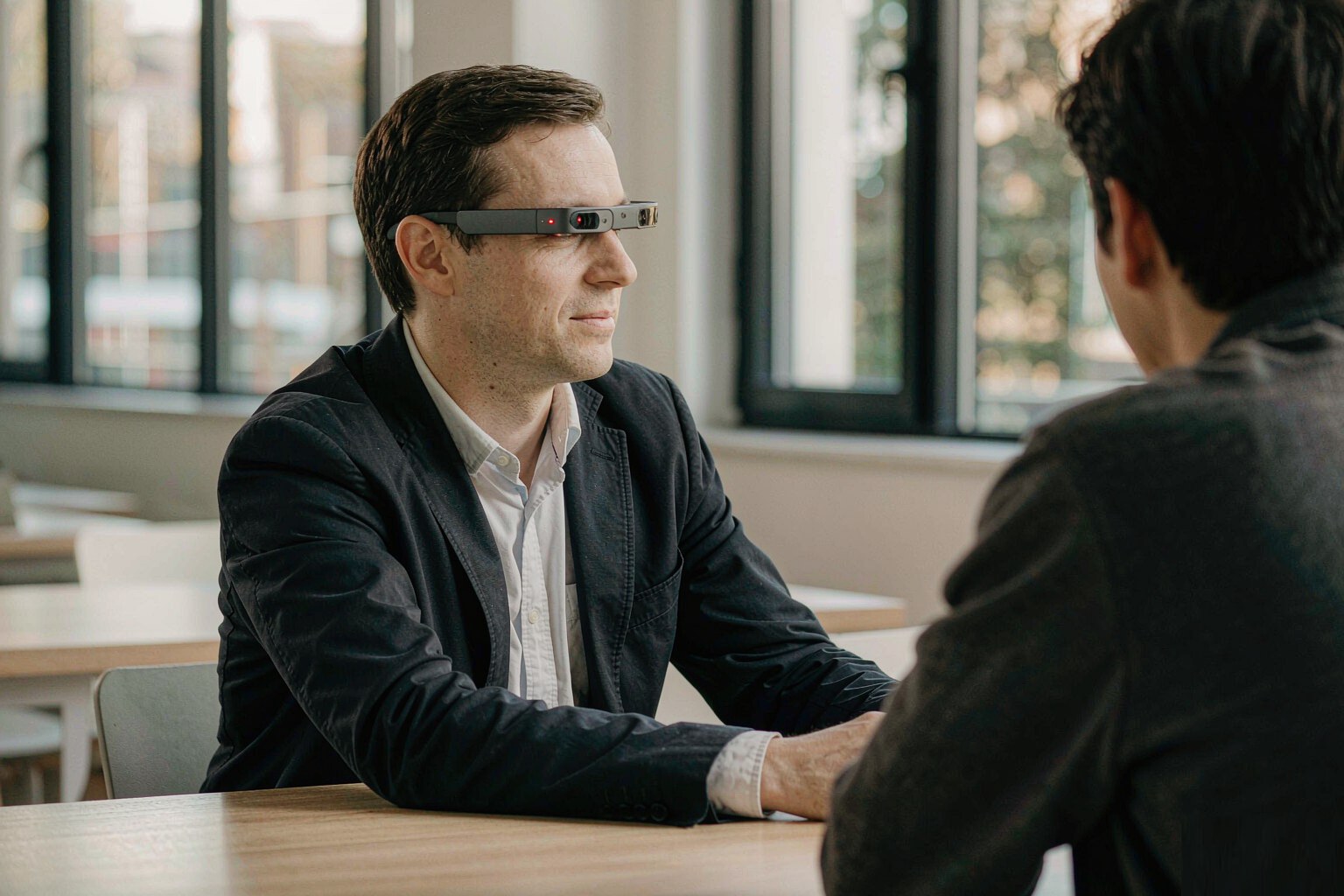
No. Not for conversation, and probably not this decade. The obstacle is not the camera or the model — it is the shape of the problem. A two-way conversation is a full-duplex audio task with two participants, and a pair of glasses has no way to include the second person: you cannot hand one lens across the table. What glasses do extremely well is the other half of translation — reading a menu, a platform sign, a customs form, a boarding gate — and that half is worth real money. So the useful question for a brand in 2026 is not which form factor wins. It is which job your next SKU is being built to do, because the answer decides your tooling, your certifications and your bill of materials.
We have run both kinds of programme out of Shenzhen, and the failures we see are rarely about translation quality. They are about a specification written for a demo instead of for a use case. This piece is the split we now write into every brief before a quotation is issued.
Translation is two jobs wearing one name
The word "translation" covers at least two different products, and buyers merge them by accident.
Job one is conversation: two people, alternating, in the same room, often in noise, often with hands full. Job two is comprehension: one person, one static or slow-moving source of text, no counterpart to involve — a menu, a sign, a form, a label, a gate number.
Those two jobs have opposite requirements. Conversation needs low latency, a microphone close to the mouth, and a private audio channel per person. Comprehension needs a camera pointed at the world, optical character recognition, and somewhere to put the text. Put them in a table and the argument ends:
| Job | What the user needs | Ear | Eye |
|---|---|---|---|
| Two-way conversation | Own-language audio, no delay, hands free, eye contact kept | Native fit — one bud per person, one channel each | Poor — nobody puts on your glasses to answer you |
| Reading the environment | Text in the field of view, private, no phone in hand | Poor — audio of a 60-item menu is unusable | Native fit — camera in, subtitles out |
| Group or lecture | Continuous captions, speaker labels, a transcript afterwards | Workable — one-way audio into both ears | Workable — subtitles, but only for a short line at a time |
The conversation job belongs to the ear
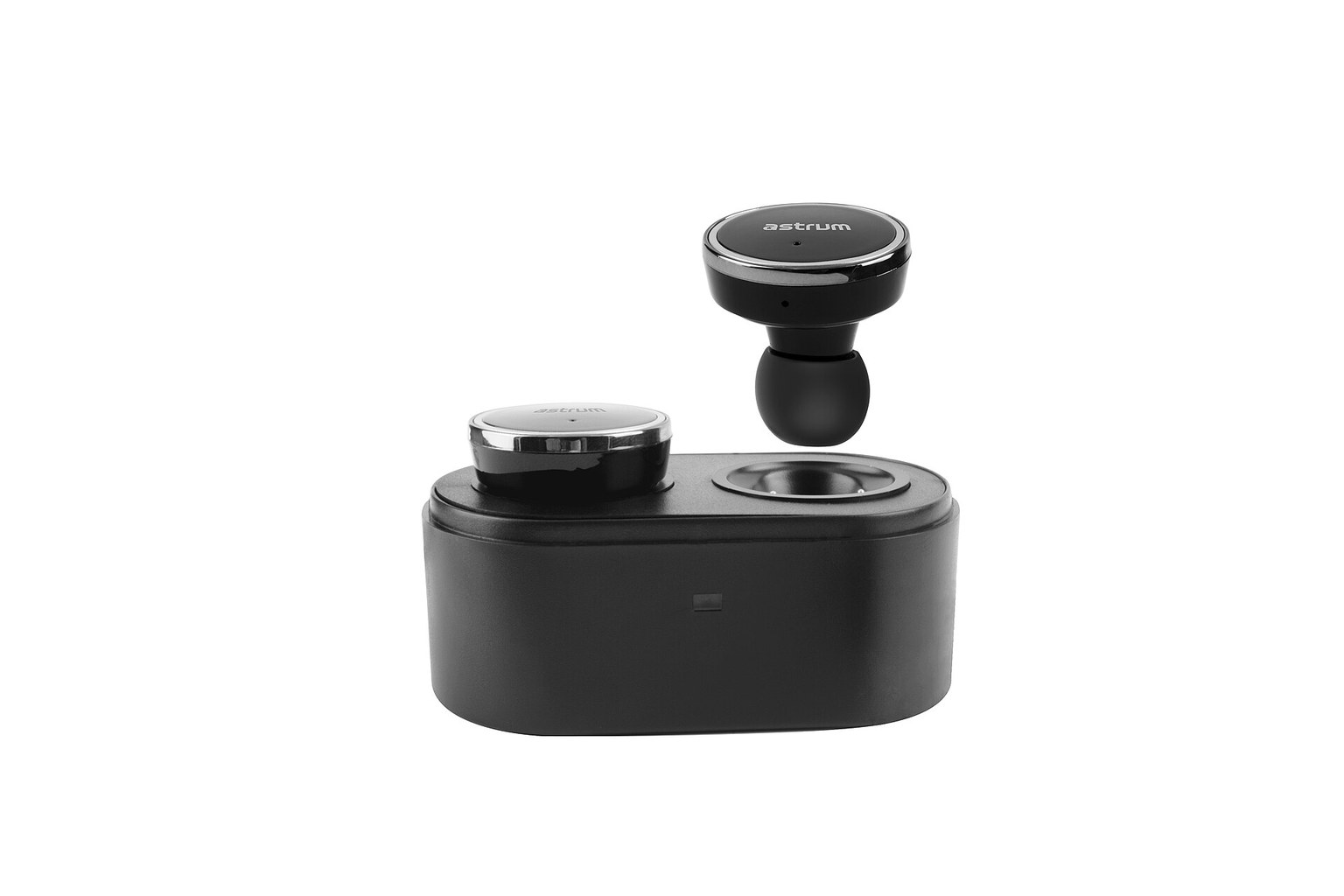
Look at how a serious face-to-face mode is built. The two buds are split into two independent channels: person A wears the left one and hears only the translation of what B said; person B wears the right one and hears only A. Each bud carries an array of 3 microphones and a beamformer that picks up its own wearer's voice and rejects the other person sitting 60 cm away — otherwise the system transcribes both speakers into one stream and produces fluent nonsense.
That is a hardware design, not an app feature. It needs two radios in sync, per-bud echo cancellation, and a translation engine fast enough that the reply arrives while the sentence is still in the air. One Chinese vendor shipping this in 2026 quotes a first-word response of 2 seconds across 60 language pairs online. Two seconds is the edge of usable: normal conversation runs at roughly 150 words a minute, and past about 3 seconds people start talking over the machine.
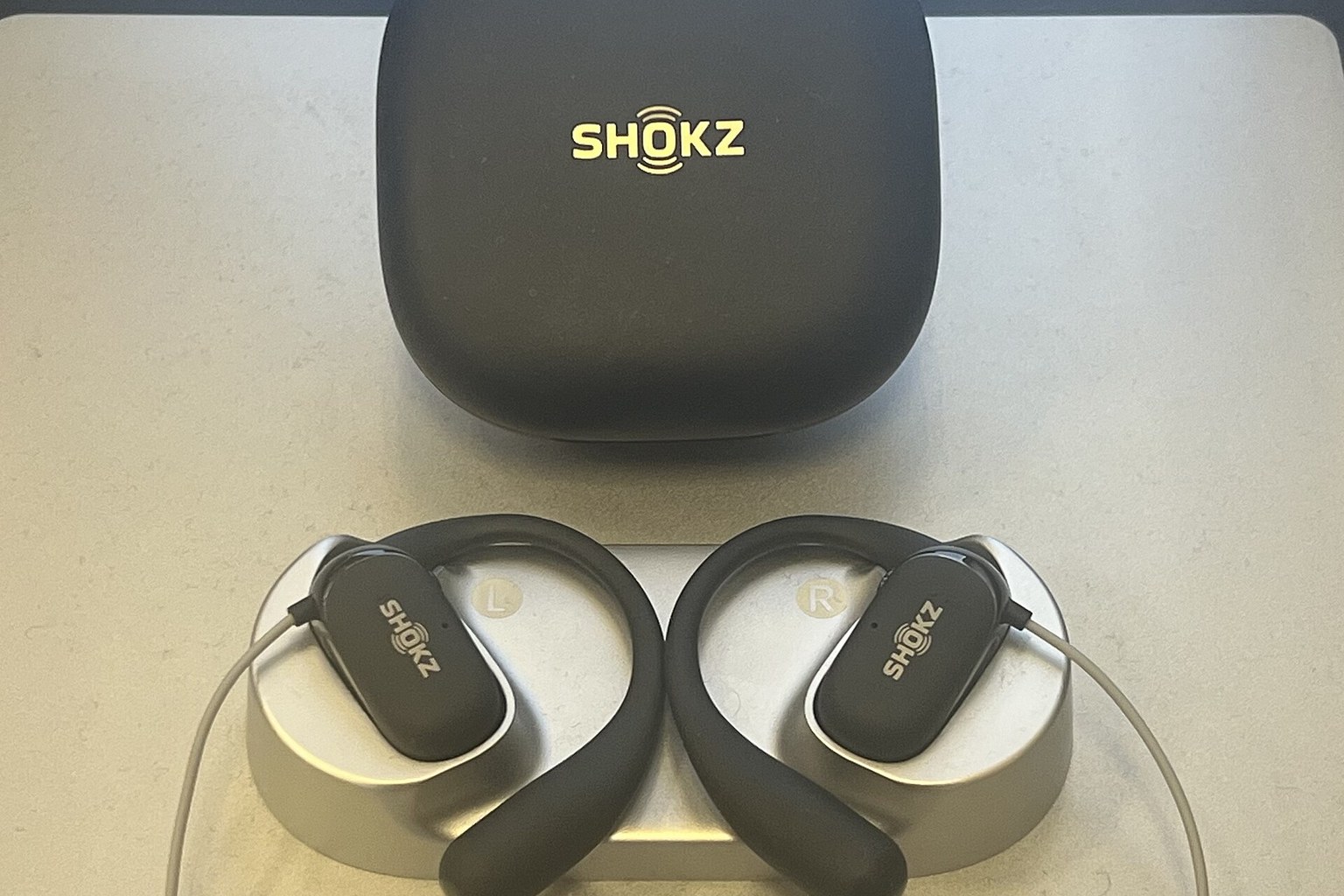
Now try to reproduce that on a frame. The glasses can capture the wearer's voice with a 4 to 6 microphone array and speak the translation through open-ear speakers. What they cannot do is give the other person a private channel. Play it aloud and the whole café hears the negotiation; keep it directional and the counterpart has to lean into your temple. Neither is a conversation. Every "translation glasses" demo we have been shown solves this by handing the phone to the other person — at which point the glasses are a camera and a screen, and the phone is doing the work.
There is a second, less obvious reason the ear wins here: hygiene and social permission. Handing someone a single bud is a small, understood gesture. Asking a stranger to put on your prescription eyewear is not.
The reading job belongs to the eye
Reading is where the frame earns its place. A camera at eye level sees what you are looking at, which is exactly the input an OCR pipeline needs. Point at a menu, a museum label, a station departure board, a medicine leaflet, and the answer arrives in your field of view without you lifting a phone. For a traveller, that is the difference between standing in a doorway squinting and walking in.
The constraint is display real estate, and it is tighter than the marketing suggests. Meta's Ray-Ban Display puts a 600 × 600 pixel image in the right lens only, with a 20° field of view at 42 pixels per degree. Rokid's display model runs a binocular micro-LED at 1,500 nits with a 25° field of view. Both are sharp enough to read; neither is a page. At 42 pixels per degree you get crisp text, but the window is roughly a couple of lines — a subtitle band, not a document.
Then comes the number almost nobody puts in a specification: reading speed. Broadcast subtitling guidance — the BBC's and Ofcom's both — puts the comfortable rate at 160 to 180 words per minute, and notes that dialogue requiring more than 200 words per minute is hard for many viewers to follow. Ordinary speech already runs around 150 words per minute, and a fast sales conversation runs well past 200. So a pair of glasses is a subtitle machine. It is superb for a menu and for a one-way briefing. It cannot carry a negotiation in which three people interrupt each other, because the display can only show you the last thing that was said, at a speed you can actually read.
What the 2026 hardware actually is
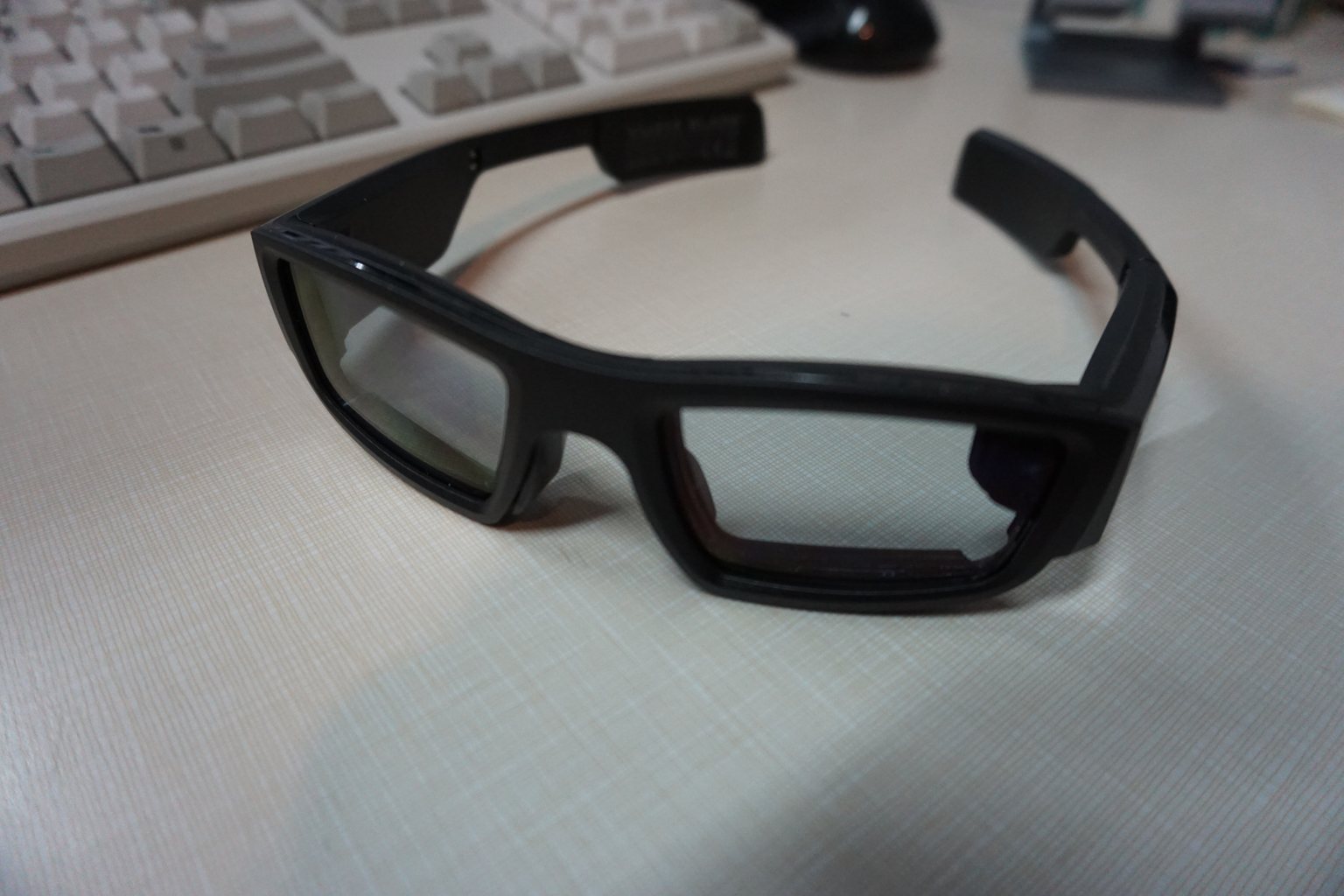
Strip the launch copy and four products define the price ladder a buyer is shopping in.
| Device, 2026 | Display | Weight | Battery | Price | Translation claim |
|---|---|---|---|---|---|
| Meta Ray-Ban Display | 600 × 600 monocular, 20° field of view, 42 PPD, 30 to 5,000 nits | 69 g | 6 hours, 30 hours with case | US$799 | Live captions and real-time translation through the paired app |
| Rokid Glasses (display) | Binocular micro-LED, 1,500 nits, 25° field of view | 49 g | 210 mAh, charging case | US$619 to US$699 | 89 languages, 6 of them offline |
| Rokid AI Glasses Style (no display) | None | 38.5 g | 6 hours music, 5 hours calls | US$399 | 89 languages with the app |
| Translation earbud class | None | 4 to 6 g per bud | 6 to 9 hours, 20 to 30 hours with case | US$30 to US$300 | Dual-channel face-to-face, 40 to 60 languages online |
Two details in that table matter more than the headlines. First, the display is monocular on the market leader: one eye reads, the other watches the room. That is a deliberate compromise on weight and power, and it tells you the engineering margin is thin. Second, the prescription range on the Meta frame is −4.00 to +4.00, single vision only. Anyone outside that band needs a different frame, which means your addressable market in Europe and North America shrinks the moment you go to an optical channel.
The market numbers, read the right way
IDC put smart glasses at 2.25 million units in the first quarter of 2026, up 167% year on year, and forecasts 13.6 million for the full year — a 41% increase — reaching 27.3 million by 2030. Revenue lands near US$5.1 billion this year, with average selling prices around US$376 compressing toward US$229 as volume arrives. Meta held 69.2% of the category in that quarter; the next four vendors together held about 11%.
Now put the hearables number beside it: 407.6 million units forecast for 2026, growing 4.0%. That is roughly 30 earbuds for every pair of glasses. Both statements are true at once, and they point in opposite directions. Glasses are the growth story. Earbuds are the volume business, and they are where a mid-sized brand can still ship a container instead of a pallet.
The translation niche has its own shape. Timekettle, the Shenzhen company that created the category, reported more than 1.5 million users across 170-plus countries by the end of 2025. That is a real business and a small one — and it was built entirely on the ear, before any of the 2026 display hardware existed.
What the next three years will look like
Three predictions, each with the reason attached, so you can price the risk yourself.
1. Glasses will start shipping with a paired earbud. The frame is a poor place to put a speaker for private audio, and an open-ear speaker at 40 cm from a stranger is a privacy problem. The cheapest fix is a bud in the box. Expect bundles, not a new category.
2. The volume will land in the no-display tier at US$399. A 38.5 g frame with a camera, an assistant and 89 languages is the product most buyers can actually sell in 2027. The display version stays a flagship at twice the price until the optics cost curve moves.
3. The translation earbud price floor drops below US$30. Dual-channel firmware and a mature audio SoC are already there; what has been holding the floor up is the app and the language packs. Once a second-tier brand ships a credible US$29 pair, the $200 tier has to justify itself with accuracy, latency and support rather than with the feature list.
What will not happen by 2029: a frame that runs a full conversation model locally. A 2 GB memory budget and 6 hours of mixed use do not leave room for a speech-to-speech model of hundreds of megabytes, and the memory market has spent 2026 making that arithmetic worse rather than better. We covered the compute split in where the AI in earbuds and glasses actually runs, and nothing in the new hardware changes it.
Where a translation-glasses SKU breaks in the field
A distributor in the Gulf came to us in early 2026 with a one-line brief: translation glasses, no phone, face-to-face mode, retail under US$250. He had seen a demo at a trade fair where two people talked through a pair of frames and both heard their own language.
We asked for the airplane-mode test and the demo fell apart in four minutes. Without the phone, the frames translated a fixed list of phrases and nothing else. The "two people" in the demo had been wearing one bud each, with the frames as a camera and a display; the audio was coming out of the buds. Nobody had lied. The brief had described an experience, and the factory had quoted an experience.
The second failure was physical. In a real meeting you hand something to the other person. With glasses, you either take them off — and lose the display — or you both lean into one frame. The distributor's own sales team killed the concept after one afternoon at a trade show, and the programme moved to a two-piece kit: a 49 g frame for reading, and a pair of dual-channel buds for talking, sharing one app and one account.
That kit is what we would quote today. It costs more than one device and less than two separate programmes, because the app, the account system and the language packs are shared.
What to write into the RFQ
Seven lines. They fit on one page and they separate a product from a trade-fair demo.
1. Name the job. Conversation, comprehension, or both. A supplier who is told "both" will quote you a bundle and call it one product.
2. Describe the hand-over. Who wears what, and what the second person has to put on. If the answer involves the counterpart wearing your eyewear, the product is not a conversation tool.
3. State the offline language pairs and the first-word time. "Offline support" is not a number. Ask for the pair count, the phrase limit if any, and the seconds to first translated word, measured with the phone in airplane mode.
4. Fix the display duty cycle. Subtitle band on for how many minutes per hour, at what brightness, with the camera running. That single line predicts your real battery life better than any datasheet.
5. Ask who owns the optics and the prescription channel. A frame that only fits −4.00 to +4.00 excludes a large share of the 40-plus buyers who can afford it. Know whether the factory can supply an optical insert, and at what cost per unit.
6. Put privacy on the drawing. Recording indicator, shutter behaviour, where the audio goes, retention period, and — for Europe — the AI disclosure that applies from August 2026. A camera on a face is a compliance file, not a feature.
7. Write down who pays for the cloud in year three. Per-unit allowance, subscription, or nothing because the feature is local. Get it before tooling, because it decides whether the SKU is still profitable after the launch quarter.
Our stance
Do not build a translation-glasses SKU to replace a translation earbud. Build the reading half into the frame, keep the conversation half in the ear, and ship them as one system with one app. If your budget only covers one device, choose the ear: it is roughly 30 times the market, a third of the certification work, and the only one of the two that a second person will actually put on.
And treat "AI glasses" as a hardware description, not a capability. The frame tells you where the camera is. It tells you nothing about who is doing the translation, how fast, in which languages, with whose money.
Planning a translation product for 2027?
We are a sourcing and OEM partner in Shenzhen. We write the job, the hand-over and the offline limits into the specification before a quotation is issued, so the form factor follows the use case instead of the trade-fair demo. Tell us the market, the languages and the price band, and we will come back with the split and the questions to put to the factory.
Talk to us about an OEM programme →