
Air, sea or rail: how to pick a shipping mode for consumer electronics before the first order ships
The mode is usually decided by whoever fills in the quotation, in about ninety seconds, and it sets your landed cost, your cash cycle and your launch date for the next six months. This is what each mode actually charges you for, why a 9 kg carton can bill as 12 kg, which battery packing instruction decides whether your product can fly at all, and the arithmetic on a 3,000-piece order.
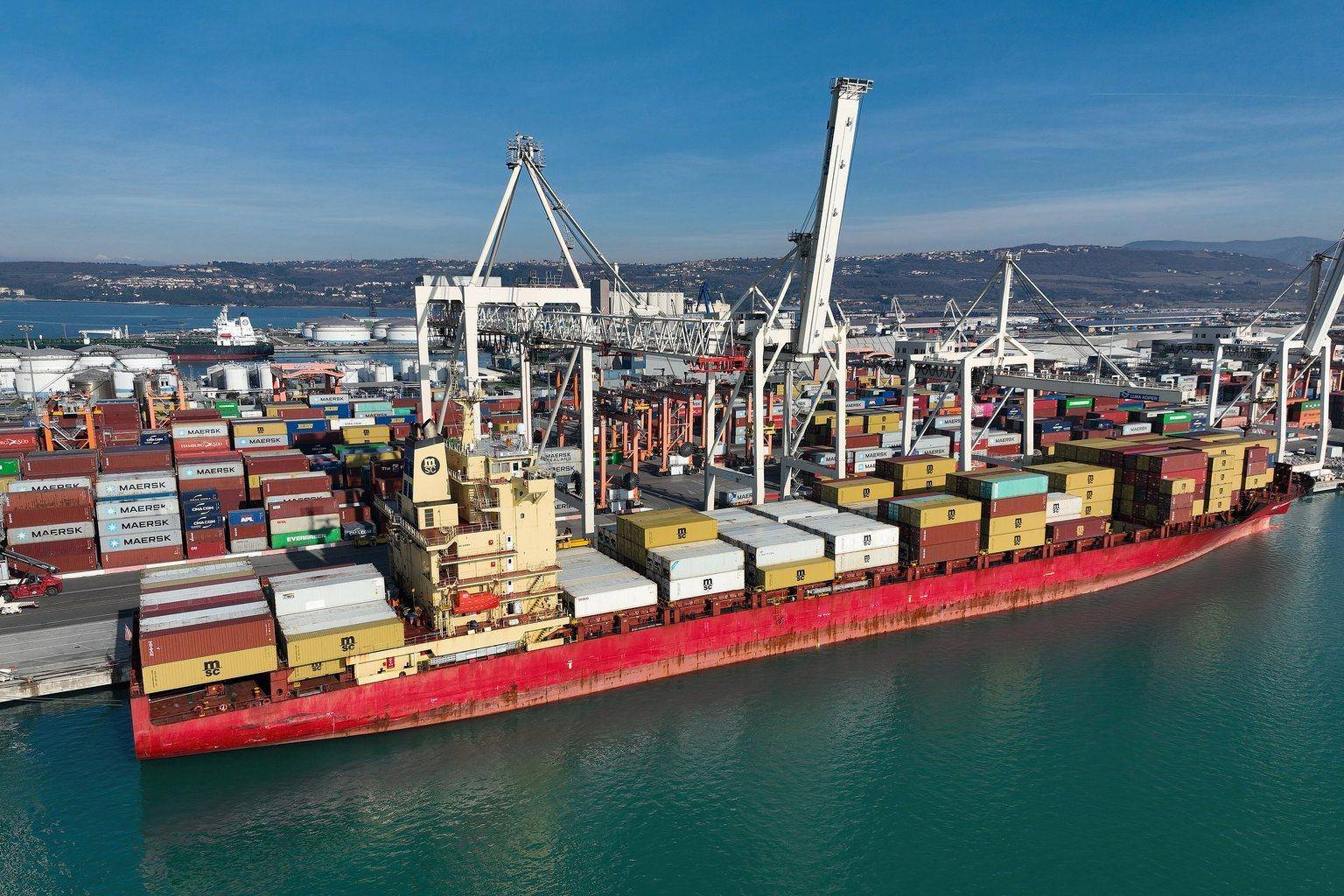
Header photo: Petar Milošević / Wikimedia Commons, CC BY-SA 4.0
Pick sea unless one of three things is true: the cargo has to arrive before a date you cannot move, the volume is too small to fill a container, or the product cannot legally travel by sea on the route you need. Air is fast and expensive in a way that is easy to calculate. Sea is cheap and slow in a way that is easy to underestimate, because the cost shows up as working capital and missed selling weeks rather than as a freight line. Rail sits between them and is the right answer for exactly one battery configuration, which happens to be the one most consumer electronics ship under.
Most of the mistakes we see are not pricing mistakes. They are category mistakes: a brand books sea for a launch date three weeks away, or pays air freight on 40,000 pieces because the first order went by air, or discovers at the airline counter that the samples were charged to 70% and cannot board the aircraft.
Here is the decision, taken apart in the order it should be taken.
Freight is a small line; the mode is a large decision
On a typical pair of TWS earbuds, ocean freight is a few cents per unit. Air freight is twenty to forty times that. Neither number is the reason the decision matters. The reason is that the mode also sets how many days your money sits in a warehouse, how much stock you must hold to cover a demand spike, and whether a retail booking is met or lost.
Three quantities decide almost everything, and only one of them is on the quotation:
Chargeable weight. What the carrier bills, which for light consumer goods is volume, not mass.
Container fill. How much of a box your cartons actually occupy once pallets, gaps and stacking limits are taken out.
Days in transit plus days of stock. The one nobody puts in the spreadsheet, and the one that decides whether the cheap option was cheap.
Chargeable weight: three industries, three different divisors
The same carton is measured three different ways depending on how it travels.
Air freight divides length × width × height in centimetres by 6,000. That works out to 167 kg for every cubic metre. Express couriers divide by 5,000, which is 200 kg per cubic metre, so the same parcel is billed heavier by express than by a freight forwarder. Sea LCL uses a freight ton: one cubic metre equals 1,000 kg, and the carrier charges whichever is greater, the volume or the weight.
Now put a real carton through it. A hundred pairs of earbuds in a master carton of 60 × 40 × 30 cm is 0.072 m³ and about 9 kg gross. Air charges 0.072 × 167 = 12 kg, so you pay for a third more than the box weighs. LCL charges 0.072 freight tons, which is 72 kg — eight times the actual weight. That is not a trick or an error. It is the industry telling you, in the only language it has, that your product is mostly air.
Which is why the mode question starts with density. A carton of earbuds sits at roughly 125 kg per cubic metre. A carton of Bluetooth speakers sits nearer 300. A carton of power banks can pass 600. The lighter the product, the more the volumetric divisors punish you, and the more you should be thinking about filling a container rather than buying kilos.
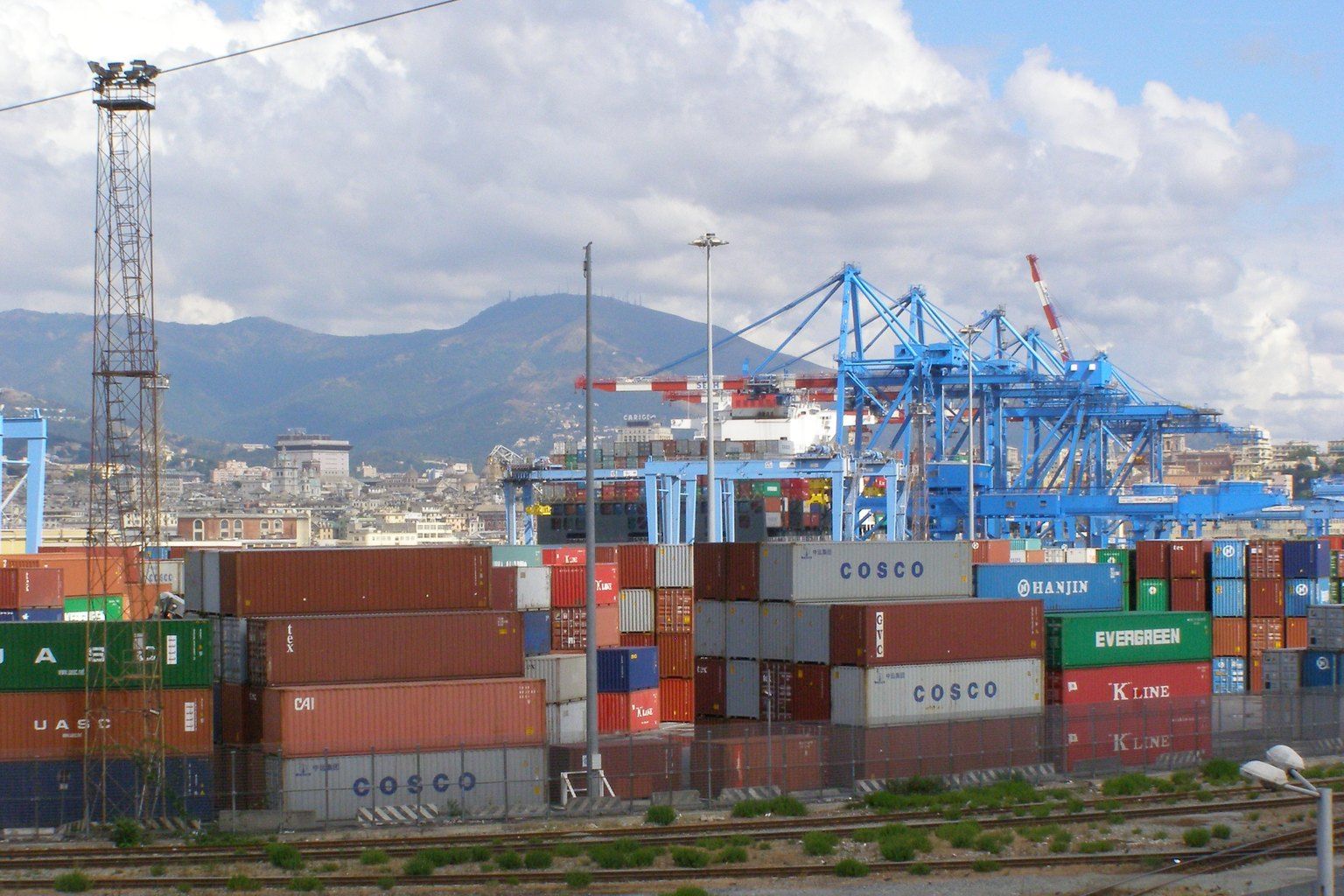
What a container actually holds
Container capacity is quoted as a theoretical volume, and then reality takes a bite. Here are the four boxes that carry over 95% of manufactured goods, with the numbers a forwarder will work from:
| Box | Internal volume | Payload | Realistic fill |
|---|---|---|---|
| 20GP | 33.2 m³ | 28.2 t | 25 to 28 m³ |
| 40GP | 67.7 m³ | 26.8 t | 55 to 60 m³ |
| 40HQ | 76.4 m³ | 26.5 t | 65 to 68 m³ |
| 45HC | 86.1 m³ | 26.5 t | 73 to 78 m³ |
The gap between 76.4 and 65 is not waste. It is cartons that do not divide evenly into the internal dimensions, corrugated board that bulges under load, pallets that eat 15 cm of height, and the fact that nobody can stack to the ceiling at the door end. Loading efficiency across the industry runs from 75% to 92%, and the low end is where the arguments happen.
Run the earbud carton through it. A 40HQ filled to 65 m³ holds 900 master cartons, which is 90,000 pairs, which weighs 8.1 tonnes. Against a payload of 26.5 tonnes. The container is barely a third loaded by weight and completely full by volume, and that single fact explains most of the pricing you will see: for light consumer electronics you are buying space, and the per-unit freight cost falls with every cubic metre you manage to pack out.
It also explains why a 3,000-piece order should never take a 40HQ. Three thousand pairs is 30 cartons, 2.16 m³, one thirtieth of the box. You would pay for 65 m³ to move 2.16.
Sea: the default, and the three things that eat the saving
Ocean freight from South China to Northern Europe is quoted door to door at 30 to 45 days. To the US West Coast, 14 to 18 days port to port, and add a week on either end for trucking, rail to the Midwest and customs.
The quote you receive is almost always port to port. The number your customer experiences includes the truck that collects from the factory, the export declaration, the vessel, the destination terminal, the import clearance and the delivery. On a European lane that tail can be 10 days on its own, and it is the part that moves when a port is congested.
Three costs hide behind a sea rate. Demurrage and detention: containers get a few free days at destination, often 5 to 7, and then bill per box per day in both directions — the box sitting loaded and the box sitting empty. DG booking lead time: a container of Class 9 lithium batteries needs to be booked as dangerous goods, which means earlier cut-offs, carrier approval and a real chance of being rolled to the next vessel. Schedule reliability: a two-week slip on a 35-day transit is not a two-week slip on your launch, it is a two-week slip plus whatever safety stock you did not hold.
On the compliance side, the IMDG Code amendment 42-24 became mandatory for sea transport on 1 January 2026. It did not change the fundamentals — lithium batteries ship as UN3481, Class 9, in approved packaging with the right marks — but it did change the paperwork and the training records that a carrier will ask to see.
Air: a battery compliance exercise before it is a freight decision
Air freight from Shenzhen to a European airport is 3 to 7 days door to door, and the reason it costs several times what sea costs is that you are buying speed and a very short booking window. The reason it sometimes cannot happen at all has nothing to do with money.
Lithium batteries fly under packing instructions, and which instruction applies depends on how the battery sits in the box:
PI 965 is cells or batteries shipped alone, UN3480. It is cargo aircraft only, the state of charge must not exceed 30%, and the per-package limits are 35 kg of cells for Section IA and 10 kg for Section IB. Loose cells in a carton are the hardest thing to fly.
PI 966 is batteries packed with equipment but not inside it, UN3481 — the spare pair in the same box as the product. From 1 January 2026 the 30% state-of-charge limit became mandatory for cells and batteries above 2.7 Wh in Section II. This is the change that caught people out this year, because Section II had been treated as the lenient route.
PI 967 is batteries contained in equipment, UN3481 — the normal case for earbuds, speakers, glasses and rings. The 30% state of charge is recommended rather than required, but many carriers apply it as a condition of carriage, and Section II caps the package at 5 kg of cells.
Two practical consequences follow, and both land on the production line rather than in the documents folder. First, a sample charged to 70% for a demo cannot legally fly under PI 966, and under PI 967 it will be refused by a growing number of carriers. Someone has to discharge it to 30% and record the measurement. Second, the battery mark changed: from 2026 the new mark is required, with the UN number at least 12 mm high on a label at least 100 × 100 mm, and the older mark carrying an emergency telephone number may be used only until 31 December 2026. Packaging has to pass a 1.2 m drop test and, from this year, a 3 m stack test.
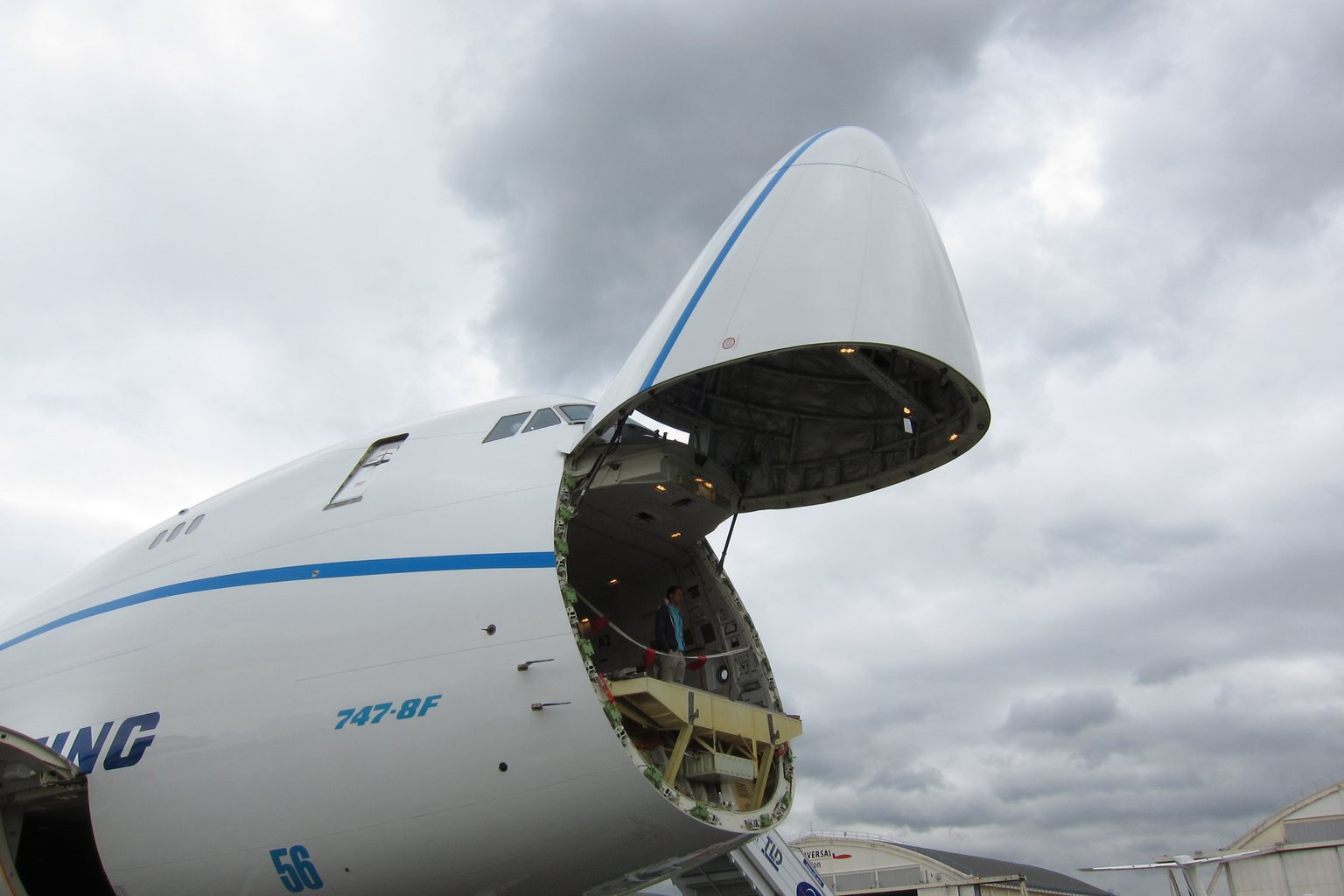
Rail: fast enough to matter, but only for one battery configuration
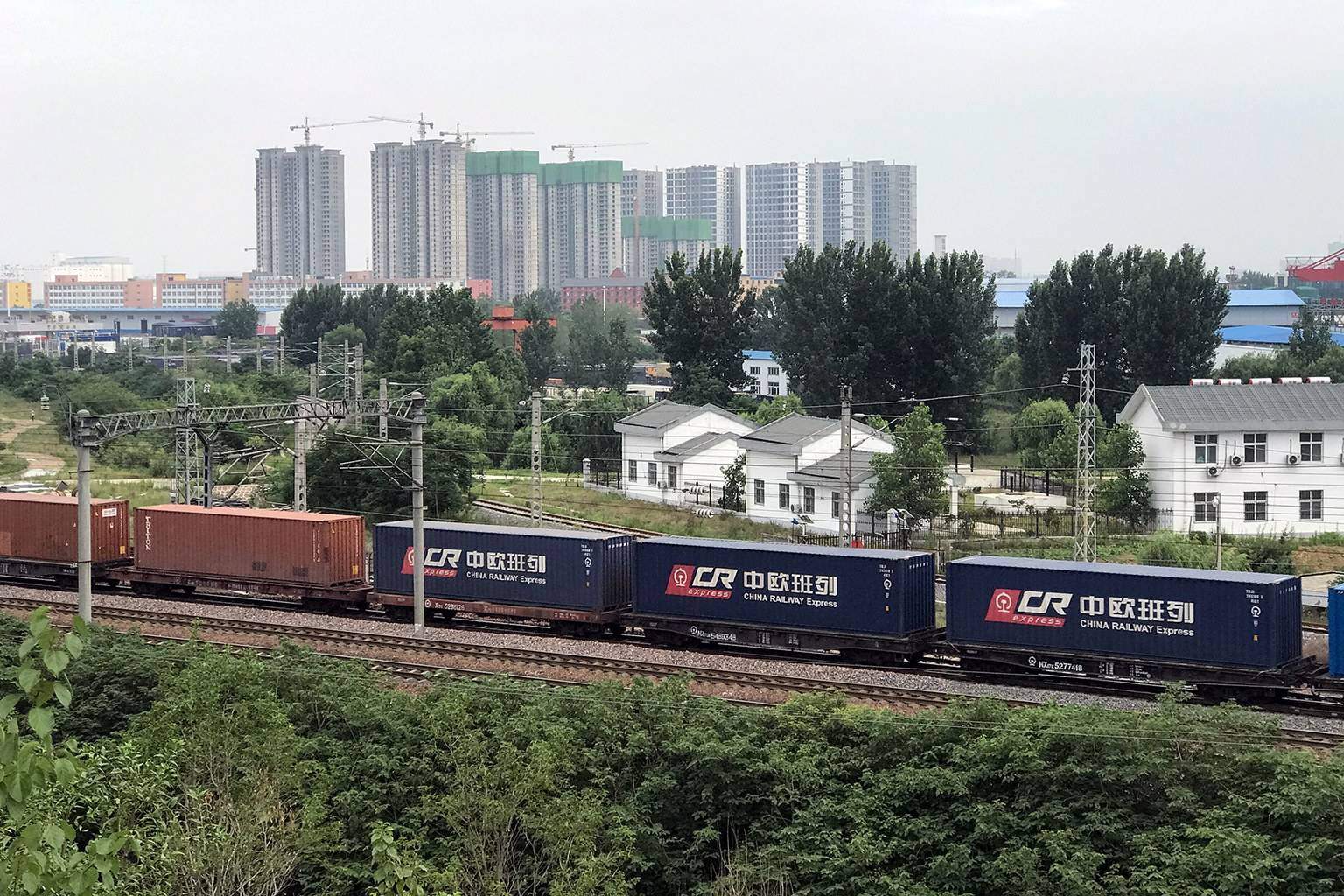
The China–Europe block trains run from terminals in Zhengzhou, Chongqing, Chengdu, Xi'an and Yiwu to Duisburg, Łódź, Małaszewicze and Liège. Station to station is 18 to 26 days; door to door, 25 to 34. Cost sits roughly a third to a half above sea and 40 to 60% below air.
Two details decide whether that range is real for your cargo. The first is the gauge change at the Belarus–Poland border: about 85 to 90% of these trains enter the EU through Małaszewicze, where the wheelsets are swapped and the queue can add days with no notice. The second is that rail is stricter than sea on dangerous goods, on the reasonable grounds that a fire inside a long tunnel is not something anyone can respond to.
In practice: batteries contained in equipment, PI 967, are accepted and are the bulk of what moves. Batteries packed with equipment, PI 966, are accepted on some services and refused on others. Batteries shipped alone, PI 965, are effectively unavailable outside a dedicated dangerous-goods train with approvals at every border. Kazakhstan applies its own state-of-charge limit of 30%, and Russia requires the MSDS and safety labels in Russian. A shipment that is compliant for sea is not automatically compliant for rail, and the difference is discovered at the terminal, not at the quotation stage.
The arithmetic on one 3,000-piece order
Take 3,000 pairs of earbuds: 30 master cartons, 0.072 m³ each, 9 kg gross each — 2.16 m³ and 270 kg in total. The rates below are illustrative, chosen to make the structure visible rather than to quote a lane.
Sea LCL. 2.16 freight tons at US$45 per cubic metre is US$97, or 3 cents per pair, with a door-to-door transit of about 42 days.
Rail. 2.16 m³ at US$120 per cubic metre is US$259, or 9 cents per pair, at about 28 days door to door.
Air. Chargeable weight is the greater of 270 kg actual and 361 kg volumetric, so 361 kg. At US$5 per kg that is US$1,805, or 60 cents per pair, at about 5 days.
Sea FCL. A 40HQ at US$2,600 carries 900 of these cartons. Loading 30 into it costs the same US$2,600, which is 87 cents per pair — nearly three times the air rate. This is the mistake that gets made most often: buying a full container for a first order because the per-container rate looks cheap.
So the spread between the cheapest and the fastest option is 57 cents per pair, or US$1,708 on the order. Now price the time. Three thousand pairs at US$12 each is US$36,000 of goods sitting in transit. The sea route holds that money about 37 days longer than air. At a 6% annual cost of capital, 37 days on US$36,000 is US$219. Air therefore costs US$1,489 more than the carrying cost it saves.
That number is the whole argument. Air is not justified by working capital on an order this size. It is justified by a date: a retail window, a trade show, a customer who will cancel, or a factory delay that has already eaten three weeks. When those are absent, sea wins by a factor of twenty, and rail wins over air by a factor of six while arriving in half the time of sea.
The conclusion flips at volume. At 30,000 pairs — 300 cartons, 21.6 m³ — sea LCL is still the cheapest per unit, but you are approaching a third of a 40HQ, and the FCL rate starts to win on both cost and damage risk. The crossover is not a rule of thumb, it is arithmetic you can run in five minutes once you know your carton dimensions and your annual volume.
The documents that decide whether the mode works
Every one of these has stopped a shipment that was otherwise ready:
Packing list with measured weights. Gross and net per carton, and dimensions in centimetres. Estimated weights are the single most common cause of a re-weighing charge and a re-priced booking, and on air freight the chargeable weight is recalculated at the terminal.
UN38.3 test summary. Model, watt-hours, cell model and manufacturer must match the goods. An old summary for a cell the factory has since changed is worthless, and the airline will not accept a report without the summary page.
MSDS. Current, in the language the transit country requires — English for sea and air, Russian for the rail route through Russia.
Dangerous goods declaration. For air, filed by a trained signatory, not by whoever is on shift. A wrongly declared lithium battery shipment is a customs and aviation offence, not a paperwork error.
The air transport identification report. In China this is issued per product and is generally valid for the calendar year, which means a product certified in December needs a new one in January.
ISPM 15 and VGM. Heat-treated or fumigated wood packaging with the IPPC mark, and a verified gross mass for the container. Both are cheap to do in advance and expensive to fix at the gate.
Eight lines to put in the shipping RFQ
A quotation that does not answer these is a number without a definition. Ask before you compare, not after you book.
1. Carton data. Measured gross and net weight per carton, and external dimensions. Not an estimate, not a target.
2. Packing instruction. Which PI applies to this product, the Wh per cell and per battery, and whether the batteries are contained in the equipment or packed with it.
3. State of charge. What percentage the line will ship at, how it is measured, and where the record is kept.
4. Battery mark and packaging. Which version of the mark is on the artwork, and the drop and stack test reports for the packaging.
5. Port-to-port or door-to-door. The transit time quoted, and exactly where it starts and stops.
6. Free time at destination. Days of demurrage and detention included, and the daily rate after that.
7. Dangerous goods acceptance. Whether the carrier on that lane accepts Class 9, the booking lead time, and the roll probability in the season you are shipping.
8. Fallback. Who rebooks if the airline rejects the shipment, who pays the storage, and what the second option costs. Ask for it in writing while the goods are still in the factory, not while they sit at the airport.
Our stance
Do not accept a quotation that says "freight included" without naming the mode. It is not a price, it is a placeholder, and it will be reconciled against you later.
Do not put a charged sample on an aircraft. Discharge it, record the percentage, and tell the customer why the box arrives at 30%. A buyer who understands the reason will charge it and move on; a buyer who does not will assume the product is faulty.
Do not use LCL for light goods without running the freight-ton conversion. A 2 m³ shipment of earbuds prices like 2 tonnes, and that is where "sea is cheap" stops being true at small volume.
And do not buy a full container for a first order. A 40HQ has 76.4 m³ of space and a first run rarely needs a tenth of it. Book the space you need, keep the rest of the money for the second order, and revisit the mode when your annual volume makes the arithmetic change.
Need the freight built into the offer, not bolted on after?
We are a sourcing and OEM partner in Shenzhen, shipping wireless audio, smart glasses and wearables to more than 80 countries. Send us your carton dimensions, your annual volume and your target market, and we will tell you which mode the product can legally take, what the landed cost looks like at 1,000 and 3,000 pcs, and where the transit time will actually land.
See how we run an OEM project →