
From ear trumpet to ear clip: 128 years of open-ear audio, and what it means for sourcing
The open-ear earbud is sold as a new category. The idea behind it is older than the transistor, older than the radio broadcast, and it was built for people with hearing loss long before anyone wanted to run with music. That inheritance is why an OWS quotation looks the way it does — and why some of the claims inside it cannot be true.
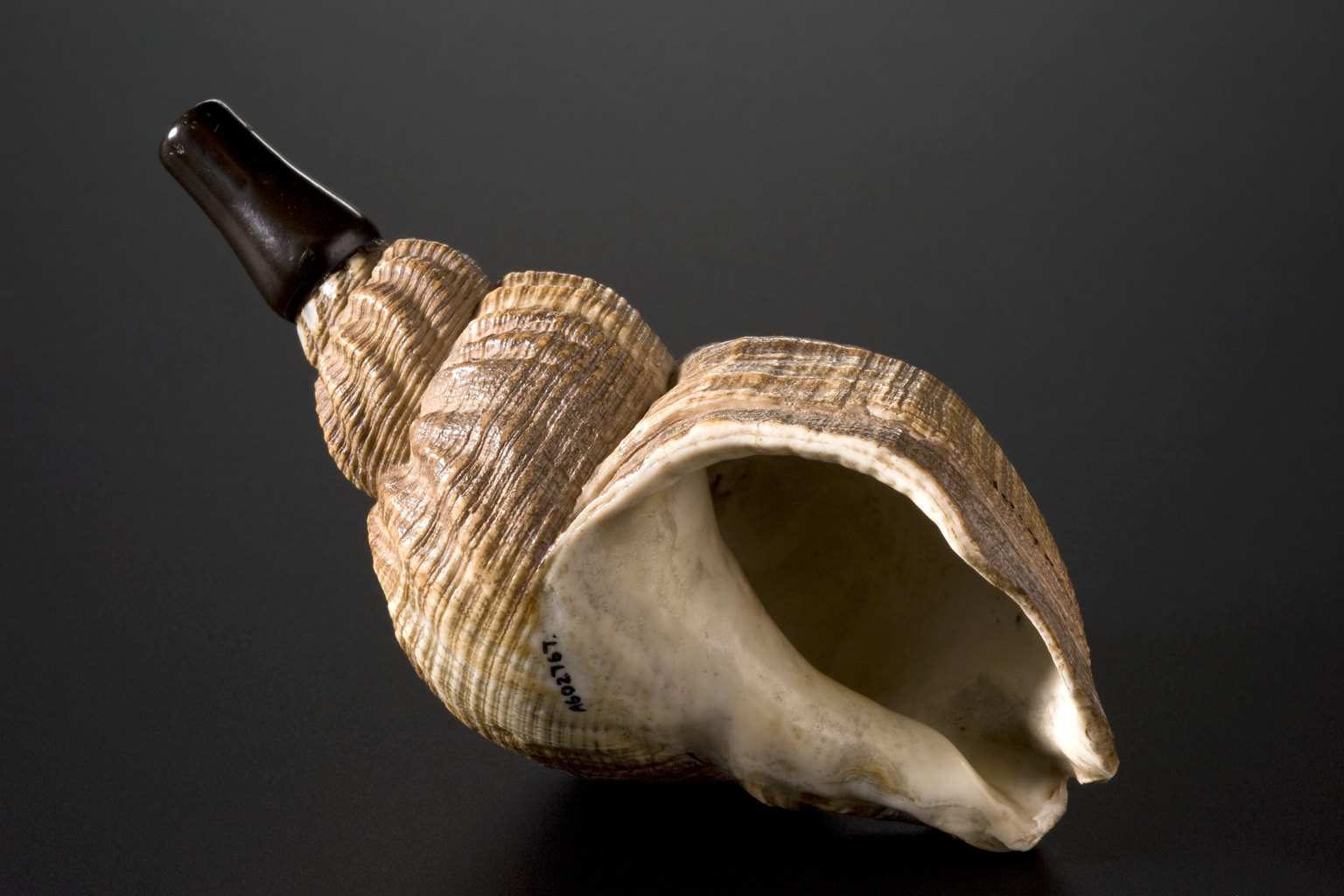
Header photo: Wellcome Collection / Wikimedia Commons, CC BY 4.0
The open-ear earbud did not begin in 2023 with a hinged clip. It began in 1898 with a carbon microphone, a battery in a coat pocket and a person who could not hear the conversation at dinner. Every design decision that a buyer now argues about — no seal, no passive isolation, weak bass, gain without feedback — was settled decades ago by engineers working for people with hearing loss. If you are sourcing an OWS this year, the history is not decoration. It tells you which factory you are actually talking to.
Here is the short version, and then the part that matters commercially.
1898: the first open-ear device was medical
Before electricity, the answer was a trumpet. A shell, a horn, a tube: something that collected pressure waves and funnelled them towards the ear canal without ever closing it. Wellcome Collection holds examples made from a whelk shell with a vulcanite tip, and descriptions of hearing aids go back to the 16th century. The principle never changed. Put more sound pressure at the entrance of the canal, and leave the canal open.
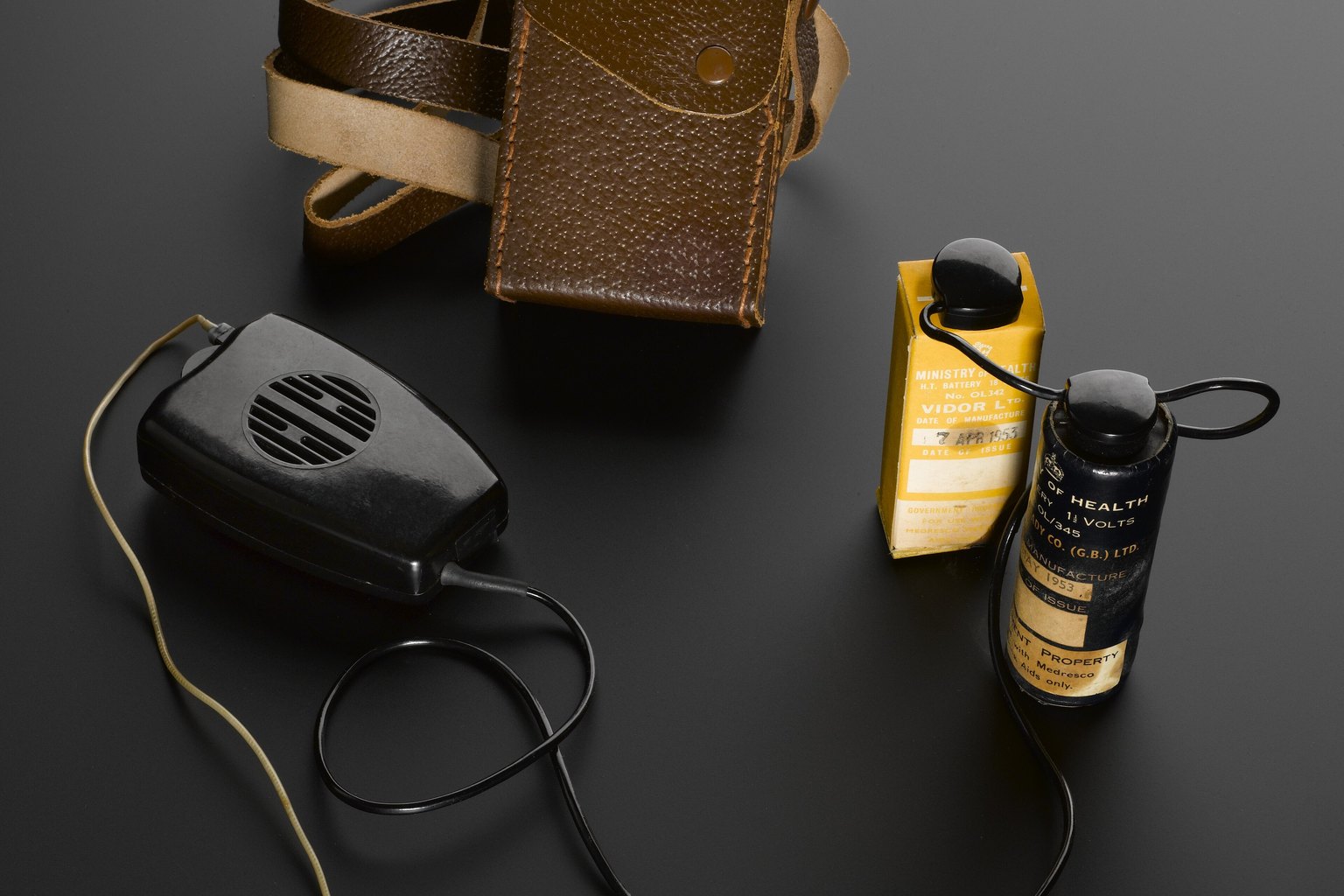
In 1898 the American engineer Miller Reese Hutchison built the first portable electric version, the Akouphone, using a carbon microphone and a battery small enough to carry. The Acousticon company put the idea on the market, and by the early 1900s a hearing aid was a box in a pocket with a wire to the ear. That is 120 years before anyone marketed an "open-ear wearable".
The trade-off was established in the same decade, and it has not moved. If you do not seal the canal, the sound has to cross a couple of centimetres of open air to get in. Low frequencies fall apart over that distance, because they need pressure that a small open radiator cannot build. And the microphone is sitting next to the receiver, so any sound that leaks out of the ear gets picked up and amplified again. Every open-ear product sold today is still negotiating with those two facts. An in-ear product is not, which is why the two categories have never really competed on the same specification.
1952: the transistor shipped in an ear before it shipped in a radio
Ask most people which product carried the first transistor to consumers and they will say a radio. The Computer History Museum is blunt about it: the first transistorised consumer product sold in the United States was a hearing aid, the Sonotone 1010 of 1952, at US$229.50. It was a hybrid — two vacuum tubes and one transistor — and the transistor was there for one reason, which was battery life.
That single fact explains a lot about this industry. A table radio could be plugged into a wall. A hearing aid had to run on a cell the size of a matchbox, worn on the body, for a full day, without overheating against someone's chest. Miniaturisation and power efficiency were not marketing features for hearing-aid makers; they were the product. Within two years the transition was effectively complete: about 50% of the units sold in 1953 were transistor models, and by 1954 the figure was close to 97%.
The other lesson from 1952 is about testing. Transistor hearing aids failed in the field within weeks at first, because moisture condensed on the package, and the industry had to learn to coat the device and to test it warm, the way a body would warm it. A consumer earbud shipped today faces the same physics in a sweaty ear. The difference is that a hearing-aid factory has been testing for it since before most of today's audio brands existed.
1956 to 1964: the shape that won went behind the ear
The behind-the-ear hearing aid arrived in 1956, the in-the-ear version a year later, and the integrated circuit in 1964 shrank the amplifier again. But the reason the hook shape won is mechanical, not electronic. A behind-the-ear device holds the microphone at the top of the case and the receiver at the bottom, with the whole height of the pinna between them. That separation is free feedback margin, and feedback margin is the currency of any product that amplifies sound near a microphone.
That is the exact geometry an OWS hook copies today: a pod behind the pinna, a short arm over the top, a radiator in front of the canal. It was not invented for athletes. It was invented because it is the cheapest way to keep a microphone and a speaker apart while still being wearable.
1977: bone conduction went into the skull
The other branch of the family arrived in Gothenburg. In 1977 the ENT surgeon Anders Tjellström implanted the first three patients with a bone-conduction hearing solution at Sahlgrenska University Hospital, using a titanium screw 4 mm long and 3.75 mm in diameter, fixed into the bone behind the ear. It rested on Per-Ingvar Brånemark's discovery that titanium fuses with living bone. The sound processor clipped onto the abutment and vibrated the skull directly.
Why go to that trouble? Because bone conduction is the only route to the cochlea that skips the eardrum and the middle ear entirely. For a patient whose ear canal is chronically infected, or who was born without an external ear, an air-conduction aid has nowhere to work. Bone conduction does not care about the outer ear. It is a bypass, and a bypass is worth surgery when the normal road is closed.
Every consumer bone-conduction headset on the market is the same physics with the surgery removed: a transducer pressed against the temporal bone, a vibrator instead of a speaker. This is also why those products feel the way they do on the temple, and why the low-frequency argument about them never resolves. The implant version solved it with direct coupling to bone. The consumer version has to solve it through skin.
1996: digital, and the problem moved into software
Widex's Senso and Oticon's Digifocus arrived within months of each other in 1996 as the first fully digital hearing aids, built on dedicated DSP hardware rather than analogue circuits. The immediate effect was better noise handling and feedback cancellation. The lasting effect was organisational: once the device is digital, the product is no longer the shell. It is the fitting.
An audiogram, a prescription, a feedback path measured in situ, a gain curve that has to stay below the howl threshold at every frequency — that is a software and audiology problem, not an acoustics problem. This is the single clearest difference between the two kinds of factory that will quote you an open-ear product. One of them employs people who can read an audiogram. The other employs people who can tune a bass reflex port. Both are legitimate. They are not interchangeable, and the quotation rarely tells you which one you are holding.
2011 to 2017: the medical idea goes to the gym
The consumer version started in 2011, when the AfterShokz brand was registered, and in 2012 with the Sportz M1, a bone-conduction sports headphone that put the transducer on the cheekbone and left the ear completely open. Runners bought it for a reason that had nothing to do with audio quality: they wanted to hear traffic. The product then spent five years fixing its own weaknesses — the 2015 Titanium model cut vibration against the skin, and the generation that followed cut leakage by cancelling the escaping wave against itself.
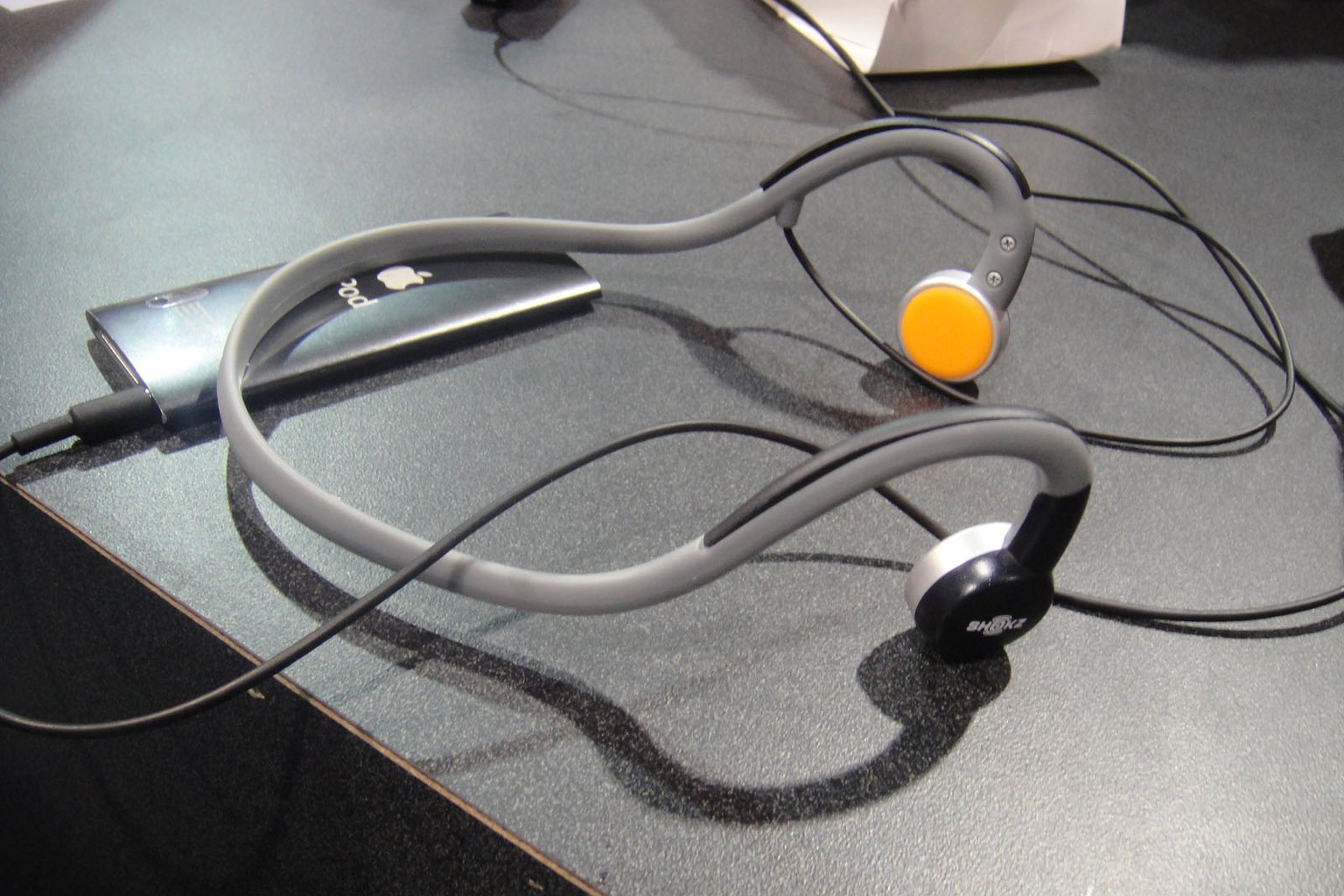
Note what happened to the language in this period. The category was called bone conduction, then "open-ear" appeared as a label once products stopped vibrating. The rename was commercial, not technical: it moved the product out of a niche defined by a transducer and into a category defined by what the customer experiences. Buyers should read the two words carefully, because a factory will use whichever one is selling.
2021 to 2024: air conduction takes the format back
Bose moved the category in a different direction on 5 January 2021 with the Sport Open Earbuds: US$199.95, 14 g per bud, 48 by 55 mm, a 16 mm dipole driver sitting above the canal rather than against bone, 8 hours of playback and an IPX4 rating. No vibration on the temple, better treble, worse bass, and a shape that grips the outer ridge of the ear.
Then the clip arrived, and it changed the mechanical problem. Huawei's FreeClip, launched in China on 26 December 2023, put the driver and the battery in two pods joined by a C-shaped bridge with a nitinol spine and a nine-wire flexible beam, 5.6 g per side, a 10.8 mm dual-magnet driver, 8 hours on a charge and 36 hours with the case, IP54. Bose followed in February 2024 with the Ultra Open Earbuds at US$299 and 6.5 g. By 2026 the clip had taken the majority of open-ear volume away from the hook.
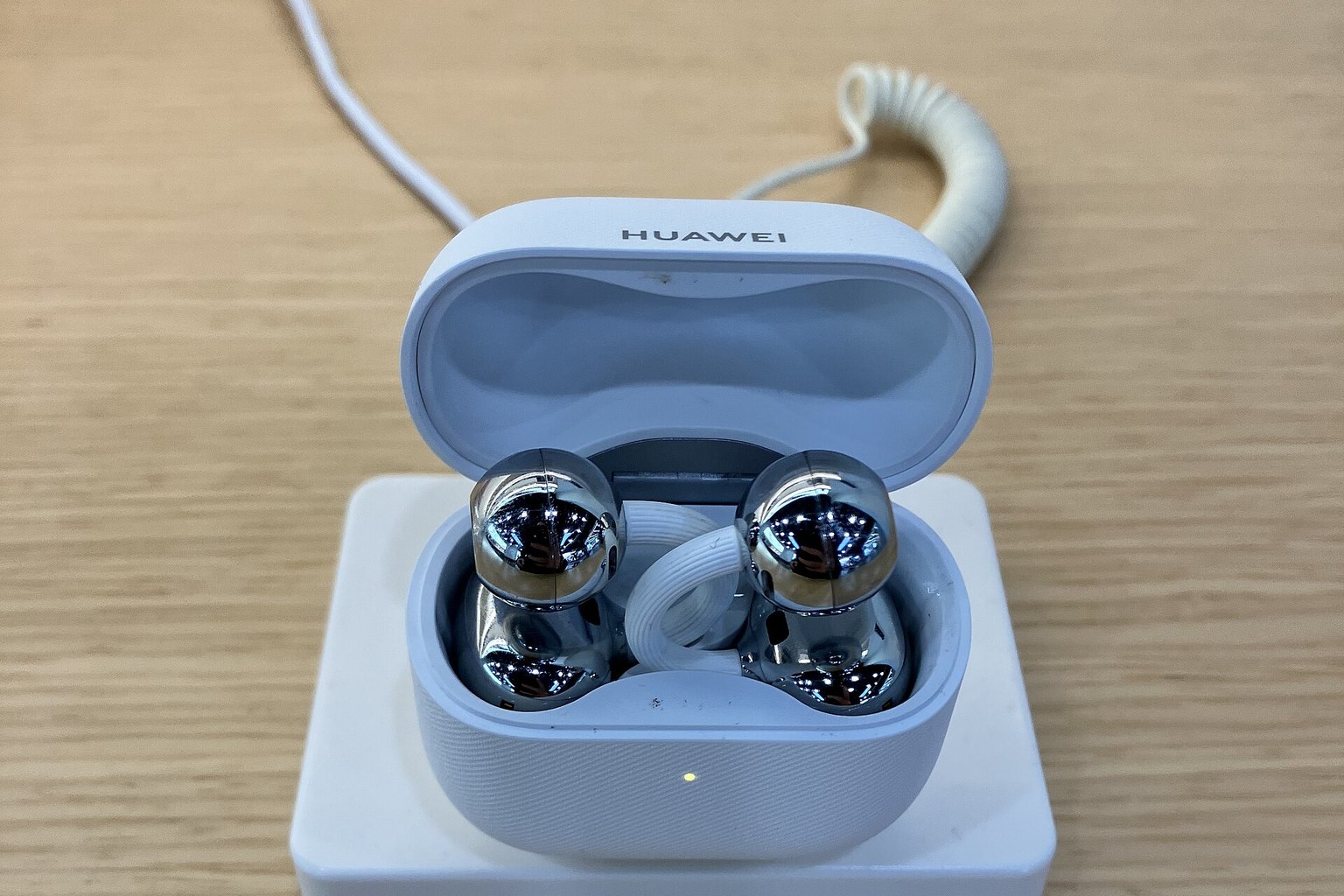
The reason is not acoustics. A hook conflicts with spectacle temples and with a cycling helmet strap; a clip does not. It also survives hair, hats and a ponytail. That is a mechanical insight about how people actually wear things, and it is the kind of insight that a speaker factory does not usually have. The companies that got there first were the ones with hinge and spring experience.
2022: the words "hearing aid" became a regulated category
On 17 October 2022 the US Food and Drug Administration's over-the-counter hearing aid rule took effect, creating a legal category for adults with perceived mild to moderate hearing loss, sold without a prescription or a fitting by an audiologist. The FDA's own framing is the useful part: close to 30 million adults in the United States have some degree of hearing loss, and only about 20% of those who could benefit seek help.
That rule did two things to the consumer audio market at once. It opened a large, underserved buyer group to anyone who could build a self-fitting device with the right labelling, and it drew a line. A hearing aid is a medical device with a regulatory pathway, output limits and required warnings on the box. An open-ear earbud is consumer audio. If your listing, your packaging or your influencer brief calls an OWS a hearing aid, you have made a medical claim that your factory's test reports do not cover, and the exposure lands on the brand, not on the supplier.
There is a legitimate middle position, and it has a name: a personal sound amplification product. It is not a hearing aid, it must not be marketed as one, and its performance claims still have to be true. That distinction is worth writing into the brief before the first sample, not after the artwork is approved.
What this history tells you about the factory quoting you
Three lineages build open-ear products today, and they are good at different things.
Hearing-aid houses. They bring low-power DSP, balanced-armature transducers, medical-grade process control and people who understand gain and feedback. They are usually weaker on industrial design, on bass, and on hitting a consumer price point, because their cost structure was built around a device that sells in the hundreds of dollars through a clinic.
Headphone and speaker houses. They bring dynamic drivers, tuning, IP ratings, tooling speed and industrial design. They are usually weaker on anything that requires more than a few dB of gain, because they have never had to keep a 30 dB amplifier stable next to its own microphone.
Mechanical houses. The clip turned a pair of earbuds into a spring. Clamp force, fatigue life, coating wear and assembly tolerance now decide whether the product survives a year in a bag. A factory that is excellent at drivers can still ship a clip that loosens in 6 months.
Last year a buyer in northern Europe sent us a sample with "hearing-aid-grade" written in the presentation deck and a measured maximum gain that would not have troubled a 1950s body-worn unit. The product was fine as an open-ear earbud. It was not fine as the thing the deck claimed, and the deck had already been shown to a retailer. We rewrote the claim rather than the product. That is the cheapest correction in this business, and it only works before the print run.
The four questions that separate the lineages
We keep this short on purpose, because a longer list stops being read.
1. Which of the last three products in this exact form factor did you ship, and under whose brand? Not a catalogue — three model numbers with shipping dates. A factory that has never built a clip will answer with a hook.
2. What is the clamp force in newtons, and to how many open-and-close cycles did you test it? Ask for the report, not the number. A clip is a fatigue part; the answer tells you whether the factory thinks of it as one.
3. How do you measure leakage — at what distance, at what level, in which coupler? "Low leakage" is not a specification. The measurement setup is, and it also tells you whether the acoustics team is real.
4. Is this device positioned as consumer audio or as a personal sound amplifier, and who signs the declaration? If the answer arrives as a marketing sentence instead of a document, the factory has not dealt with the question before.
Our stance
The driver in an open-ear product is close to commodity now. The DSP is close to commodity. What is not commodity is the hinge, the spring, the coating, the tolerance stack, and the discipline of testing the thing 10,000 times before shipping it. So when a clip quote comes in far below the reference sample, the saving is almost never in the driver. It is in the spring steel, the plating and the number of cycles anyone bothered to run.
That is the part of this history worth carrying into a purchase order. The category has spent 128 years learning that the hard problems are mechanical, thermal and regulatory — not acoustic. Buyers who treat it as an audio purchase keep being surprised by the returns.
Sourcing an open-ear product?
We are a sourcing and OEM partner in Shenzhen, working across open-ear audio, bone conduction, smart glasses and wearables. Send the brief and the sample you are being quoted against, and we will tell you which lineage built it, which claims the test reports actually support, and what the specification should say before tooling starts.