
Open-ear earbuds are the fastest-growing audio category: what a buyer should check before sourcing
Open-ear shipped 10.67 million units in the first quarter of 2026, up 39.9% while the whole ear-worn market grew 3.9%. Growth like that pulls in every trading company with a mould and a supplier. Here is what actually separates a clip that survives a year of gym bags from one that comes back as a return — and the seven numbers to put in the RFQ before you pay for tooling.
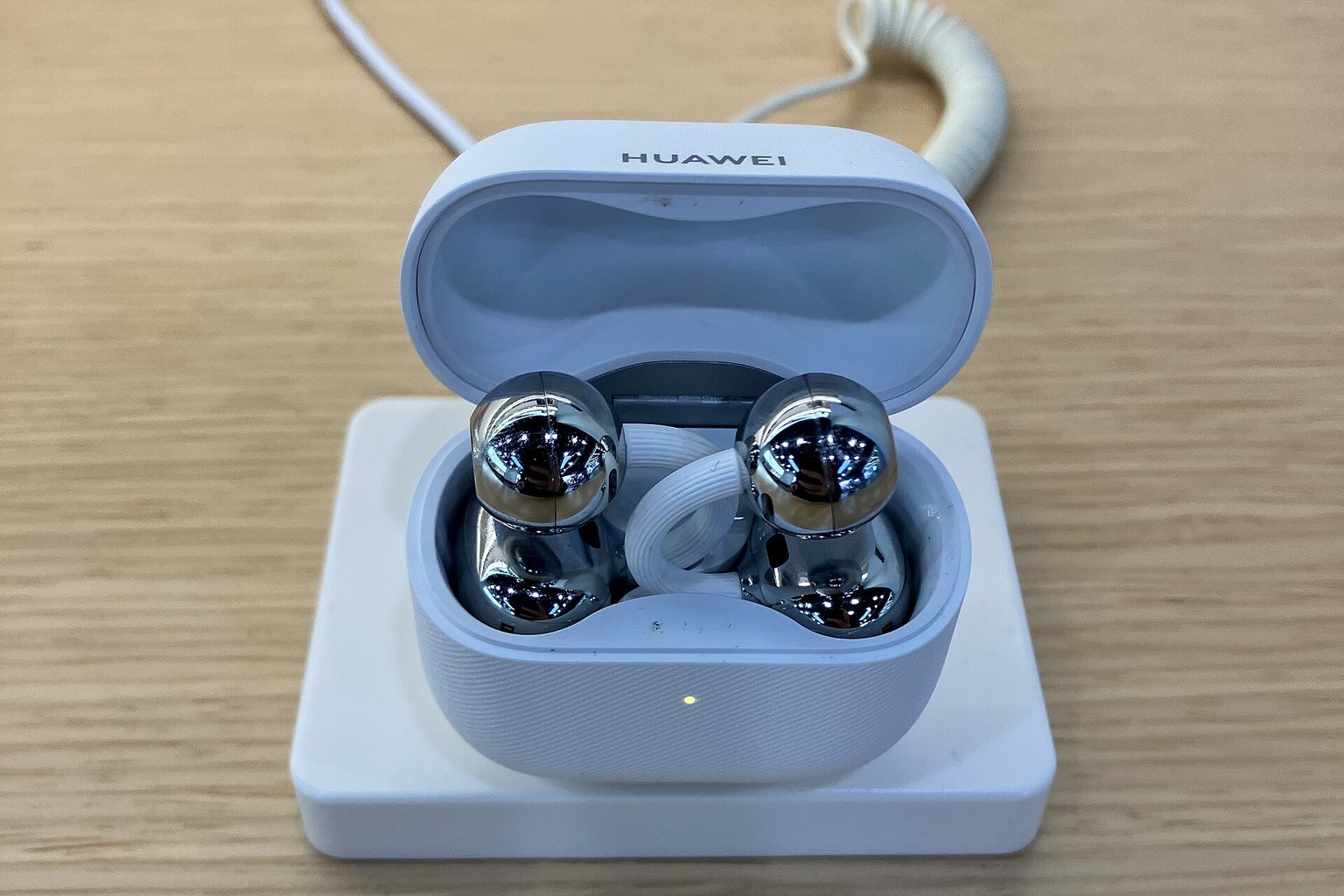
Header photo: X-SHLIED / Wikimedia Commons, CC BY 4.0
The reason open-ear grew is not that it sounds better. It is that people will wear it for 10 hours and they will not wear a sealed bud for 10 hours. The category solved a wear-time problem, not an audio problem, and that single fact decides how you should source it. You are not buying a driver. You are buying a clamping force, a leakage curve and a hinge that survives being taken off two hundred times a month.
That distinction matters because the audio spec sheet is the easy part to fake. Anyone can print a driver diameter. Almost nobody sends you the leakage measurement at 100 Hz, because that is the number where cheap tooling shows up.
The quarter the category stopped being a niche
IDC's quarterly ear-worn tracker is the cleanest public read on this. In the first quarter of 2026 the whole ear-worn market shipped 95.2 million units, up 3.9% year on year. Inside that, open-ear shipped 10.67 million units, up 39.9%, taking 11.2% of the market. One quarter later the gap widened: total ear-worn 96.13 million units at 5.4% growth, open-ear 12.33 million units at 35.0%.
What changed in the second quarter was the shape of the thing. Ear-clip designs grew 82.2% year on year and crossed 60% of the open-ear category, from 54.3% in the first quarter. Ear-hook models fell 5.1%. Neckband models, which is where most bone conduction lives, grew 0.9%. The category did not grow evenly — it reorganised around one form factor in about six months.
| Indicator | 2026 Q1 | 2026 Q2 |
|---|---|---|
| Global ear-worn shipments | 95.2 million units (+3.9%) | 96.13 million units (+5.4%) |
| Open-ear shipments | 10.67 million units (+39.9%) | 12.33 million units (+35.0%) |
| Open-ear share of ear-worn | 11.2% | Above 12% |
| Ear-clip share inside open-ear | 54.3% | Above 60% |
| Ear-hook growth | +11.8% | −5.1% |
| Neckband growth | +11.9% | +0.9% |
Two more numbers set the commercial frame. China accounts for more than 60% of global open-ear shipments, and the retail market has split into two bands that barely touch: under US$50 and above US$100. There is very little money in the middle. Omdia expects the category to go from 43.9 million units in 2026 to 90.5 million in 2030, which would be roughly one fifth of all TWS volume. That is a real category, not a trend.
Why it grew: the ear canal was the bottleneck
A sealed earbud puts pressure on a canal that was not designed to hold a silicone object for four hours. Users feel it as heat, as a dull ache, as the need to take the bud out every 40 minutes. Open-ear removes the object from the canal entirely. A clip at 5.1 g to 5.6 g hanging on the auricle, or a cuff at 6.5 g resting against the back of the ear, can stay on through a workday, a commute and a run.
That is the whole product. Everything else follows from it: the long battery claims (8 hours to 10 hours per charge on current flagship designs, 24 hours to 48 hours with the case), the IP54 to IP57 ratings, the fashion colourways, the fact that people who wear glasses are suddenly a target segment instead of an afterthought.
Here is the part suppliers do not volunteer. Because the product is bought for comfort, the return reason is almost never sound. It is fit. A clip that pinches at the top of the auricle, a hook that collides with a glasses temple, a case that opens in a bag. In our experience with OWS programmes, fit complaints outnumber acoustic complaints by a wide margin in the first 90 days, and they cost more, because a fit complaint cannot be fixed with a firmware update.
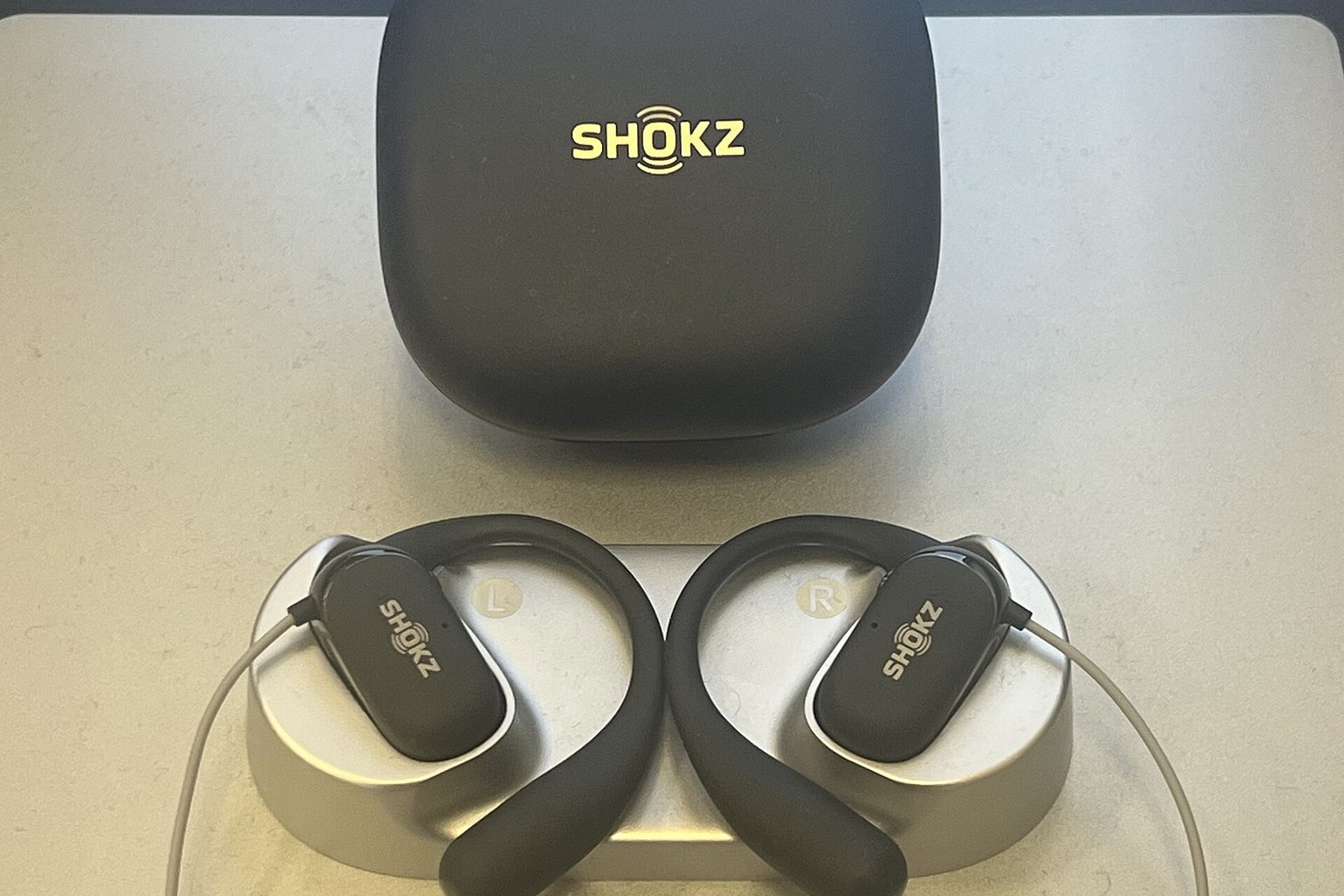
The fashion angle is real and it changes your inventory maths. Clip designs are sold in six or eight colours, and the colour is often the purchase reason. That means your SKU count multiplies, your minimum order is split across colourways, and a colour that misses the season leaves you with stock that cannot be re-dyed. If you are a first-time buyer entering this category, two colours at 1,000 pcs each is a better start than eight colours at 250 pcs — the factory will quote the same unit tooling either way, but you will only carry the risk on two.
The physics you cannot market away
A sealed in-ear bud traps a small air volume between the tip and the eardrum. That trapped volume is what lets a 6 mm to 10 mm driver build pressure at 50 Hz. Take the seal away and you take the pressure away. Open-ear designs compensate with a much larger radiator — 13 mm to 16 mm is normal now, and a few 2026 models use an 11.8 mm diaphragm in a tuned chamber — but size only partly closes the gap. Expect 3 dB to 6 dB less output below 60 Hz than a sealed bud at the same drive level, and expect that difference to be audible on bass-heavy material and invisible on podcasts.
Leakage runs the other way. Sound that does not reach your eardrum is going somewhere, and at high volume it goes to the person next to you. Well-tuned hardware stays reasonably private to about 70% of maximum volume in a quiet room; budget hardware becomes audible at 60%. The difference between those two products is not the driver. It is the back cavity volume, the angle of the nozzle relative to the canal, and how much time the acoustic engineer spent on the leak path.
One 2026 flagship illustrates how far the tuning can go: a folded acoustic path roughly 45 mm long, phased to cancel sideways radiation, with the vendor claiming about 6 dB more output at 100 Hz and 12 dB less lateral leakage than the same driver without the path. Treat that as a claim until you see the curve. The engineering is legitimate — a longer rear path lowers the resonance and a Helmholtz-style branch adds output in the 150 Hz to 300 Hz region — but the numbers are only as good as the fixture they were measured on.
Which is why the RFQ question is not "how is the bass" but "send me the leakage curve at 100 Hz, 200 Hz and 1 kHz at 80% volume, measured 30 cm from the ear on a head-and-torso simulator". Factories quote 1 kHz because 1 kHz is the easiest point to pass. Bass leaks at 100 Hz, and that is where a cheap chamber shows itself.
Clip, hook, neckband: three factories, not one
These are not variations of the same product. They are different mechanical problems, and the shops that are good at one are often mediocre at the others. Ask which line the sample came off before you ask for a price.
| Form factor | How it stays on | What it is good at | What it costs you |
|---|---|---|---|
| Ear-clip (C-bridge) | Clamps the auricle between two housings | Lightest option, 5.1 g to 5.6 g per bud, glasses-friendly, reads as jewellery | Clamping force tolerance is everything; the bridge is a fatigue part; small batteries cap playtime |
| Ear-hook | Hook over the top of the ear, battery barrel behind | More volume for battery and antenna, stable in motion, easier to fit a bigger driver | Interferes with glasses and helmets, heavier than a clip because the battery sits in the arm, hard to make look like anything but sports gear |
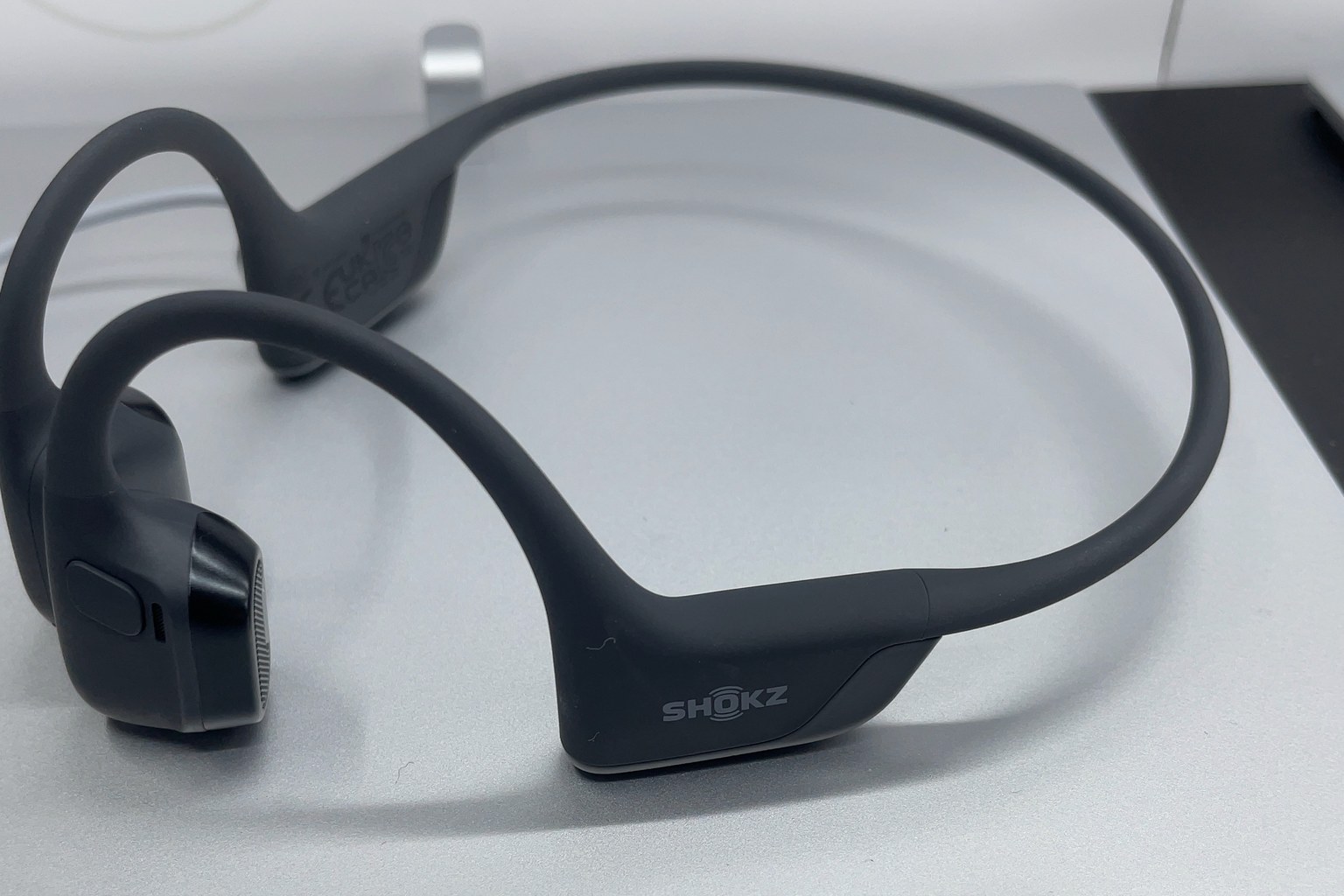
| Neckband / bone conduction | Transducer on the cheekbone, band behind the head | Nothing in or on the ear at all, secure for swimming and helmets | Different mechanism entirely, weaker low end by design, needs its own supplier skill set |
That last row causes more confusion in sourcing conversations than any other. Bone conduction is not an open-ear clip with the driver moved. It vibrates the skull and bypasses the eardrum, which is why it survives water and why it cannot produce the low end an air-conduction clip can. If a supplier quotes one price for "open-ear" and sends you a bone conduction sample, you are comparing two different products. The mechanism, the test standard and the customer expectation all change — we covered the acoustic difference in bone conduction vs air conduction, and it is worth reading before you write a brief that mixes them.
The seven numbers to put in the RFQ
A spec sheet that says "13 mm dynamic driver, Bluetooth 5.4, 8 hours, IPX4" tells you almost nothing you cannot guess. These seven lines are what separate two samples that look identical on a desk.
- Driver diameter and diaphragm material. Below 13 mm on a clip design, ask why. LCP, PEI or titanium-coated film behave differently after 200 hours of break-in, and a coated film that delaminates is a warranty claim, not a tuning issue.
- Leakage curve at three frequencies. 100 Hz, 200 Hz and 1 kHz, at 80% volume, 30 cm from the ear, on a head-and-torso simulator. Three numbers per unit, not one. If the supplier only has 1 kHz, they never characterised the leak path.
- Clamping force in newtons, new and after 10,000 cycles. Measured at the 8 mm to 12 mm gap where the clip will actually sit on an earlobe. A clip that starts at 3 N and drops to 1.2 N after a year will not stay on a run, and no measurement on the sample tells you that.
- Hours per charge at a stated playback level. "Up to 8 hours" usually means 50% volume, AAC, no calls, screen off. Ask for hours at 70 dB SPL with the codec you will actually ship. The honest number is usually 15% to 25% lower.
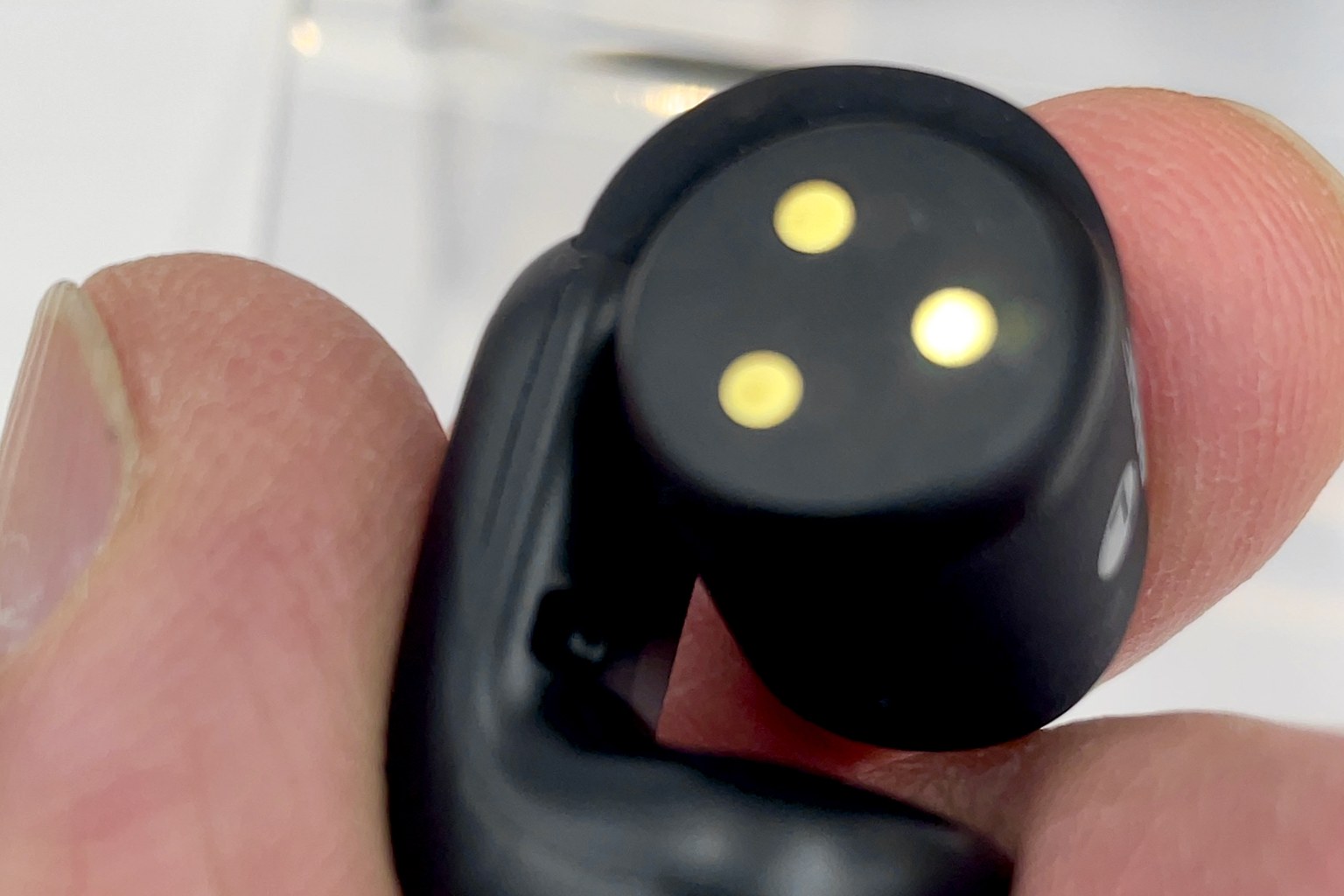
- IP rating and the test behind it. IPX4 splash and IPX4 sweat are not the same test. Ask for 24 hours of artificial sweat followed by a charge cycle, then a look at the pins under magnification.
- Microphone count and wind performance. How many mics, where they sit, and whether the noise suppression runs on the bud or on the phone. Ask for a recording at 5 m/s wind, which is a normal bicycle speed, not a gale.
- Plating thickness on the charging pins. Gold over nickel, with a number in micrometres. This is the cheapest place to save a cent and the most common cause of "one side stopped charging" at month eight.
None of these require a laboratory you do not have access to. Every one of them is a document the factory either has or does not have, and the answer to "can you send it" is more informative than the number itself.
What fails first in mass production
On a clip design, the first thing to drift is not the sound. It is the seam. The C-bridge is usually a two-shot part with a soft overmould over a spring steel or memory-alloy core, and the bond line between the two materials is where a batch fails. A 0.2 mm shift in the overmould tool shows up as a hairline that opens after 3,000 flexes, and the customer experiences it as "the earbud split in half".
Second is leakage spread. Two units off the same line can differ by 3 dB in the 100 Hz region, which is the difference between "acceptable" and "my colleague can hear my podcast". That variance comes from chamber volume and from how consistently the driver is glued, and it is invisible in a golden sample. Ask for a distribution from a 300 pcs pilot run, not a single measurement.
Third is colour. On a fashion product, a ΔE of 3 between the clip and the case is a visible mismatch in daylight, and it will be photographed in reviews. Set a ΔE limit in the drawing and inspect it under D65, not under the factory's yellow shop light.
Our default QC plan for this category: 100% acoustic sweep at 1 kHz plus a functional check on every unit, ISO 2859-1 general inspection level II sampling for cosmetic and mechanical defects at AQL 2.5, and a 300 pcs pilot with 48 hours of burn-in before the mass run is released. If a supplier resists the pilot run, that is your answer about the process, not about the schedule.
Calls outdoors are the weak point
An open-ear microphone hears your voice and the street at almost the same level. There is no sealed cavity to give the algorithm a clean reference, so the noise suppression has to guess which part of the signal is you. Two well-placed mics can do a decent job indoors and in a car. One mic cannot, and no amount of "AI ENC" on the box changes the physics.
Wind is worse than traffic. Wind hits the mic port directly, and even good processing only removes part of it. Some products add a transparency mode that is supposed to let you hear a car horn, but testers measuring those modes report latencies of 50 ms and up — enough that the feature reassures the wearer more than it protects them. That is not a reason to drop it. It is a reason not to put "hearing protection" on the packaging.
Practical position for a buyer: promise indoor and office call quality, promise usable outdoor calls at walking pace, and do not promise calls at 30 km/h on a bike. If your market is cycling, sell the awareness and the fit, and let the phone handle calls.
The 100 dB line, and why "safer" is a claim you cannot support
Any earbud sold into the EU is measured against EN 50332-1, which caps the maximum sound pressure level at 100 dB(A) on a head-and-torso simulator with the volume at maximum. The companion standard EN 50332-2 puts the player output at 150 mV or less and the headphone's wide-band characteristic voltage at 75 mV or more.
Here is the asymmetry nobody puts in the brochure. Because an open-ear design delivers less sound pressure at the eardrum for the same electrical drive, a compliant product has headroom above the point where a sealed bud would already be loud. In a noisy street, users spend that headroom. The unit passes the standard; the dose the person receives can still be higher than with a sealed bud at the same volume setting.
So "open design protects your hearing" is a marketing sentence, not a test result. If you want to make a hearing claim, the measurement you need is dose-based — EN 50332-3, referenced in IEC 62368-1:2018, combines level and duration. Very few suppliers have that data, and the ones who do will show you the report without being asked twice.
What this means for your buying decision
Spend your differentiation budget on three things: acoustic tuning time, the tooling precision of the bridge, and the plating on the pins. Those are the parts a customer feels in month six, and they are the parts a trading company cannot fake with a spec sheet.
Do not spend it on active noise cancelling, because a product with no seal cannot cancel noise — any "ANC" on an open-ear box is either ENC for calls or a mislabel. Do not pay a premium for "Hi-Res" badges while the chipset tops out at SBC and AAC. And do not choose a supplier on driver diameter alone; a 16 mm driver in a badly tuned chamber loses to a 13 mm driver in a good one, every time.
One last commercial point. The category's growth is concentrated in the sub-US$50 band, which is where the returns also concentrate. If you are entering as a brand rather than a reseller, the defensible position is the US$100+ band, where the buyer is paying for fit and finish rather than for a driver number. That is a slower business and a better one.
Sourcing open-ear for a brand programme
We build OWS clips, hooks and neckband models for private label programmes from 1,000 pcs per colour, with the acoustic and mechanical test documents included rather than quoted on request. If you have a brief, send it — we will tell you which of the seven numbers above your current sample is missing.