
The Pearl River Delta supply chain map: what is actually made where
Shenzhen quotes your product, engineers it, tests it and ships it — but it rarely makes it. The making happens in a ring of towns inside a 90-minute drive: tools in Dongguan, cells in Huizhou, speakers in Guangzhou, hardware and lighting in Foshan and Zhongshan, money and air freight in Hong Kong. Here is what each town actually does, why the address on your quotation is usually a sales office, and the seven lines a buyer should put in the RFQ before the first tool is cut.
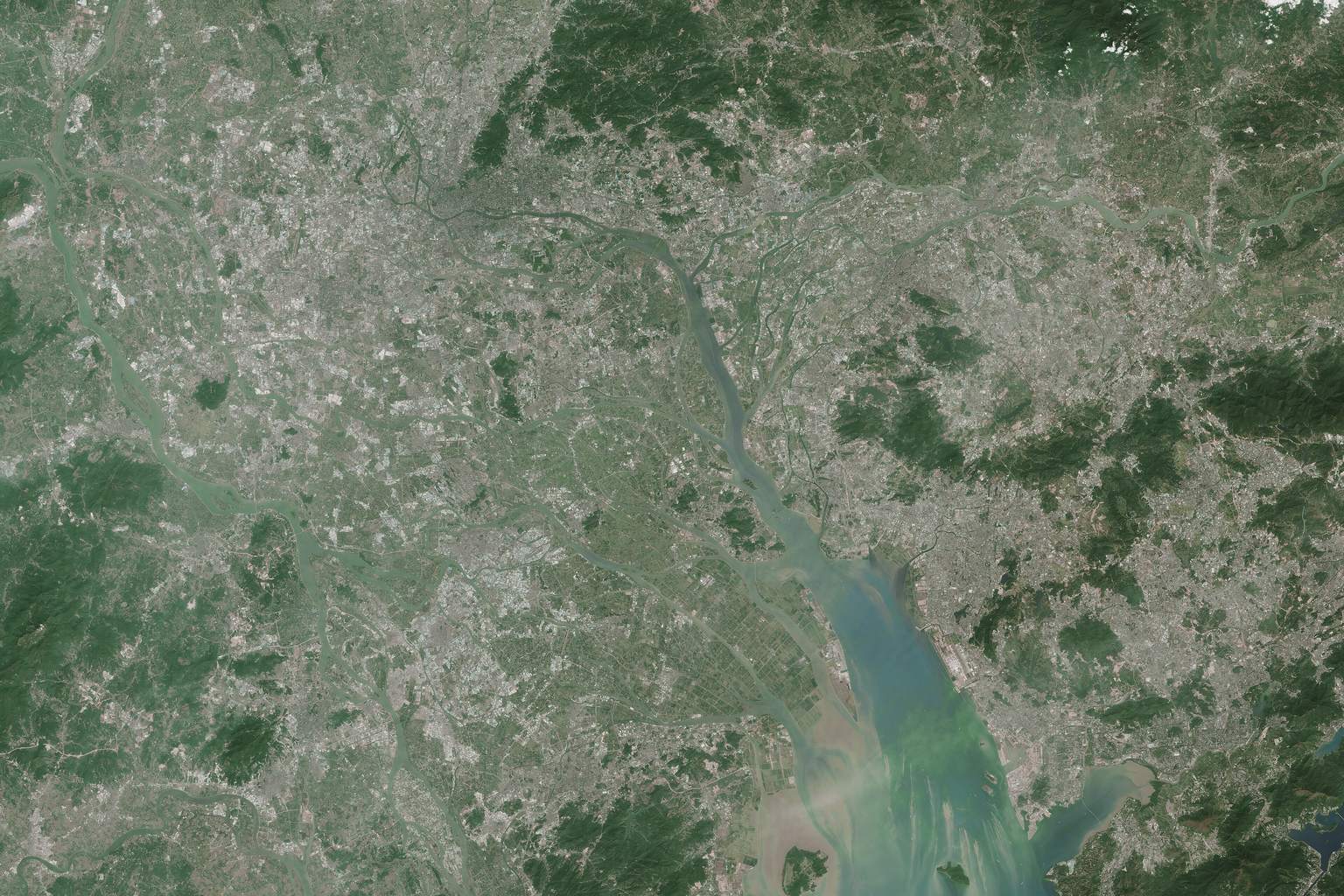
Header image: NASA Earth Observatory / Adam Voiland, public domain
Your product is not made in Shenzhen. It is quoted in Shenzhen, engineered in Shenzhen, sampled in Shenzhen and put on a truck in Shenzhen — and then assembled in a town 40 minutes to an hour and a half away, from parts that were made in two or three other towns in the same ring. The single most useful question a buyer can ask about a Chinese quotation is not "how much" but "which town is this actually built in", because the town tells you the tool shop, the sub-suppliers, the lead time and how fast a problem can be fixed.
We buy and build across this region for brands in more than 80 countries, mostly wireless audio, open-ear wearables and smart glasses. The pattern repeats on almost every program: the purchase order goes to a company with a Shenzhen address, the mould is cut in Dongguan, the cell comes from Huizhou, the speaker from Guangzhou or Dongguan, the packing from whichever town had capacity that month. When something goes wrong, the distance between those four places decides whether you lose a day or three weeks.
The ring is 56,000 square kilometres wide
The Greater Bay Area — nine Guangdong cities plus Hong Kong and Macao — covers about 56,000 km² and holds roughly 86 million people. In 2023 it produced more than 14 trillion yuan of GDP, close to 2 trillion US dollars, on less than 0.6% of China's land. Shenzhen alone kept first place among Chinese cities for above-scale industrial output that year, and its port moved just under 30 million TEU, fourth busiest in the world.
Those numbers explain why "made in China" is the wrong unit of analysis. This is not a country with a manufacturing sector; it is a single industrial district the size of a small European country, with internal specialisation so fine that a one-town move can change your cost structure and your risk profile at the same time.
Here is the part buyers usually miss. The specialisation is not by product category. It is by process. One town owns the tool steel, another owns the anodising lines, another owns the cell houses. Your product is assembled wherever those processes happen to be closest together, which is why two suppliers quoting the same earbud can be 20% apart and both be telling the truth.
Shenzhen: the front office, the component floors and the SMT lines
Shenzhen does three things for a hardware program, and only the third one is manufacturing.
First, it sells. The trading companies, the export agents and the sales offices of half the factories in the province sit in Futian, Nanshan and Luohu, in towers where a 30th-floor suite might represent four plants in three cities. That is not a scam; it is how the region has worked since the 1990s. The sales office is where English is spoken, where the quotation is formatted, and where your deposit lands.
Second, it supplies. Huaqiangbei is the densest component market on earth: a grid of buildings where you can buy a connector, a codec board, a lens, a jig and a reel of 0402 resistors within one afternoon, cash, no minimum. Most of it is not where production volume gets bought — a stall's stock comes from the same authorised agents everyone else uses — but for engineering samples and for the part that nobody planned for, it is the reason a prototype can be revised in 48 hours instead of three weeks.
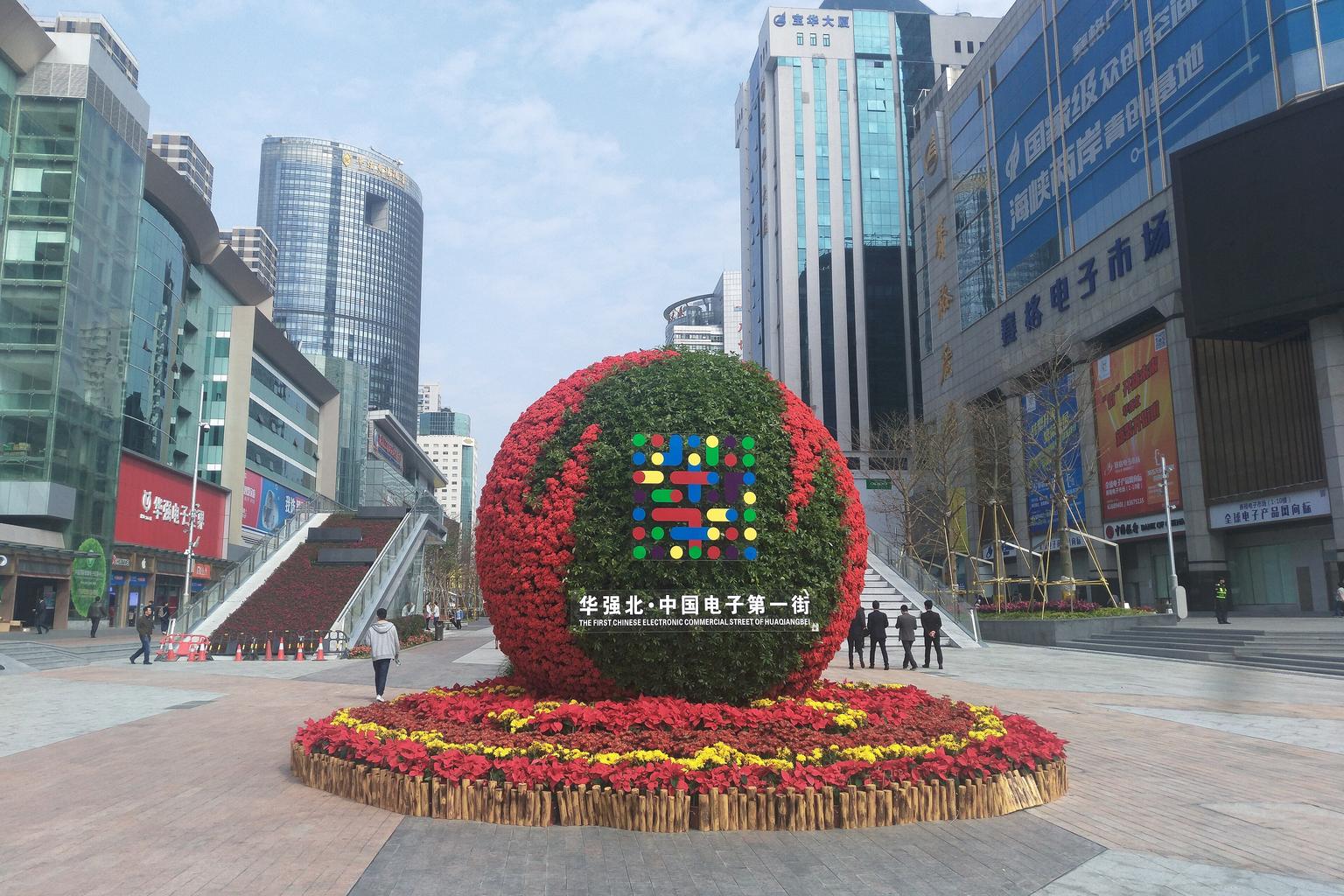
Third, it builds the electronics. The SMT lines, the PCBA houses, the RF labs and the firmware teams are in Bao'an and Longgang, on the western and eastern edges of the city where the land was still cheap when the industry arrived. This is the part that stays in Shenzhen even when the plastic goes elsewhere, because a double-sided board with 0201 parts and a Bluetooth antenna needs a process engineer within walking distance, not a four-hour flight.
Dongguan: the tool room of the region
Dongguan is the reason a Shenzhen quotation can be fulfilled at all. The city reports more than 210,000 industrial enterprises, of which around 14,000 are above a designated size, spread across 34 of China's industrial categories and something like 60,000 product types. It passed 1 trillion yuan of GDP in 2021. What matters for a hardware buyer is narrower than that: tools, plastics, die-casting, painting, printing and the hundreds of small shops that do one operation well.
A two-plate shell tool for an earbud charging case typically takes 25 to 35 working days from 3D data to first trial shot. Add a slider, a lift or a second material and 40 to 45 days is normal. Each round of trial shots that does not pass costs another three to five days, and a texture change — the fine grain on the inside of a case that hides flow marks — can add a week on its own because the etching shop is a separate booking.
This is where the ownership question matters more than the price. In most quotations the tool is paid for by the buyer and held by the factory, and the paperwork that says so is often a line in an email. If the mould lives in a Dongguan tool shop that also serves three of your competitors, the practical control you have over your own product is whatever that email says. The documents that actually lock a program are set out in the piece on tool ownership and copy risk; the short version is that you want the tool drawing, the cavity count, the steel grade and a signed tool custody note, not a promise.
Huizhou: the cell belt
An hour and a half northeast of Shenzhen, Huizhou is where a large share of the province's lithium cells and battery packs are made, alongside the consumer electronics assembly that grew up around them. For a wearable, the cell is a small pouch — often 25 to 60 mAh in an earbud case — and it is the single part in the bill of materials that cannot be swapped late, because the UN38.3 transport test, the IEC 62133 safety file and the charging profile in your firmware are all tied to that specific cell.
Two practical consequences follow. First, cell lead time is usually the long pole in a first build, not the plastic: a standard cell can ship from stock, a custom size with a protection board and a wired connector is a 4 to 6 week item. Second, the cell house is almost always a separate contract from the assembler, even when the assembler quotes you a finished product. Ask for the cell's part number, the manufacturer name and the test report number — then check that the pack on the production line carries the same markings as the one in the report.
Guangzhou, Foshan, Zhongshan, Zhuhai: the deep bench
The western side of the estuary is where the region's process depth sits, and even if your product is not made there, your supplier probably buys from there.
Guangzhou's Panyu district has been the province's audio district for decades; a large share of the small speakers and driver assemblies that end up inside headsets and speakers come out of shops within an hour of it. Foshan's Shunde district is white goods and appliances at a scale that sets the price of injection moulding capacity for everyone else. Zhongshan's Guzhen town is the lighting capital — its international lighting fair in 2023 covered 1.5 million m² of exhibition space with more than 3,300 exhibitors — and Zhongshan also carries a deep bench of hardware, die-casting and lock manufacturing. Zhuhai is smaller and more precise: connectors, PCB work, precision metal.
Why a buyer in the audio business should care about lighting towns: capacity is shared. The moulder who quotes your charging case is competing for machine time with an appliance maker and a lamp maker, and in the four weeks before a major trade fair, your 3,000-piece run is not the priority. Knowing the calendar of the towns around your supplier is a genuine lead-time advantage, and nobody puts it in a quotation.
Hong Kong: the money, the airport and the sea-air trick
Hong Kong makes almost nothing, and it is still the most important node on the map for a Western buyer. It is where a large share of the contracts, the letters of credit and the freight forwarding relationships sit, and it is where a lot of small brands actually pay their supplier.
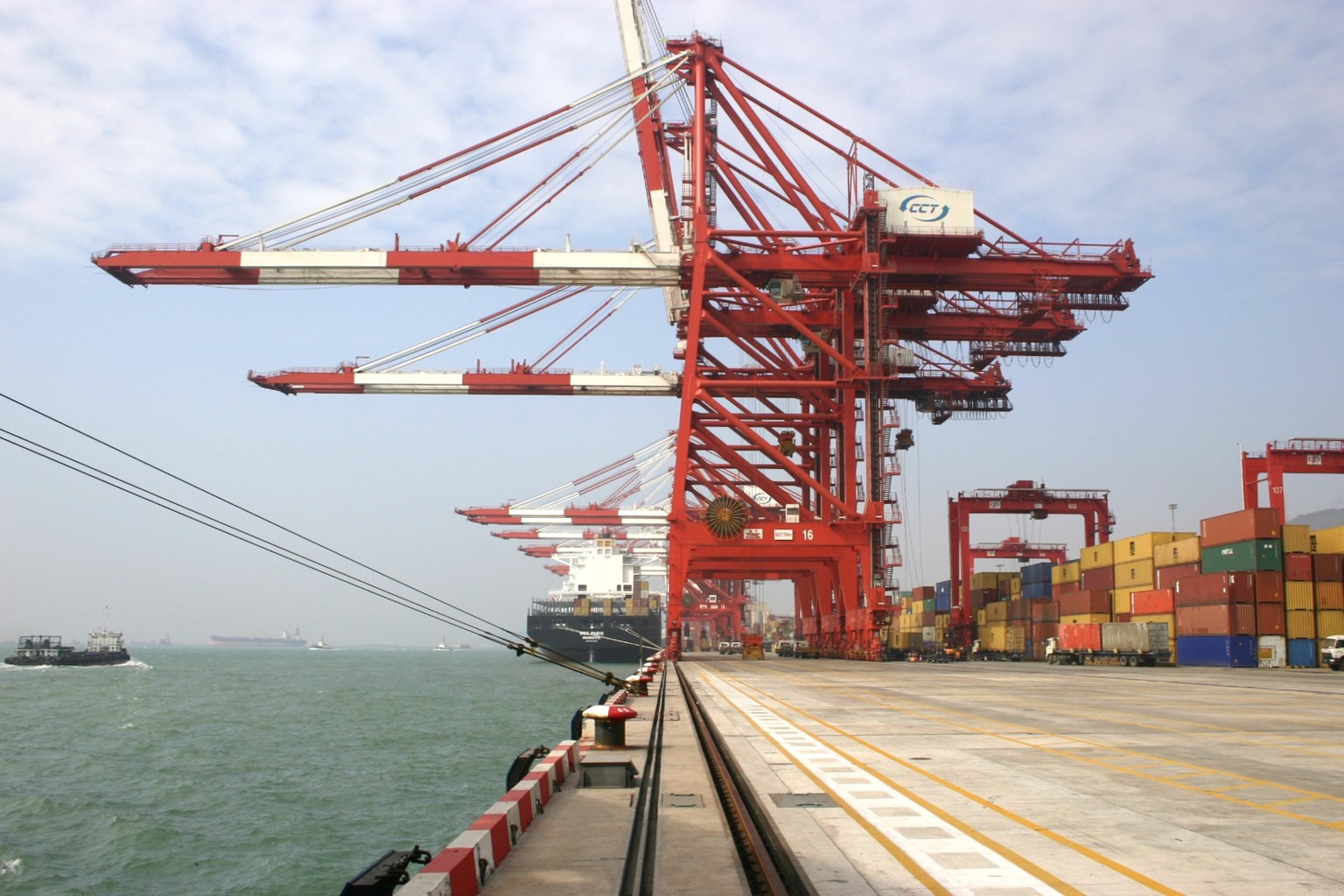
It is also the air gateway. Hong Kong International Airport handled 4.3 million tonnes of cargo in 2023 and was named the world's busiest cargo airport for the 13th time since 2010. What most buyers do not know is how the cargo gets there: under the sea-air model, export goods can be screened, palletised and built up at an air cargo facility in Dongguan, then moved to the airport by sea for the flight. Your shipment is consolidated inland and only touches Hong Kong at the aircraft. It is faster and cheaper than trucking loose cargo across the border, and it changes what "air freight from Hong Kong" means when you are comparing quotes.
Why the address on your quotation is not the factory
A quotation with a Futian address and a 86 prefix tells you almost nothing about where the product is made. It might be a factory's own sales arm, an agent earning 3%, or a trading company that will place your order with whoever answers the phone. All three exist, all three can deliver, and only one of them will still be there when you need an engineering change in year two.
There are three documents that answer the question without anyone having to admit anything. The business licence carries a registered address and, where the company actually manufactures, a production address. The export declaration names the producer of the goods, which is the entity the customs system believes made them. The ISO 9001 certificate carries the site address that was audited — and a certificate that lists only a sales office is a certificate for a sales office. Compare the three. When they disagree, ask which one the auditor walked through.
Distance is the second filter. Shenzhen North to Guangzhou South is 102 km and 30 minutes by high-speed rail, which is why a buyer can see three suppliers in a day and still be in a hotel by seven. But the factories are not on the rail line: Bao'an to Chang'an in Dongguan is a 40-minute drive, Shenzhen to Huizhou is closer to 90 minutes, and a "Shenzhen" supplier whose plant is in Huizhou will cost you a half-day every time you want to stand on the line.
How a build actually moves
Inside the ring, components do not travel by logistics company. They travel by scooter, by hand cart and by the guy who knows which floor of which building has the reel you need before lunch. In Huaqiangbei you will see cartons towed behind electric scooters all day; that is the last mile of the component trade, and it is why a prototype can be built in a week by people who have no factory at all.
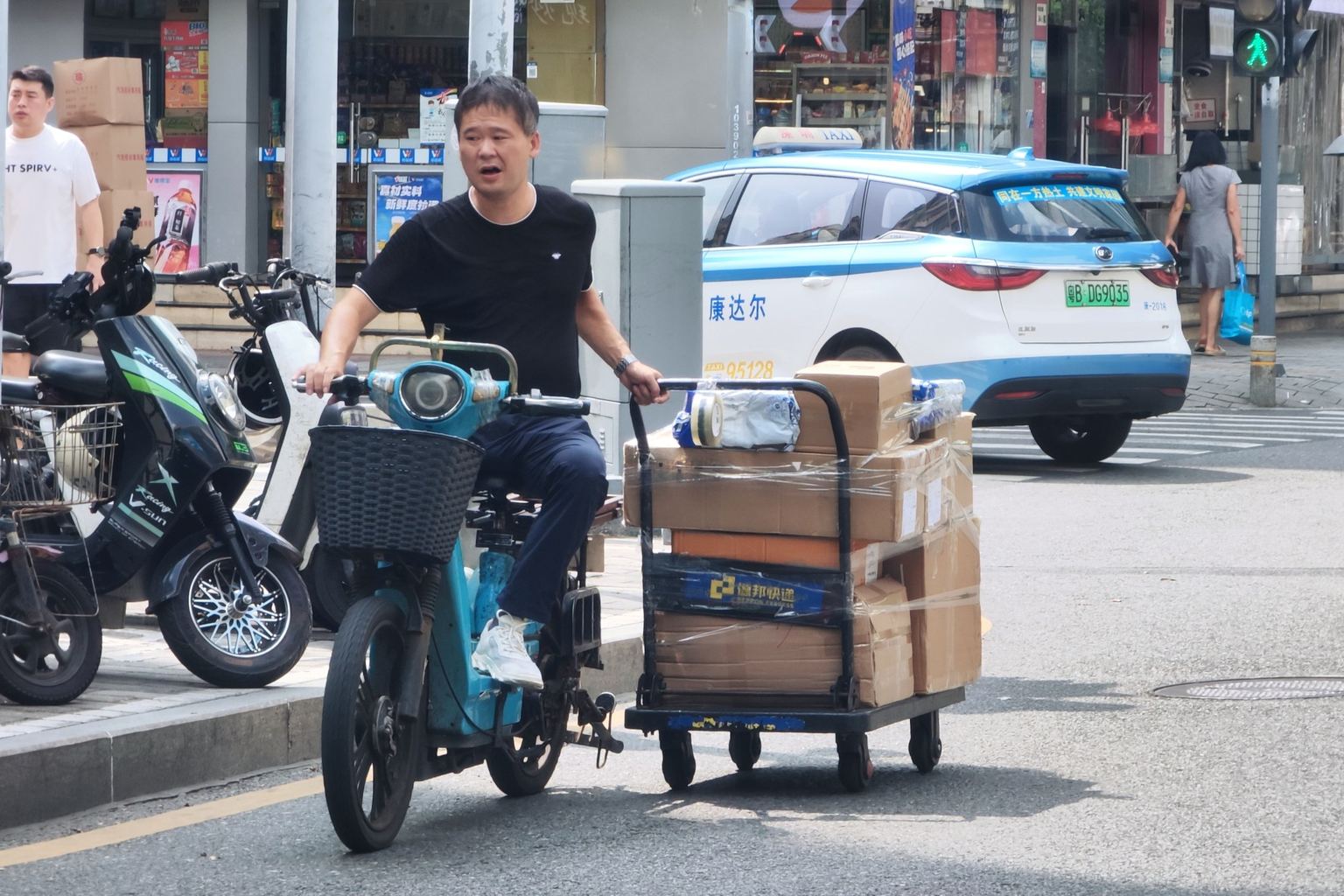
Now scale that up to a production order. One earbud program we handle touches a tool shop in Dongguan for the case, a moulder 20 minutes away for the shells, an SMT house in Bao'an for the board, a cell house in Huizhou, a speaker supplier in Panyu and a printer in Dongguan for the gift box. Six suppliers, four towns, about two hours of driving end to end. The product is "made in China" on the label and made in a 60 km radius in reality.
What this means for your RFQ
You are not choosing a city. You are choosing a radius, and the radius is what you should be writing down.
| Town | What is actually made there | What to ask before you accept the quote |
|---|---|---|
| Shenzhen | PCBA and SMT, RF and firmware engineering, sales offices, export | Production address on the licence; who owns the SMT lines; is the board built here or bought in |
| Dongguan | Tools and moulds, injection moulding, die-casting, painting, printing, packing | Tool ownership document; cavity count; T1 date; which finishing steps are subcontracted |
| Huizhou | Lithium cells and packs, electronics assembly | Cell part number and maker; UN38.3 and IEC 62133 reports; stock or custom build |
| Guangzhou (Panyu) | Speakers, drivers, audio assemblies | Driver model and maker; whether the driver is tooled by the supplier or bought |
| Foshan / Zhongshan | Appliances, lighting, hardware, die-casting, plating | Which process is outsourced here, and what the queue looks like before trade fairs |
| Hong Kong | Contracts, banking, air cargo, sea-air consolidation | Routing and consolidation point; whether cargo is built up in Dongguan before the flight |
Then put these seven lines in the RFQ. They cost you nothing and they change the answers you get.
- The production address for this specific program, as printed on the business licence — not the sales office.
- Which operations are in-house: tool making, moulding, SMT, painting, packing, testing. Everything else is a subcontract you are not seeing.
- The town for each tier-one part, not the province. "Made in Guangdong" covers 56,000 km².
- Driving time between the tool shop and the assembly line, in minutes.
- Who owns the tool, under which document, and what happens to it if the relationship ends.
- Which parts come from outside the ring — anything more than four hours away is your single point of failure.
- The name on the export declaration, and whether it matches the factory you are being invited to visit.
The mistake that costs the most
A brand we worked with approved a Pantone colour on a painted sample that came from the moulder's own paint line. Production was placed with a different assembler 40 km away, who used a different paint shop, which matched the colour to a different masterbatch batch. The delta was small enough to pass a visual check on a single part and obvious the moment 2,000 shells sat in one box. Three weeks, one re-spray run and a lot of arguing later, the colour was right.
Nothing in that story was dishonest. It was a map problem: three companies in three towns, one colour, no single owner of the specification. If the RFQ had named the paint line and the masterbatch supplier, the change would have been caught on the first trial shot.
So treat the map as part of the specification. A supplier who can tell you, without checking, which town each operation happens in, is a supplier who knows their own supply chain. One who answers "all in our factory, Shenzhen" and then cannot explain why the tool shop's address is in Dongguan is telling you that you will be the one managing the distance — and you will be managing it from 9,000 km away.
Planning a build in the Delta?
We are a sourcing and OEM partner based in Bao'an, Shenzhen, working with audio, open-ear wearables and smart glasses programs for buyers in more than 80 countries. Send us the product, the target market and the volume, and we will tell you which towns the program will actually run through, where the lead time will land, and which two parts are most likely to hold you up.
Talk to us about your program →