
Locking the factory: the 4 documents that stop your product being copied
The NDA, the tooling ownership agreement, the non-circumvention clause and the sub-supplier declaration — what each one has to say to be worth signing, and the order to negotiate them in before your supplier has no reason left to sign.
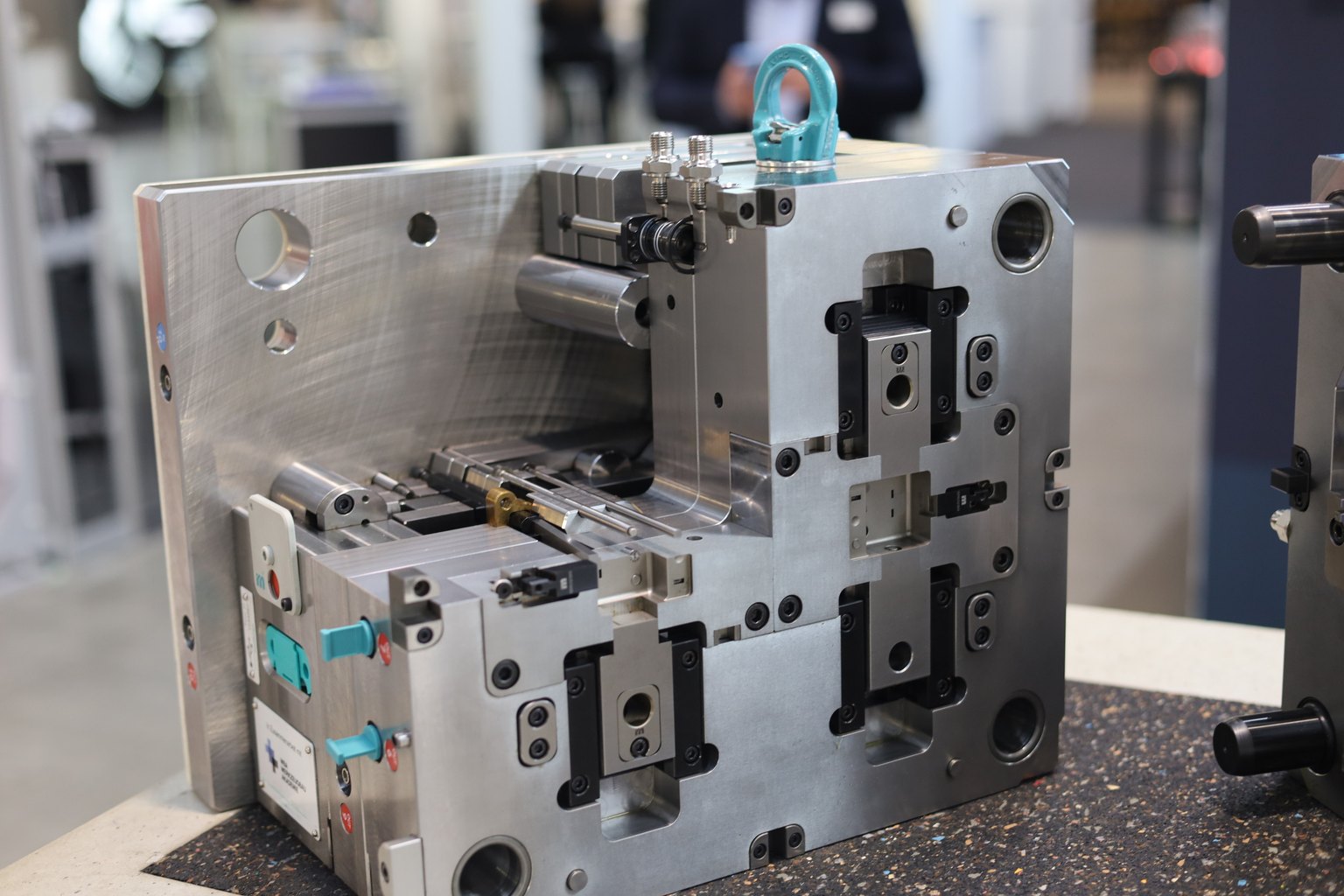
Header photo: Bricetofly / Wikimedia Commons, CC0
Four documents lock a factory, and a deposit is not one of them: a non-disclosure agreement that covers your drawings and your buyer list, a tooling ownership agreement that names the owner of the mould, a non-circumvention clause that keeps the plant off your customer list, and a sub-supplier declaration that lists the second-tier workshops your order passes through. Negotiate all four in that order, before the tooling invoice is paid, because that is the last moment when the other side still has a reason to sign.
Most buyers sign one of the four — the NDA — and treat the rest as something to sort out later. Later arrives about nine months after launch, usually as a screenshot of your product on someone else's listing. At that point you will look for the paperwork that answers three questions: who owns the mould, who was allowed to see the design, and who else touched the order. If the answer is "we assumed", the paperwork does not exist.
Nothing here is exotic. Every clause below is standard in the trade, which is exactly why a supplier will sign it — the alternative reading is that a factory that refuses a standard clause has told you something useful about the order ahead.
Why the deposit is not a lock
A deposit buys you goods in a queue. It does not buy you a title to anything, and it does not restrict who the plant can talk to. When you pay for tooling, the money leaves your account and a mould appears inside someone else's building, on someone else's floor, under someone else's lock. Nothing about that arrangement says "yours" unless a document says "yours".
This is the part that catches out first-time private-label buyers, because the invoice feels like a receipt and the receipt feels like ownership. It is not. Paying for a tool without documenting its ownership normally leaves you holding a debt claim — a right to be repaid — not a right to take the steel. Those are two very different positions if the relationship sours in month 14.
So the four documents below are not legal theatre. They are the difference between a commercial relationship and an enforceable one. Sign them in this order: confidentiality first, because it has to be in place before you send drawings to quote the tool; ownership second, because it must exist before the tooling money moves; non-circumvention third, once you know the price and can price the risk; sub-supplier declaration last, when the order is real enough that a factory will answer the question honestly.
1. The NDA: what it has to cover to be worth signing
An NDA is only as strong as its definition clause. A supplier's standard template often defines confidential information as "business and technical information disclosed by either party" — and that phrasing is where a copied cavity quietly sits outside the agreement, because nobody wrote the words "mould design, cavity layout and tooling drawings" into the list. Name the things.
- What is confidential. Technical drawings and CAD files, tooling and cavity design, bill of materials, firmware and app source, test reports, packaging artwork and dielines, price lists and margin sheets, customer names and target markets. If your product has a serial-numbering scheme, that goes on the list too.
- How long. Most manufacturing NDAs run 3 to 5 years after the relationship ends. That is fine for commercial information. For genuine trade secrets the protection runs longer, because Chinese law protects the secret for as long as it stays secret and you took reasonable steps to keep it that way — which is why the date-stamped, marked "Confidential" version of every drawing matters later.
- Who it binds. The company signature does not bind the engineer who leaves in March and joins another plant in April. Require the supplier to place equivalent obligations on its employees and on any sub-contractor that receives the information, and to be liable if it does not.
- What happens at the end. Return or destroy the material, and certify the destruction in writing, within a stated window such as 15 days of a written request.
- The carve-outs. Expect four: information already public, independently developed, lawfully received from a third party, and disclosure required by law or a court. They are reasonable. What is not reasonable is a fifth sitting in the middle of the list, worded loosely enough to swallow the rest.
Two lines are worth adding to any version you are asked to sign. First, that the obligations survive termination. Second, which language governs — a Chinese text with the company seal plus an English reference translation, with one of them expressly prevailing, so that a later dispute does not turn into a translation argument.
One detail most buyers do not know. Confidentiality in China does not rest only on your contract. The Anti-Unfair Competition Law was amended for the third time on 27 June 2025 and took effect on 15 October 2025, growing from 33 articles to 41, and it brought the burden of proof closer to the buyer's side: where the owner of a trade secret shows reasonable prima facie evidence of infringement, the alleged infringer may be required to prove that it did not infringe. That matters because it changes the arithmetic of a dispute — but it only helps if you can show what was secret and that you treated it as secret. A design you emailed without a confidentiality note and never marked is a hard thing to call a trade secret.

2. The tooling agreement: who owns the mould on day 700
The mould outlives the order. That is the whole reason this document exists. A properly hardened production mould for a consumer-electronics housing is typically good for 300,000 to 500,000 shots before it needs refurbishment, and a soft prototype tool for roughly 5,000 to 20,000. Cutting it is also the longest single lead time in a first order: a two-cavity housing tool usually takes 20 to 35 days from CAD release to first shot. A two-cavity tool on a 25 to 40 second cycle, running 24 hours a day, turns that shot life into months of production capacity sitting in a piece of steel that somebody owns.
Decide, in writing, which of the two commercial models you are in, because they produce completely different ownership answers:
- Outright paid tooling. You pay the full tooling invoice. You own the tool. It should be engraved with a property plate carrying your company name and an asset number, listed on an annex to the agreement with its value, and returned or transferred to a toolmaker of your choice within a stated number of days if the relationship ends.
- Amortised tooling. You pay a per-unit tooling charge across the first order instead. You usually do not own the tool. Say so out loud, and then negotiate the two things that still matter: that the tool will be used only for your orders, and the number of shots over which the amortisation runs.
A model that looks like a compromise is the one to be careful with: "you get exclusive use, we keep the tool". Exclusivity is a promise about future behaviour; ownership is a right you can exercise. When the relationship ends badly, the first one is a claim and the second one is a phone call to a haulier.
Put these clauses in and the document stops being decoration: title and risk; identification of each tool by asset number and engraving; custody during production and during any idle period; who pays for routine maintenance and who pays when the cavity wears past drawing tolerance; a right to inspect the tool on reasonable notice; what happens to the tool if the supplier becomes insolvent; and what happens if your product is discontinued while the tool still has useful life left.
Now the part that is genuinely counter-intuitive, and the reason we write this section at all. Under the Civil Code, if a design or a technical solution was developed as a commissioned project and the contract says nothing about ownership, the default is not buyer-friendly. The right to apply for a patent on a commissioned invention belongs to the developer — the factory — unless the parties agreed otherwise, with the buyer holding only an implied right to work the patent and a priority right to buy the application if the developer sells it. For technical-secret results, where there is no agreement and no way to determine one, both sides may use and transfer the result until a patent is granted on the same solution. In plain terms: the factory that developed the tooling and the design with you may, by default, be free to use and to transfer what it learned. Write the assignment clause, or accept the default.
The same logic applies to registered rights, and there is a clock on it. A Chinese design patent now runs 15 years from the filing date for applications filed on or after 1 June 2021, up from 10 years — but it runs from whoever filed first. If the shape of your product is worth protecting, file it in your own name before the tool is cut, not after you notice a copy.
3. The non-circumvention clause: keeping the plant off your customer list
Non-circumvention is the clause that stops the factory from selling your product to your buyers, or to the buyer's competitor, or under a slightly different colour. It is also the clause most often signed and least often usable, and the reason is always the same: the restricted parties were never written down.
A workable clause has four moving parts.
- A named list. Not "the buyer's customers" but an annex listing the entities, each with a date. This annex is the clause. Everything else is commentary.
- A defined act. Direct sale, sale through a distributor, sale of the same tooling output under another brand, and sale of a cosmetic variant all count. Say it, because the workaround is always cosmetic.
- A term. Two to three years after the last shipment is normal and enforceable. A ten-year blanket restriction invites an argument about restraint of trade and is usually a sign that the person drafting it has not had to use one.
- A remedy with a number in it. A liquidated amount per unit sold into the protected list, or a royalty on those sales, is what makes the clause relevant to a plant manager. A clause whose only remedy is "the parties will resolve the matter amicably" has no operational effect at all.
Then read the exclusions. Every non-circumvention clause contains a carve-out for customers the factory already had, and that carve-out is where these agreements die. Ask for the excluded customers as a list with first-order dates attached to it, not as a category. A factory with 40 customers can produce that list in an afternoon. A factory that cannot produce it is telling you it intends to keep the door open, and you should either attach your own list and accept a narrower protection, or price the risk into the unit cost and stop pretending the clause protects you.
The honest position on enforcement is that the pressure you can actually apply is operational, not judicial. Cross-border litigation costs more than most first orders and moves slower than most product cycles. What actually protects you is holding three things: the tool, the inserts, and the last shipment. Which is precisely why the tooling agreement in section 2 has to be signed before this one starts to mean anything.
4. The sub-supplier declaration: the plants you never meet
Your contract is with one company. Your product passes through several. A typical consumer-electronics order touches a toolmaker who cuts the cavity, a plating or anodising shop, a silk-screen or printing house for the housing artwork, a battery packer, a cable and PCBA assembler, and a packaging printer. Each of those sees a piece of what you paid to keep private, and your NDA with the assembler does not bind them automatically.
The declaration is a short annex that fixes this. It names each second-tier supplier, the process it performs, its address, and confirmation that it has accepted equivalent confidentiality obligations. Then it adds three mechanisms: no change of sub-supplier without your written approval, written notice at least 5 days before any change you have pre-approved, and a right to audit on 2 days' notice.
Think about what leaks where. The toolmaker holds your complete geometry — every radius, every wall thickness, every internal rib. The printer holds artwork that has not launched yet. The battery packer sees an energy density, a protection board specification and a cell supplier. None of those three is going to sell your product. Any of those three can be the source of a photograph.
There is no good commercial reason to refuse this annex. Declaring a supplier costs a factory nothing except the obligation to ask you before it changes one — which is exactly the obligation you wanted. When a supplier pushes back hard on this and accepts everything else, treat it as the most informative document in the set.
Which document answers which risk
Four documents, four different failure modes. Match the clause to the thing you are actually afraid of.
| What you are afraid of | Document | The clause doing the work |
|---|---|---|
| Drawings, BOM or firmware reused elsewhere | NDA | Named definition of confidential information, survival, sub-contractor flow-down |
| Tool sold, moved or run for someone else | Tooling ownership agreement | Title and risk, engraved property plate, asset annex, return on termination |
| Factory sells your model to your buyers | Non-circumvention clause | Restricted-party annex with dates, defined act, remedy with a number in it |
| Design leaks through a workshop you never met | Sub-supplier declaration | Named second-tier list, change approval, notice window, audit right |
What these four documents cannot do
They cannot tell you who copied. Contracts create liability; evidence creates cases. If you cannot show a date-stamped drawing that matches the copied cavity, and a change log that shows when it was issued, you have a suspicion rather than a claim. Version your files, mark them, and keep the issue register.
They cannot make a cross-border remedy cheap or quick. Even with a clean contract and a clean evidence trail, the practical answer for a buyer in a different jurisdiction is usually to stop the next shipment and take the tool, not to litigate. Budget for the operational remedy and be pleasantly surprised if the legal one helps.
They cannot protect information you never identified. The claw that pulls a design out of a factory is a supplier who has been sent the same drawing for three different quotations without a single confidentiality note attached. The document has to exist before the disclosure, in the same email thread.
And they cannot replace the two checks that come before any of this: knowing who you are dealing with, and knowing whether the plant can build the thing. Documents bind a real company; they do not make an unverified one real, and they do not improve a process capability. Those two jobs are the 20-minute desk verification of a Chinese supplier and the 12 checks in a factory audit. Locking the factory is the third step, not the first.
How to write it into a first order
Six steps, in this sequence, and the whole thing takes about 10 days of calendar time rather than a deposit.
- Send the NDA with the request for quotation, not after it. You are disclosing drawings to get the tooling price, so the obligation has to exist first.
- Ask for the tooling scope in writing: number of cavities, expected shot life, cycle time, and who owns the tool. Compare the answers; the variance tells you as much as the price.
- Attach the tooling asset annex with a value per tool, and require the property plate before first article approval.
- Attach your restricted-party list with dates, and ask for the supplier's excluded-customer list in the same email.
- Require the sub-supplier declaration before the first production run, not before the sample.
- Decide how your rights attach if the supplier sub-contracts the assembly. If a partner plant stands behind the goods, name it and treat it as a declared sub-supplier rather than an assumption.
Then connect the documents to the rest of the programme. The sign-off that fixes a sample as the reference belongs to sample approval, the volume conversation that decides whether a first tool pays for itself is the one in what an MOQ of 1,000 pcs actually buys, and the decision about who carries quality responsibility for the order depends on whether you are contracting with a plant or with a trader — which is the choice in OEM versus ODM. From sample to mass production, the whole sequence runs on a fixed calendar worth reading before you commit to a launch date.
One word about our own practice, since it is the fair test to apply to any supplier quoting you. We will sign your NDA rather than insist on ours, including the sub-contractor flow-down. We will tell you which tools we own and which are yours, and we will provide the sub-supplier declaration for your order before the first production run. What we do not publish is our partner list, because the plants we work with are not ours to advertise — the method is public, the names are not. Any supplier who gives you the names without the documents has handed you the easy half of the job.
Want the documents before the tooling invoice?
Tell us the product, the volume and the market. You will get the tooling scope in writing, the ownership terms, the restrictive-party annex and the sub-supplier declaration for your order — before the tool is cut.
See how we run an OEM programme →