
Company verification: how to check a Chinese supplier in 20 minutes
Four desk checks, in a fixed order, that tell you whether the company you are about to pay exists, trades under the name that will appear on your invoice, and can legally ship your order.
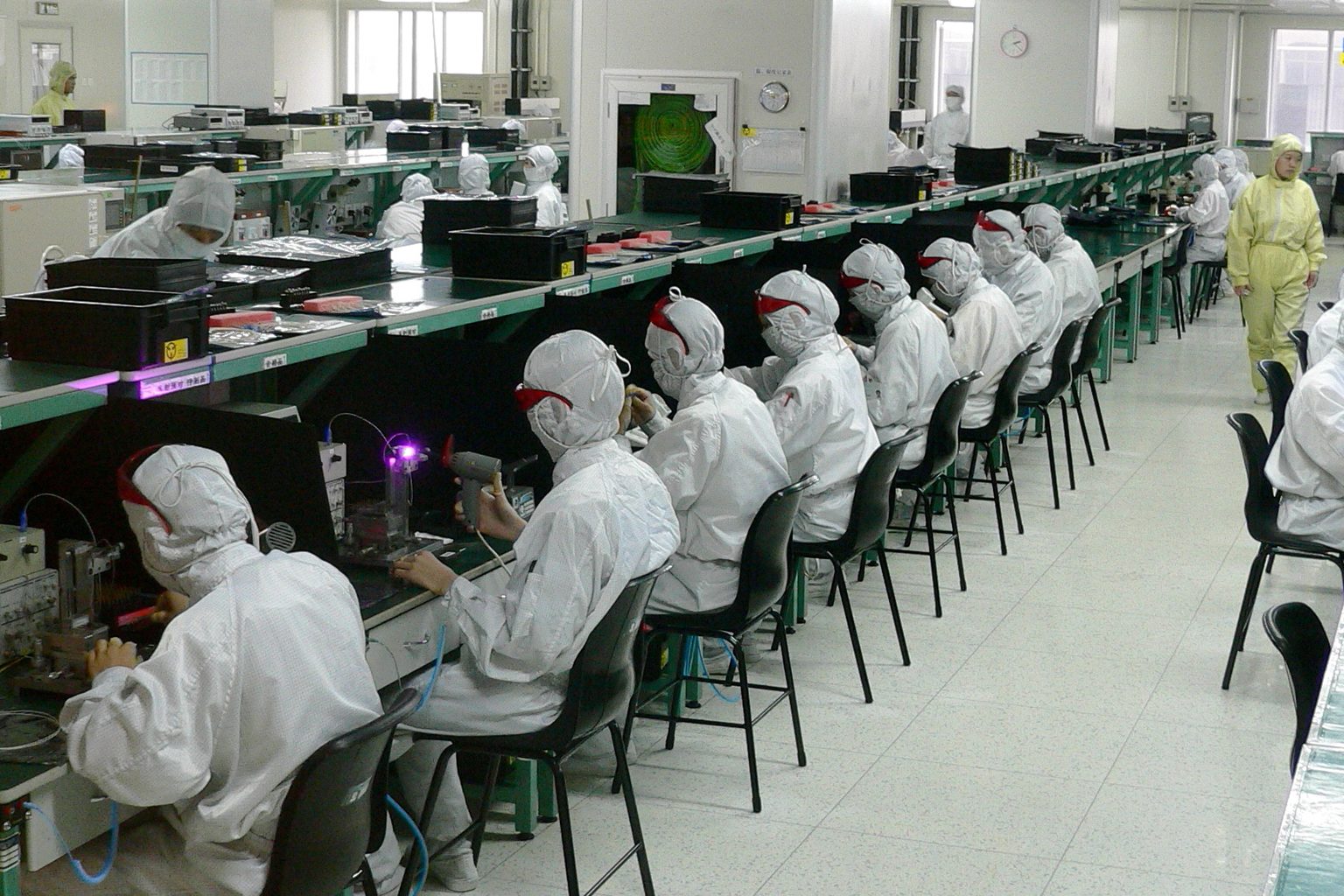
Header photo: Steve Jurvetson / Wikimedia Commons, CC BY 2.0
You can verify a Chinese supplier from your desk in about 20 minutes, with four checks that have to be done in this order: read the registration record, match the names that will appear on your paperwork, read the public record of how the company behaves, and test the claims it makes about certification. What 20 minutes cannot do is tell you whether that company can actually build your product. That part is a plant visit, and it is a different job with a different price tag.
Most buyers run it the other way round. They ask for a quotation, then a sample, and only after the sample looks right and a deposit is on the table does somebody in finance ask who the money is going to. Here is the problem with that sequence: every check below costs minutes and nothing else, and every one of them is cheapest before a quotation exists.
The rule for stopping
Checks 1 and 2 are pass or fail. If the registration record does not exist, or the name you are asked to pay is not the name on the licence, stop and start again with someone else - no explanation is worth the risk, and no discount makes it worth the risk either. Checks 3 and 4 are information rather than verdicts: they tell you what you are buying, what you should write into the contract, and what you should price in.
Step 1, minutes 0 to 5: read the registration record
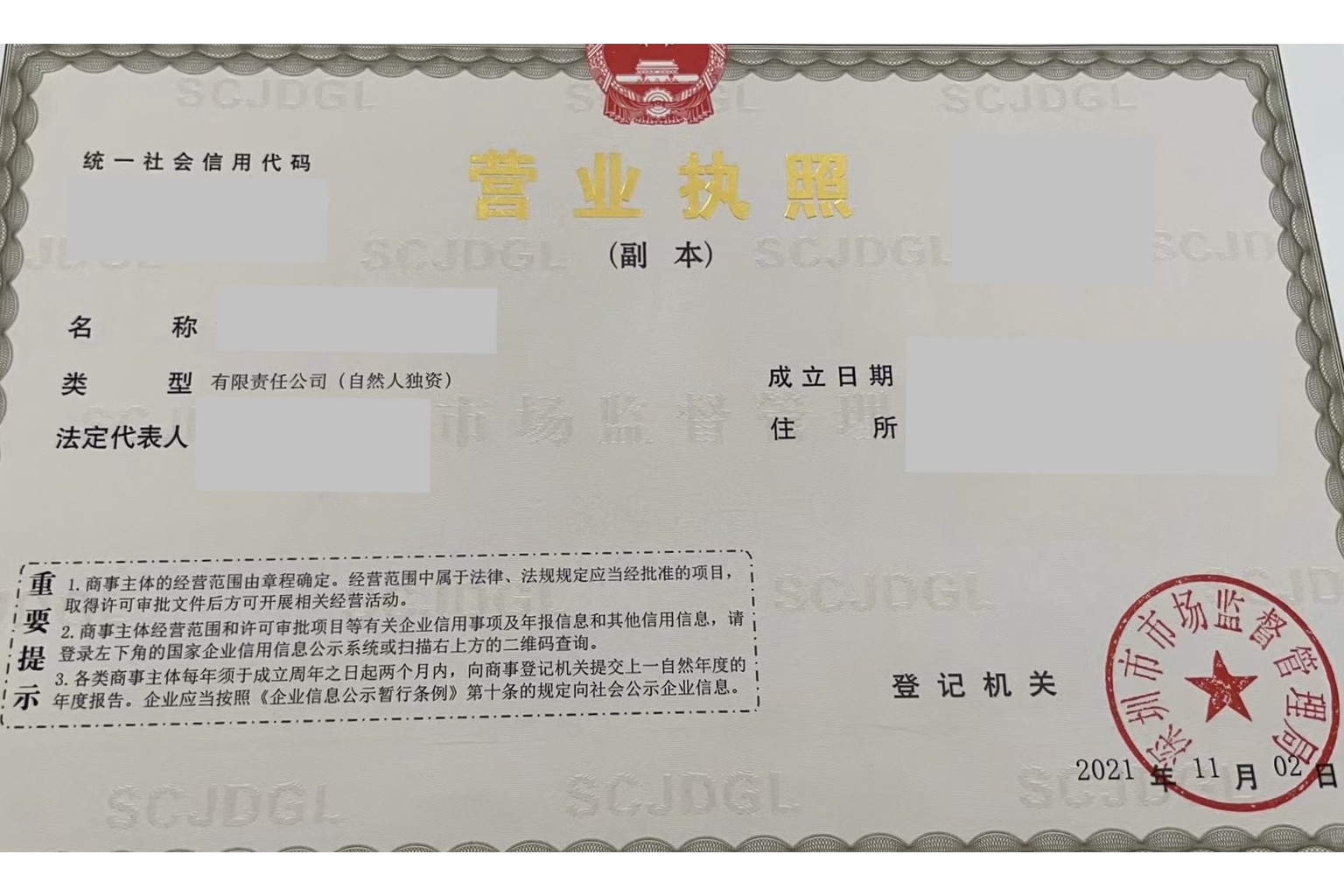
Ask for two things in writing: the exact registered name, in Chinese characters, and the 18-character unified social credit code. Ask for a colour scan of the business licence rather than a phone photo of a screen, and do not move on until the code and the name agree.
The code is worth learning to read. Its first digit identifies the registration authority, the next 6 digits are the administrative division where the entity is registered, the following 9 characters are the organisation code, and the last is a check character. A licence from Shenzhen carries a division code of 440300, a Dongguan one 441900. Two suppliers who both describe themselves as "a Shenzhen factory" can be registered in two different provinces, and the code settles it in one look.
Then read the fields that matter on the certificate itself:
- The scope of business. This is the single most informative line on the page. Production wording means the entity is licensed to manufacture. Sales and technical-development wording with no production line entry means you are talking to a trading or design company. That is perfectly legal and often useful - but it changes who carries quality responsibility for your order and whose name goes on the warranty.
- The type of entity. A limited company owned by one natural person is common, quick to deal with, and has one decision maker. Useful to know before you spend three weeks asking for a compromise that needs a second signature to exist.
- The date of establishment. Not proof of competence, but a company founded in the same year it started quoting you has no production history to audit and no failures to learn from.
- Registered capital. Treat it as a promise rather than money. Since the subscription-capital reform the figure on the licence is what shareholders have committed to, not what is in the bank. Under the revised Company Law that took effect on 1 July 2024, a company established after that date must pay its subscribed capital in within 5 years; companies established earlier have a transition window to adjust their schedule by 30 June 2027 and to complete payment by 30 June 2032. Read the number, then read the annual report to see whether any of it has been paid.
- The registered address. A registration address is an address, not a plant, and in Shenzhen it is often a serviced office or a cluster registration that dozens of companies share. Legal, common, and worth knowing before you plan a visit there.
Where you read all of this matters as much as what you read. Use the national enterprise credit publicity system at gsxt.gov.cn: free, no account, and the official source that the commercial credit apps resell. Type the legal name or the credit code yourself. If the record disagrees with the PDF in your inbox, the PDF is the document you should doubt.
Give a supplier 24 hours to send the code and the licence scan. If it does not arrive in that window with a straight answer about why, you have saved yourself the flight.
Step 2, minutes 5 to 10: the four names that have to be one name
Cross-border sourcing fraud is rarely a fake factory. It is a real company, a real sample, and a payment that goes somewhere else. The defence is dull and it works: insist that four names are the same name.
- The licence name and the proforma invoice name. The invoice must be issued by the entity you verified, with the same characters in the same order. A slightly different name is not a translation issue; it is a different legal person.
- The invoice name and the bank beneficiary. The account you pay must carry the registered name. Not a director's personal account, not a cousin's company, not an offshore entity that "handles group finance". If the beneficiary does not match, stop the payment and restart the conversation with someone else. There is no commercial reason to route a deposit through a third party, and every reason not to.
- The name on your purchase order. Put the registered name in the contract and leave the brand name out of it. If your order has to be defended later, the brand on the packaging proves nothing; the registered name does.
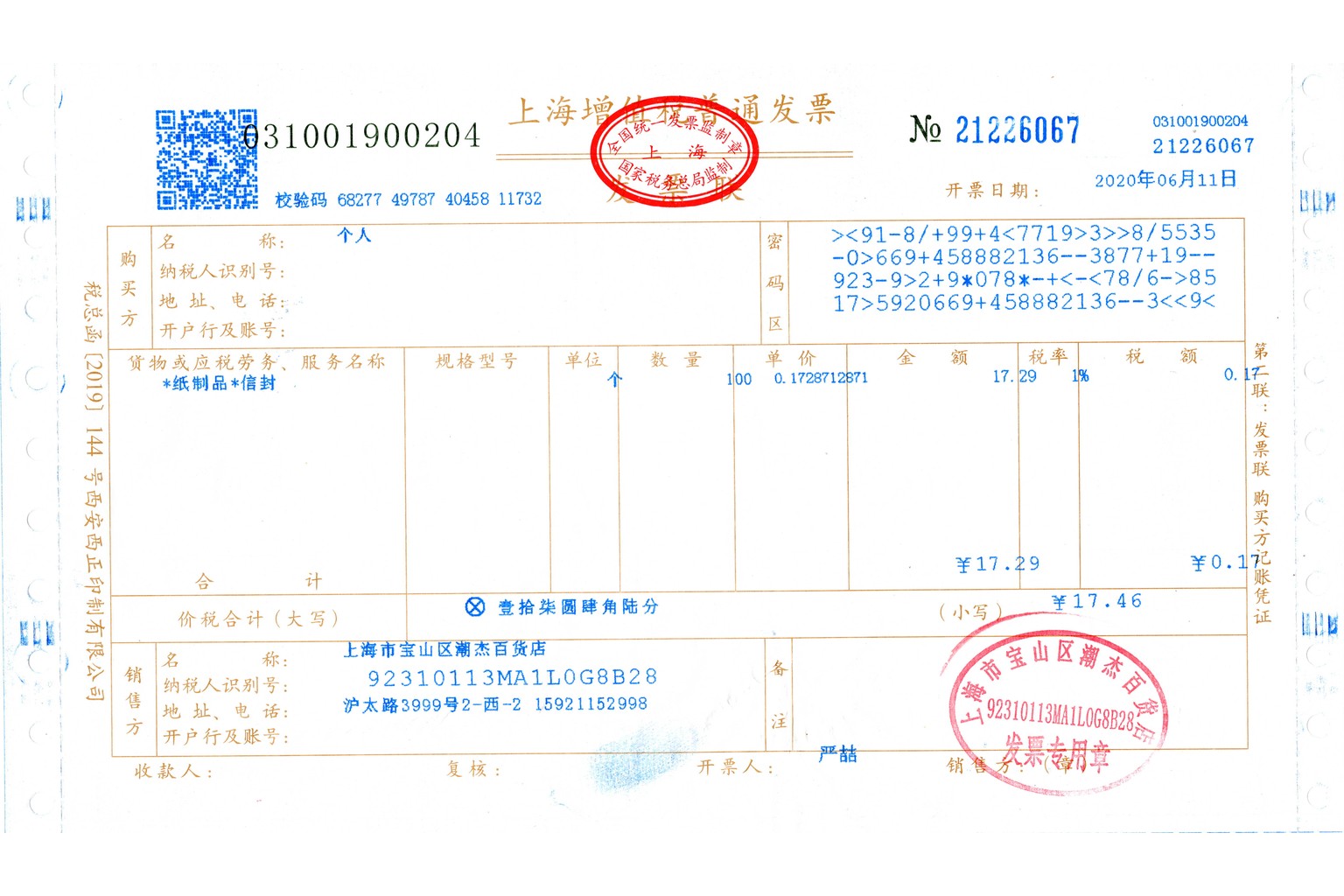
- The name in the customs record. Whoever is registered to export is the entity your goods will be declared under, which is not always the entity that quoted you.
Two more things are worth the remaining minutes. First, ask the public record for a change history: the system shows former names and registration changes, so a company that was renamed 6 months ago has a history, and the interesting question is why. Second, ask for the bank details on the supplier's own letterhead as part of the proforma invoice. Bank-detail changes that arrive later by email, mid-order, are the most common way buyers lose money in this trade. If that happens, call the number you already had, and hold everything you were about to send for 48 hours.
Finally, decide what the address on the licence is telling you. Ask a simple question in writing: which address will the goods be produced at, and which one should a courier visit? A supplier who answers with one address for both has either a genuine integrated plant or a story, and the site visit in the factory audit checklist is what separates the two.
Step 3, minutes 10 to 15: what the record says about behaviour
A licence tells you that a company exists. The behaviour record tells you whether anyone is steering it. Three public sources are worth the next 5 minutes.
The abnormal operations list. Every company in China has to file an annual report between 1 January and 30 June, and the register flags a company that misses the window within 10 working days of it closing. Two consecutive missed reports combined with a registered address that cannot be reached is grounds for revoking the licence, and a serious-illegal listing bars that person from acting as legal representative elsewhere for 3 years. One missed year on a small trading company is not a scandal. A company on the list for the third year running while quoting you a 1,000 pcs order is a company nobody is running.
The courts. Search the entity and the legal representative's name in the enforcement records and the dishonest-debtor list. You are not looking for litigation - competent exporters get sued over freight and payment like everyone else. You are looking for unpaid judgments that were never satisfied.
Customs. The customs credit platform lets you search by company name or credit code and see whether the entity is registered with customs as an import-export operator at all, and what credit level it holds. The advanced-certified list runs to roughly 7,500 companies nationwide, so most good exporters are not on it - absence there means nothing. Absence from the platform entirely is a different signal: somebody else does their exporting, and you should know who.
One piece of trivia saves an awkward conversation. The separate foreign-trade operator filing was abolished on 30 December 2022, so a supplier who presents a scan of an old "import and export rights" certificate as a qualification is quoting a rule that no longer exists. Customs registration is what matters now, and any trading company can hold it. Which means the document proves capability, never a factory.
If the pitch includes a brand, a design or a patent, spend the last of these 5 minutes on the registers. A trademark that exists in China and not in your market is a trademark you will pay to register yourself, and a supplier who says "it is our design" should be able to point at a filing.
Step 4, minutes 15 to 20: test the certification claim
Certification is where confident sellers are least accurate, because the three document types are constantly mixed up and all three are easy to verify.
Test reports come from laboratories. Read who issued it, whether that laboratory is accredited, and which model number and production site appear on the report. A report for the model you are buying is evidence. A report for the family of models the salesman mentions is a story.
CE marking is a declaration by the manufacturer, not a certificate from an authority. There is no European agency that issues a "CE certificate", so a document with that title tells you the seller has not read the rules it is claiming to follow. What you should receive is a declaration of conformity plus the test reports behind it.
Radio approvals are the most verifiable. An FCC ID is split into a grantee code of 3 or 5 characters and a product code, and both halves can be looked up free at fcc.gov/oet/ea/fccid. The federal record names the applicant, the date of the grant and the frequencies, and it carries the test report, the internal and external photos of the tested unit, and the manual. Two things follow. If the applicant on that record is not your supplier and not a plant you can name, ask who really signed it off. And if the product has no transmitter at all, there will be no FCC ID - its absence is normal, not suspicious.
Management certificates deserve their own 60 seconds. Search IAF CertSearch, the free global register of accredited certificates covering more than 2,300 certification bodies and millions of records. Then read the scope statement rather than the logo: an ISO 9001 certificate whose scope is head-office sales administration says nothing about the workshop you are paying for. Certificates run on a 3-year cycle with annual surveillance audits, and a suspended certificate prints exactly like a valid one. Do not accept a folder that names a different model, a different entity or an expired date, and do not accept a promise that the missing report will follow the deposit.
The 20-minute scorecard
If you remember nothing else, remember the four fail conditions on the right-hand side.
| Minutes | What you are checking | Where | Walk away when |
|---|---|---|---|
| 0-5 | Entity exists; scope covers production or only sales | Business licence + gsxt.gov.cn | The record does not match the document you were sent |
| 5-10 | Licence name equals invoice name equals bank beneficiary | Proforma invoice on letterhead, change history | The deposit is requested to any other name |
| 10-15 | Behaviour: annual filings, judgments, customs registration | gsxt, court enforcement records, customs credit platform | No customs registration and no credible explanation |
| 15-20 | Certification covers your model and your production site | Lab reports, FCC ID search, IAF CertSearch | The certificate names another model or another company |
What 20 minutes cannot tell you
It cannot tell you whether the company builds anything. A licence with production wording on it is permission, not evidence, and the trading company you are worried about may well be selling you the output of a plant that would be a good supplier in its own right. The only way to know what is behind the paperwork is to stand in the building, which is what the 12 checks in a factory audit are for.
It cannot tell you about capacity, subcontracted processes, or whether the line that made your sample will make your order. A tidy desk check does not survive contact with a plant that changed its silicone moulder between batches.
And it cannot predict the future. Records are kept by people, and a company with three clean years behind it can still take a cost decision in a meeting you were never invited to. Treat the 20 minutes as a floor rather than a certificate. Run it again whenever the entity changes, whenever the bank details change, and about once a year otherwise.
Here is what it did for one buyer we worked with. He sent us three quotations he was comparing, and the cheapest one was 8% under the next offer. The 20 minutes took the licence apart: the entity was 5 months old, its scope was sales and technical development, and the certification folder he had been shown belonged to a different model made by a different company. None of that made the supplier a fraud. It made him a trader with a partner plant, which is a normal way to buy - but it is a different purchase, and the buyer renegotiated on that basis, with the QC clause, the sample approval and the inspection point written against the entity that would be standing behind the goods. He got what he actually wanted, which was not a cheaper price. It was the information to choose.
Turning the check into documents
Ask for five things in one email, and give the supplier 24 hours to answer:
- A colour scan of the business licence, and the unified social credit code typed out.
- Bank details on the company's own letterhead, as part of the proforma invoice.
- The customs registration number and the name it is registered under.
- The certification folder that covers your model, with test reports and the production site named.
- The address the goods will be produced at, written as a postal address.
Then put four lines into the purchase order, because a check that does not change a document has no effect. Name the registered entity and the production site. State that the bank beneficiary must match the licence name. Require written notice and re-approval before any change of material, component, process or site. And tie the balance to a passed inspection of the finished goods, which is what reading an AQL report prepares you to use. If this is a first order with a new partner, the sequence from sample to mass production is the one in the OEM timeline, and the volume conversation is the one in what an MOQ of 1,000 pcs actually buys.
One last thing about our own practice, since it is the fair test to apply to anyone who quotes you. We will answer all five of those questions about ourselves before you ask for them, and we will tell you when the honest answer is "we buy this in" rather than "we make this". What we do not publish is the partner list behind those answers. Any supplier who offers you the list without the documents is offering you the part of the job that can be done from a desk.
Want the documents before the deposit moves?
Tell us the product, the volume and the destination market. You will get the licence details, the bank details on our letterhead, the certification folder for the exact model, and the production address - before anything is paid.
See how we run an OEM programme →