
From jet cockpit to $28 earbud: how noise cancelling got cheap, and what a buyer should still pay for
The feature that once needed a pilot's headset and an airline budget now ships in a US$28 pair of true wireless buds. Where the cost actually came out of the product, which four costs never moved, and the tier-by-tier specification to write instead of chasing a decibel number.
Header photo: Florian Fuchs / Wikimedia Commons, CC BY-SA 3.0
Noise cancelling became cheap because the cancellation filter stopped being a product of its own. In 1990 the electronics were a board — microphone pre-amp, analogue filter, power amplifier, its own battery holder, its own assembly steps. By 2018 the same function was a block inside the Bluetooth audio chip that every true wireless earbud already had to buy. The physics did not move an inch. The packaging did. That is why a US$28 pair in 2026 cancels more low-frequency rumble than a US$400 pair did in 2008, and why the number printed on the box still tells you very little about what your customer will hear.
For a buyer, the useful part of this history is not nostalgia. It is knowing exactly which costs disappeared, because the ones that did not disappear are the ones that will decide whether your programme ships a product or a complaint. Four of them are still there, still expensive, and still invisible on a quotation.
1936: a correct idea with no hardware to run it
The principle was patented long before it could be built. Paul Lueg, a German inventor, filed in 1933 and was granted US patent 2,043,416 on 9 June 1936 for a "process of silencing sound oscillations": a microphone picks up a periodic noise, an amplifier inverts it, a loudspeaker radiates the inverted copy, and the two waves cancel where they meet. That is the schematic inside every active headphone sold today, drawn with valves and paper.
Nothing shipped for two decades, because the control loop needed to be faster than the hardware of the time. The first working model came in 1957, when Willard Meeker at an Air Force acoustics laboratory built the idea into a circumaural earmuff. His headset had an active attenuation bandwidth of roughly 50 to 500 Hz and a maximum attenuation of about 20 dB.
Hold those two figures next to a 2026 product. A well-tuned hybrid earbud today will manage somewhere between 25 and 35 dB in the 50 to 150 Hz octave, then fall away. Above 500 Hz, the electronics contribute little and the ear tip does the work. In other words, 69 years of engineering bought us perhaps 10 to 15 dB in the bottom two octaves and nothing at all in the band where speech lives. What changed by a factor of twenty was the price.
The cockpit paid for the research
In the 1950s Lawrence Fogel filed a series of patents applying the same cancellation principle to helicopter and aeroplane cockpits. Piston and turbine noise made radio calls hard to hear and did measurable damage to crews' hearing, and that combination — a safety problem with a legal cost attached — is what funded the next thirty years of work.
The story most people know starts in 1978, when Amar Bose, flying from Zürich to Boston, could not hear the airline's headphones over the engine drone. He started the research on the plane and kept it running for a decade. In 1986 two pilots, Dick Rutan and Jeana Yeager, flew the Voyager aircraft around the world without landing or refuelling, 9 days, 3 minutes and 44 seconds in the air, wearing Bose prototype headsets. The first commercial aviation headset followed in 1989.
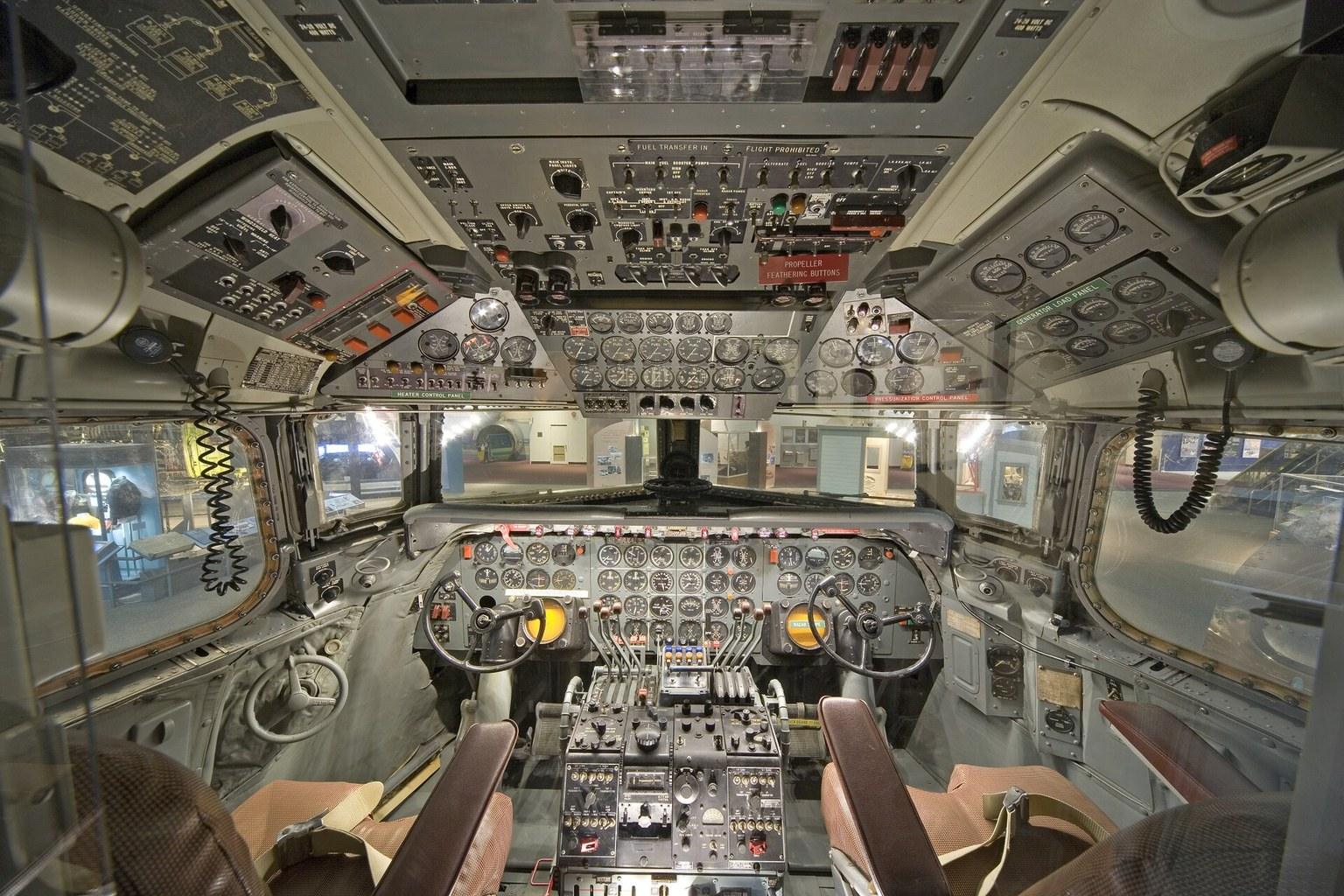
Here is the economics lesson, and it repeats in every hardware category. The aviation customer could put a number on the benefit: compensation claims for hearing loss, and the cost of a misunderstood clearance. A passenger in 1990 could only say the engine was annoying. Research gets paid for by the customer who can quantify the failure, which is why the first forty years of active noise cancellation lived in cockpits and the next twenty live in a US$28 impulse purchase.
1992 to 2008: the consumer version, and the first inflation of the number
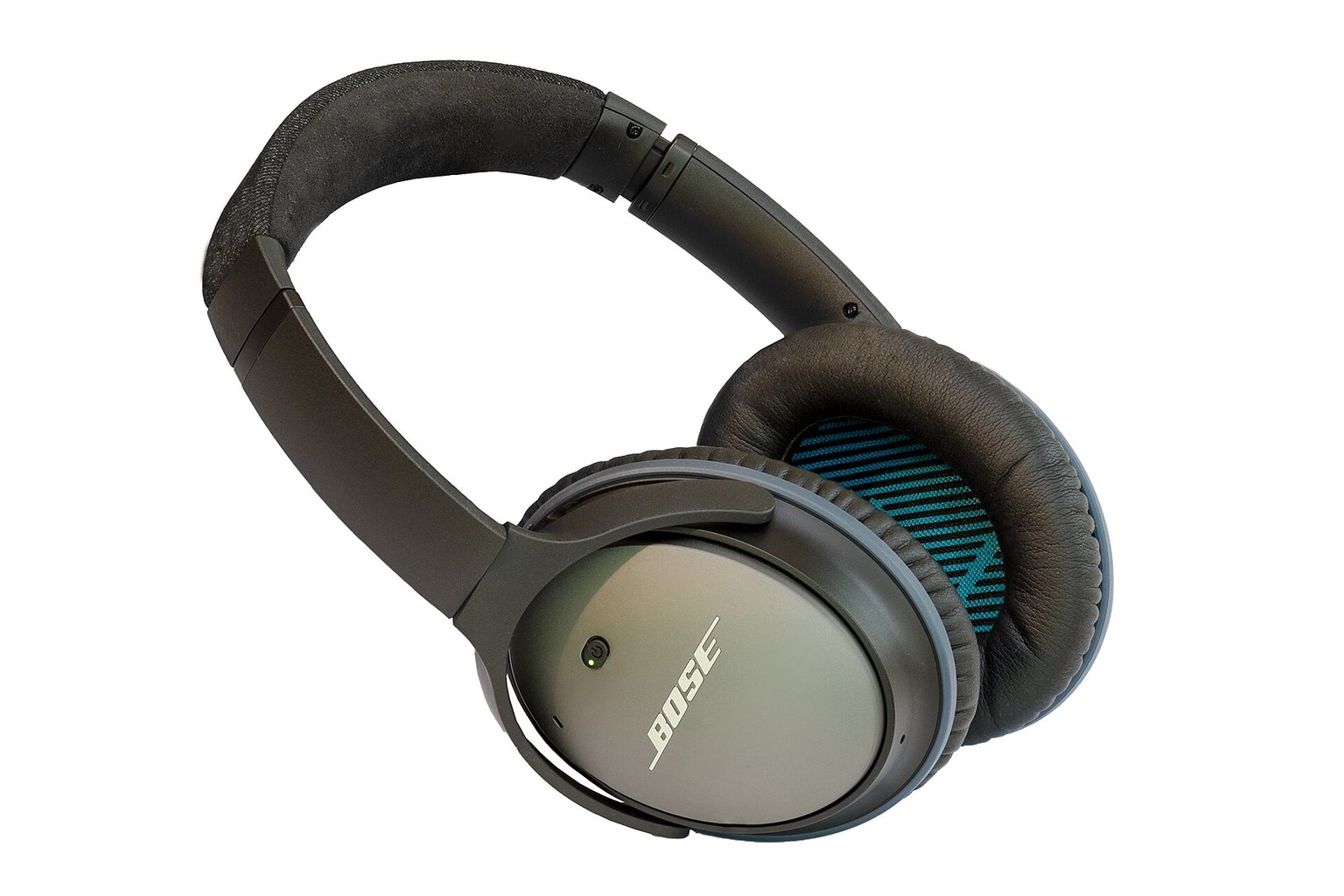
The consumer market opened in 1992, when Sony shipped the MDR-5700 and described it as the first noise cancelling headphone for consumer use — positioned, tellingly, for use in aircraft cabins. Bose followed in 2000 with the QuietComfort, a US$299 wired headphone with two AA cells in a separate in-line box, which is the product that made the category a category. In 2008 Sony launched the MDR-NC500D at around US$400, the first digital implementation, and advertised it as cutting ambient noise by up to 99%.
That 99% deserves a paragraph, because it is the ancestor of every inflated number you will read this year. A 99% reduction in acoustic energy is 20 dB. A 99% reduction in sound pressure amplitude is 40 dB. The two readings differ by a factor of a hundred in energy, and marketing copy has never been careful about which one it means. The honest reading is the 20 dB one — and 20 dB is precisely what Meeker measured on an earmuff in 1957.
So by 2008 the consumer had paid US$400 for the same attenuation a laboratory had achieved with valves half a century earlier, plus a digital filter that made the thing smaller and less prone to drifting. The price had not fallen. It had risen, because the market was small and the electronics were still bespoke.
2016 to 2020: the feature moved onto the die
The cost collapse was a chip event, not an acoustics event, and it happened in about four years.
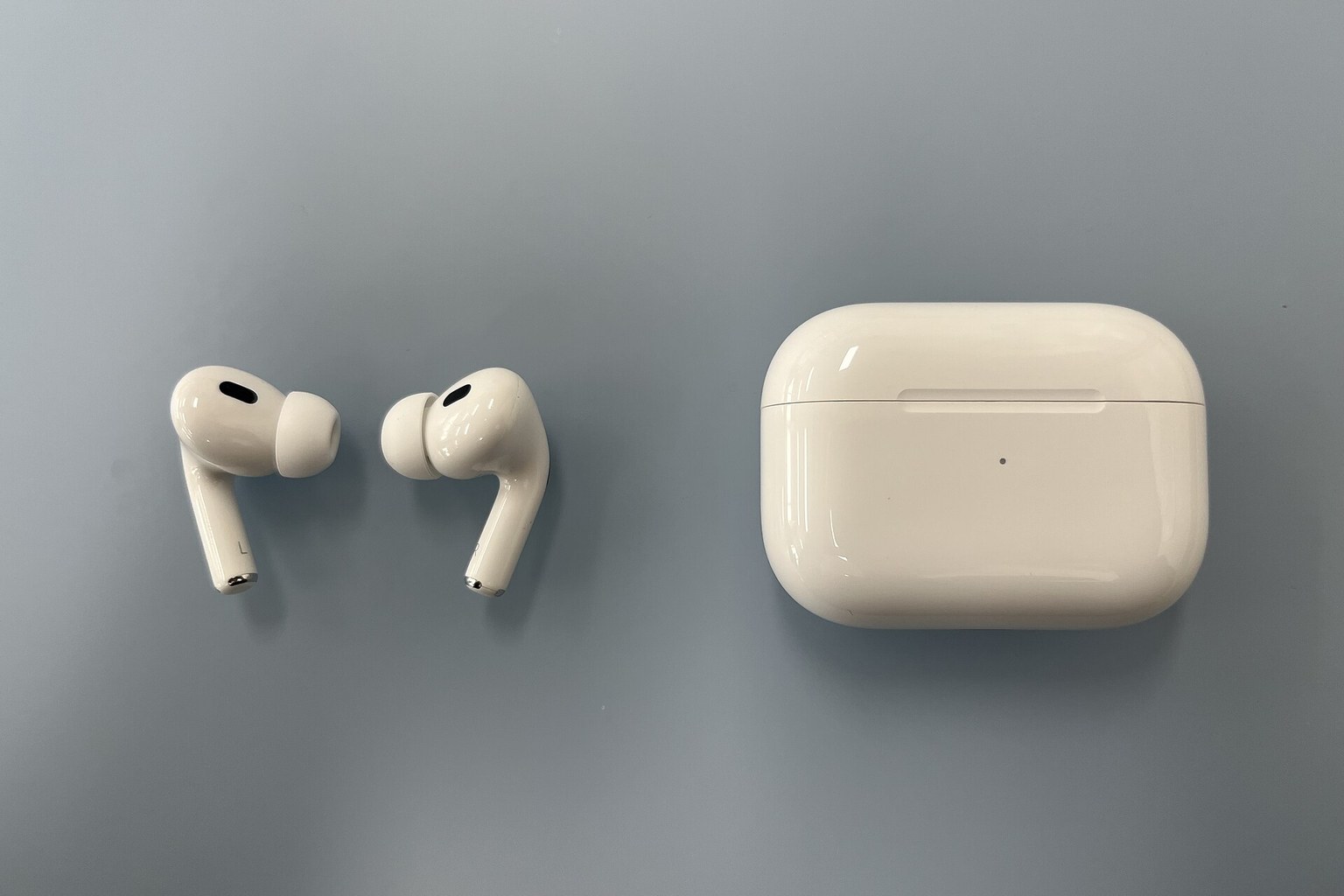
In 2016 Bestechnic shipped what it describes as the first Bluetooth headset chip with active noise cancellation integrated on the same die. In 2017 Sony put ANC into a true wireless product, the WF-1000X. In 2018 the BES2300 arrived on a 28 nm process with a full-digital hybrid ANC block integrated into a single Bluetooth audio chip. And in October 2019 Apple shipped AirPods Pro at US$249: two microphones per bud, a system-in-package built around the H1 chip, a loop that re-adjusts the signal 200 times per second, 4.5 hours of listening with ANC on against 5 hours with it off.
Why does that matter more than any single product? Because of what disappears from the bill of materials when a function moves from a board to a die. The microphone pre-amp, the anti-aliasing filter, the DSP core, the codec and the power rail stop being separate parts with separate tolerances, separate solder joints and separate failure modes. They become registers in a chip you were buying anyway, configured by a firmware build. The assembly line loses a step, the test station loses a fixture, and the quality department loses a whole class of intermittent faults.
That is the pattern in consumer audio: when a function moves on-die, its cost to the brand falls by roughly an order of magnitude within two product cycles, and the differentiation moves from having the feature to tuning the feature. The same thing happened to Bluetooth itself in the 2000s and to the audio codec before that. If you want a rule for reading a category's roadmap, watch which block is still a separate chip. That block is where the next price cut is hiding.
What US$28 buys now, and what the box still claims
In 2026 the entry tier is not a stripped product. Take a current example that reviewers have measured: the Baseus Bass BP1 Pro, listed at US$39.99 and routinely sold near US$28. On paper it offers adaptive noise cancelling with a claim of up to 50 dB, four sensors, a six-microphone call array, LDAC over Bluetooth 6.0, IP55, 12 hours of playback with ANC off and 7 hours with it on, 55 hours including the case. An independent bench test put its cancellation at about 38 dB.
Neither figure is a lie. The 50 dB is a peak, measured by the vendor's method, at the frequency where the loop performs best. The 38 dB is a broadband result from someone else's rig. What matters is that both numbers describe a product that costs less than a tenth of the 2008 flagship — and cancels, on the bench, close to 18 dB more.
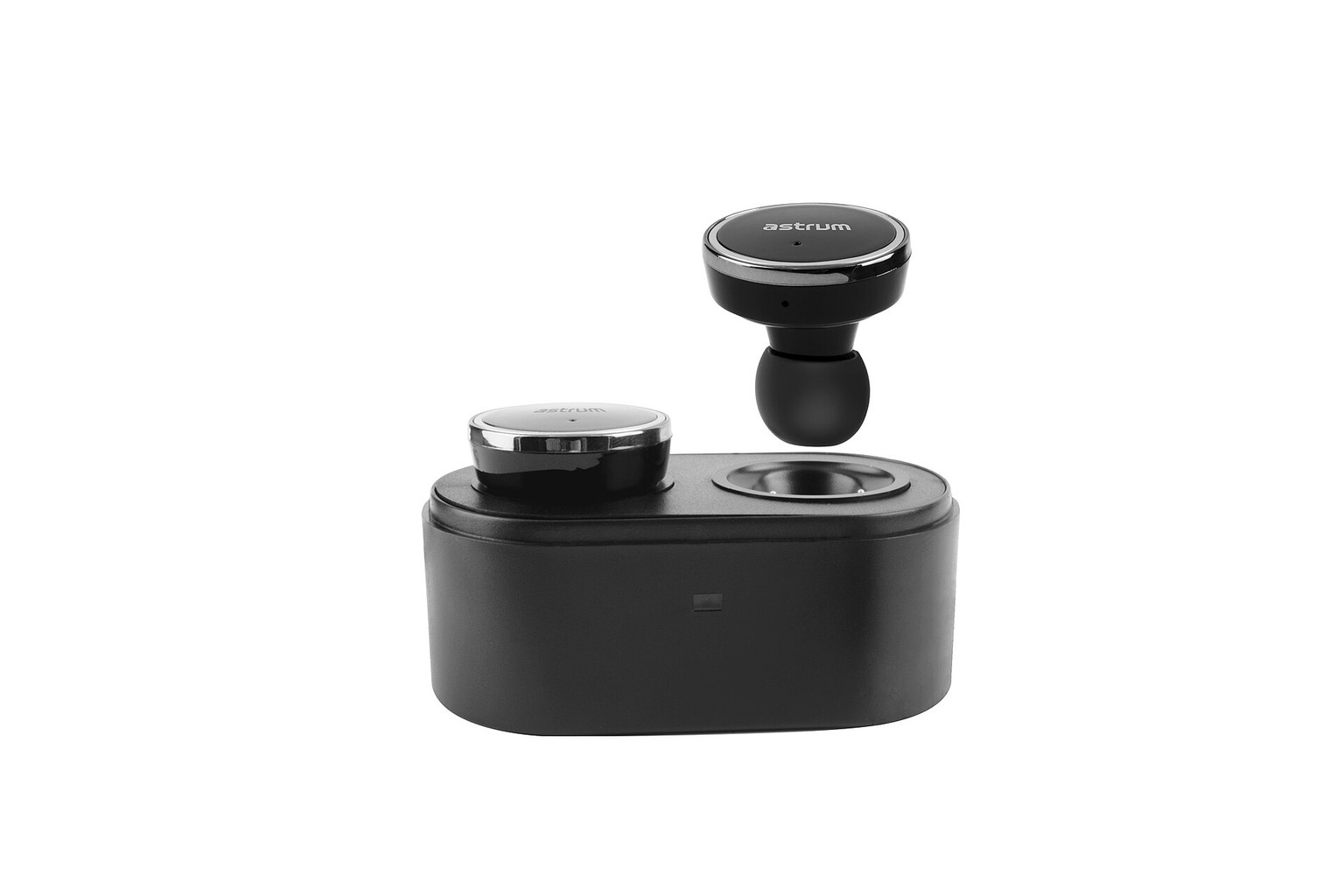
That is the shape of the last eighteen years in this category: a 93% price reduction and a performance floor that rose to where the premium tier used to sit. If you are sourcing today, the question is no longer whether ANC is available at your target price. It is which of the four remaining costs you are quietly choosing not to pay.
The four costs that integration did not touch
Everything electronic got cheaper. None of the following did, and all four are invisible on a quotation because they are hours rather than parts.
| Cost | 1990s | 2026 | Cheaper now? |
|---|---|---|---|
| Cancellation circuit | Separate board, own battery, own assembly step | Firmware block on the audio SoC | Yes, by an order of magnitude |
| Microphones | Two electret capsules, hand-soldered leads | MEMS parts on the same flex, reflowed | Yes |
| Power | Dedicated AA or NiCad pack | Shares the product cell | Yes |
| Acoustic tuning per shell | Weeks on a bench | Weeks on a bench | No |
| Fit kit: sizes, materials, tooling | 3 sizes, 1 material | 3 to 5 sizes, silicone plus foam | No, and the range got wider |
| Wind handling | Rarely addressed | Separate algorithm plus mesh plus a demo | No |
| Real-ear validation | Not done on consumer goods | 10 units, 5 or more wearers, shipping tips | No |
Tuning. Every enclosure is a different acoustic plant. Change the shell wall thickness, the microphone port depth, the nozzle angle or the vent, and the filter coefficients that worked on the previous model are wrong. A new shell is 2 to 4 weeks of bench time for one variant, and that is with an engineer who has done it before. It is not a line in a chip vendor's reference design.
Fit. The ear tip is doing more of the work than the electronics above 1 kHz, and it is where your returns come from. Three sizes is a starting point, not a kit; a foam option changes the low-frequency result enough that it needs its own tuning pass. We have measured 8 to 12 dB of difference at 100 Hz between two tip sizes on the same earbud. No chip integration removes that.
Wind. Air moving across an outer microphone is low-frequency turbulence, and the cancellation loop faithfully amplifies it. Wind handling is a detection routine that ducks the outer mic, plus a mesh or foam screen over the port, plus a test at speed. If nobody in the project owns that, your first one-star review will be about cycling, not about noise.
Validation. A rig measurement with an artificial ear tells you the loop is stable. It does not tell you what 5 humans with different ear canals hear. Ten units, five or more wearers, the tips that actually ship in the box, written results: that is the test that predicts your review section, and it costs days rather than parts.
What that looks like when it goes wrong
We had a client, a European accessories brand, planning a four-model family around one ANC platform: an in-ear, a half-in-ear, a sport version with a fin, and a version in a different shell material for a retail partner. The plan was one tuning, four SKUs, one validation report. The chip supported it. The acoustics did not.
The half-in-ear model was the first casualty. Without a seal there is no stable low-frequency path for the feedback microphone to correct, so the cancellation that worked on the in-ear version simply did not exist on that shell — the numbers came back close to passive. The retail partner's material changed the microphone port geometry by a fraction of a millimetre once paint thickness was included, which shifted the low-frequency result by about 3 dB. Two models shipped with full ANC. The other two shipped with call-noise reduction only.
The cost overrun was not in components. It was 11 weeks of acoustic work nobody had scheduled, plus a second validation round, plus a packaging change because two of the four boxes could no longer carry the same claim. That is the bill integration does not pay.
The decibel arms race replaced the old problem
Look at current listings and the numbers have climbed again: 45 dB, up to 50 dB, 55 dB, and bandwidth claims reaching 5 kHz. None of it is verified by anybody. There is no consumer standard for ANC depth — the hearing-protector standards measure a different product for a different purpose — so each brand's laboratory picks the signal, the level and the frequency, and the marketing team quotes the best point on the curve.
The newest trick is folding passive isolation into the active figure. A tip that seals well already blocks 15 to 25 dB at higher frequencies. Quote the total attenuation above 1 kHz and call it ANC bandwidth, and the electronics get credit for the silicone. If a supplier offers 5 kHz of cancellation, ask which part of that band the loop is actually contributing to. The mechanics of that measurement are in our earlier piece on how ANC works, including the four questions that separate a measured figure from a marketing one.
Our position is blunt. A headline decibel figure is a marketing asset, not a specification. What you can put in a contract is a band, a method and a demonstration.
What to specify at each price tier in 2026
The feature is now standard across the market, so the specification work moves to what the tier can actually deliver. Here is what we see at three bands, and what we would write into the RFQ at each.
| Target retail | What the tier really delivers | What to specify |
|---|---|---|
| US$25 to US$40 | Single-chip hybrid ANC, 2 mics per bud, 30 to 38 dB broadband, 6 to 8 hours with ANC on. Wind is usually the weak point; the app, if any, is thin. | Attenuation curve 50 Hz to 1 kHz, tip kit sizes, wind ducking demo, playtime with ANC on at a stated volume |
| US$60 to US$120 | Adaptive ANC with per-fit correction, 3 mics per bud, 8 to 10 hours, LDAC or equivalent, firmware update path, transparency mode worth using | Everything above, plus the adaptation rate, the transparency insertion loss, and who owns the tuning file after the project ends |
| US$150 and above | Custom tuning per shell, ear-canal measurement at insertion, better wind handling, lower occlusion on calls | Everything above, plus raw curves from two labs, a 10-unit real-ear report, and a written commitment on tuning revisions after the pilot build |
Then the questions that are worth more than the spec sheet:
- Which SoC, and is the ANC block on-die or on a companion part? On-die is cheaper and smaller; a companion part is easier to tune and can be reused across shells.
- How many tuning revisions are included after the pilot build, and what does another one cost in calendar time?
- Is the attenuation figure a peak or a band average, and over which band?
- Was it measured on a rig or on ears, with the tips that ship?
- What happens to the loop when the wearer talks, chews or runs — is there an occlusion compensation, and is it on by default?
- Which firmware version was the measurement taken on, and can I get the same test repeated on the production build?
Our stance
Do not pay for a number you cannot re-measure. A brand that has done the work will send you a curve, the method and the tips used. A brand that has not will send the same one-line claim again, a little more slowly.
Do not assume one tuning covers a family. Four colours of the same shell is one project. Four shell shapes is four projects, and the half-in-ear version may not be a project at all. Price that in before you commit to a range, not after the sample arrives.
Do not ship ANC without a wind test at 20 km/h. It is the cheapest test in the programme and the most common reason a technically correct product gets returned. Twenty minutes on a scooter tells you more than a page of attenuation data.
Where the cost curve goes next
The next category to repeat this pattern is open-ear. The integration story is the same — the same chips, the same single-die ANC block — but the acoustics are harder, because an open-ear product has no seal and therefore no stable low-frequency path for a feedback loop to correct. What ships today is narrower and shallower than in-ear cancellation, and the tuning hours per model are higher. If you are sourcing in that category, expect the cost curve to lag in-ear by several years. We wrote about the design constraints in the open-ear sourcing piece.
The other shift is regulatory rather than acoustic. Volume limiting under EN 50332 has been part of European compliance for years, and it interacts with ANC in a way buyers rarely check: a product that cancels well encourages higher playback levels in quiet conditions, and the limiter is measured on the output, not on what the wearer perceives. If your market is the EU, put the limiter behaviour in the same validation round as the cancellation curve instead of treating them as two departments' problems.
Sourcing ANC at a price that has to work?
Tell us the target retail, the form factor and the market. You will get a straight answer on which tier the acoustics can reach, what the tuning schedule costs in weeks, and the attenuation curve with the method behind it — before the tooling is committed.
See how we run an OEM programme →