
Qi2 wireless charging: 25 W on the box, 5 W in the case — what a buyer should spec before tooling
Qi2 is not a faster coil. It is a magnet ring, an authentication chip and a new test regime — and most of what it costs you is measured in millimetres and degrees, not watts. Here is the profile ladder, what the printed ratings on a receiver really mean, and the eight lines to write into an RFQ before anyone cuts a case.
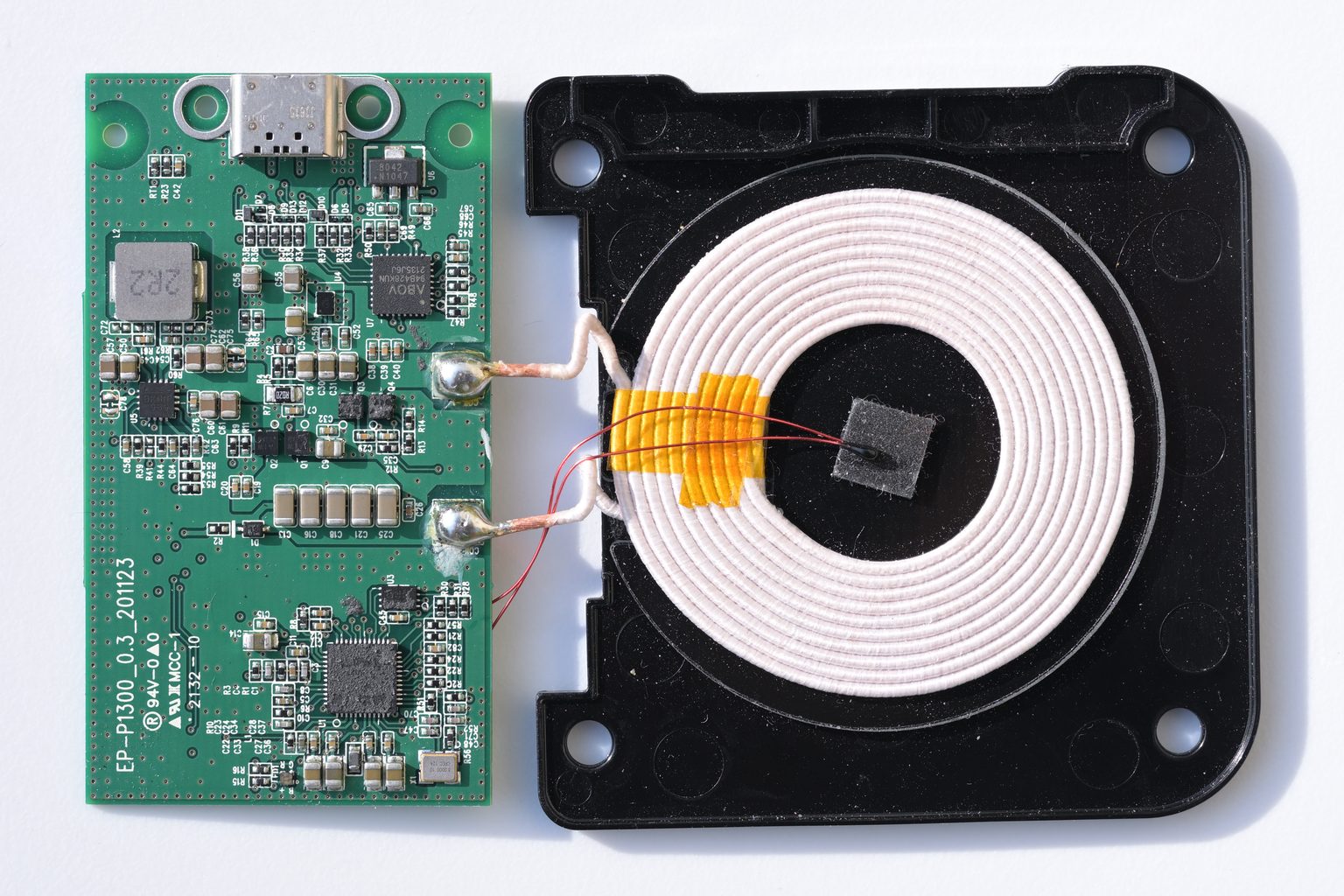
Header photo: 4300streetcar / Wikimedia Commons, CC BY 4.0
Qi2 changes one thing that matters: it makes the mechanical position of the coils repeatable. It does not make induction efficient, it does not make a 5 W receiver deliver 15 W, and it does not put a number on the box that your product will actually hit. For a buyer, the practical answer is narrower than the marketing: Qi2 is worth paying for on accessories that hold a phone — stands, mounts, magnetic power banks — and it is usually the wrong purchase inside an earbud case. What follows is the profile ladder, the loss that nobody prints on the carton, and the specification lines that decide whether the product ships or comes back.
We quote wireless charging programmes out of Shenzhen most months, and the same conversation happens every time. The brand asks for "Qi2 25 W" because that is what the retail buyer saw at a trade fair. The factory says yes, because saying yes is free at quotation stage. Then the industrial design lands, the case is 14 mm thick, and the number that was on the box becomes a number in a test report that nobody can reconcile with the packaging.
What Qi2 changed, and what it did not
Qi2 is the consumer name for the Magnetic Power Profile, introduced in the Qi specification version 2.0 in April 2023. The specification work is done by the Wireless Power Consortium, and the version history is public, which is useful: you can hold a supplier to a document instead of a logo.
Three things changed in 2.0. A ring of magnets locks the transmitter and receiver into a repeatable position. The standard adds limits on coil inductance and quality factor (the LQk restrictions), so a transmitter cannot claim a coupling it cannot actually achieve. And the protocol adds a cloak phase and coupling-factor estimation, plus detailed accounting of magnetic power loss — in plain terms, the system now has to measure what it wastes instead of assuming it away.
What did not change is the physics. Energy still crosses a gap by induction, and a receiver that was designed for 5 W still delivers 5 W. The standard even says that Qi 2.0 products are not required to be fully backward compatible with earlier certified products, so "works with all Qi chargers" is a claim to verify, not to assume.
Version 2.2, published in April 2025 and marketed as Qi2 25W, raised the ceiling to 25 W and added power modes that negotiate with a USB-C adapter instead of demanding a proprietary brick. It also added a mated Q-factor check — the charger measures the coil pair before transferring power, which is how it decides whether there is a foreign metal object in the gap. The current published version is 2.2.1, with 2.3 issued in December 2025 for gain-change reporting.
The four profiles your factory will quote
Almost every misleading quotation we see comes from collapsing these four rows into the word "Qi". They are different products with different certification files.
| Profile | Specification | Ceiling | Magnets | Where you meet it |
|---|---|---|---|---|
| BPP (baseline) | Qi 1.0, July 2010 | 5 W | No | Earbud cases, watches, hotel furniture, US$6 pads |
| EPP (extended) | Qi 1.2, October 2015 | 15 W | No | Android pads and car holders without a magnet ring |
| MPP (sold as Qi2) | Qi 2.0, April 2023 | 15 W | Yes | Phone-adjacent accessories, stands, magnetic packs |
| MPP 25 W (sold as Qi2 25W) | Qi 2.2, April 2025 | 25 W | Yes | 2025 and 2026 flagship chargers, higher-cost controllers |
A magnet ring is not a profile. Plenty of products on marketplace listings are baseline or extended-profile boards with a magnet array glued into the housing — they align the phone, they charge it, and they are not Qi2. Describing them as Qi2 is a labelling risk that lands on whoever put their brand on the box, not on the factory that supplied the board.
Magnets fixed the loss that firmware could not
Coils transfer energy best when they are concentric, and the whole history of bad wireless charging is a history of users placing phones approximately. Every firmware trick in the earlier standard tried to compensate for a physical misalignment that the charger could not control.
Qi2 stopped trying to compensate and moved the problem into the housing. The magnet ring pulls the receiver to a fixed position, and the standard then tests the coil pair at that position rather than tolerating an unknown one. It is a mechanical fix to what looked like an electrical problem, which is why the magnet grade, the retention force and the housing tolerance are now part of your specification.
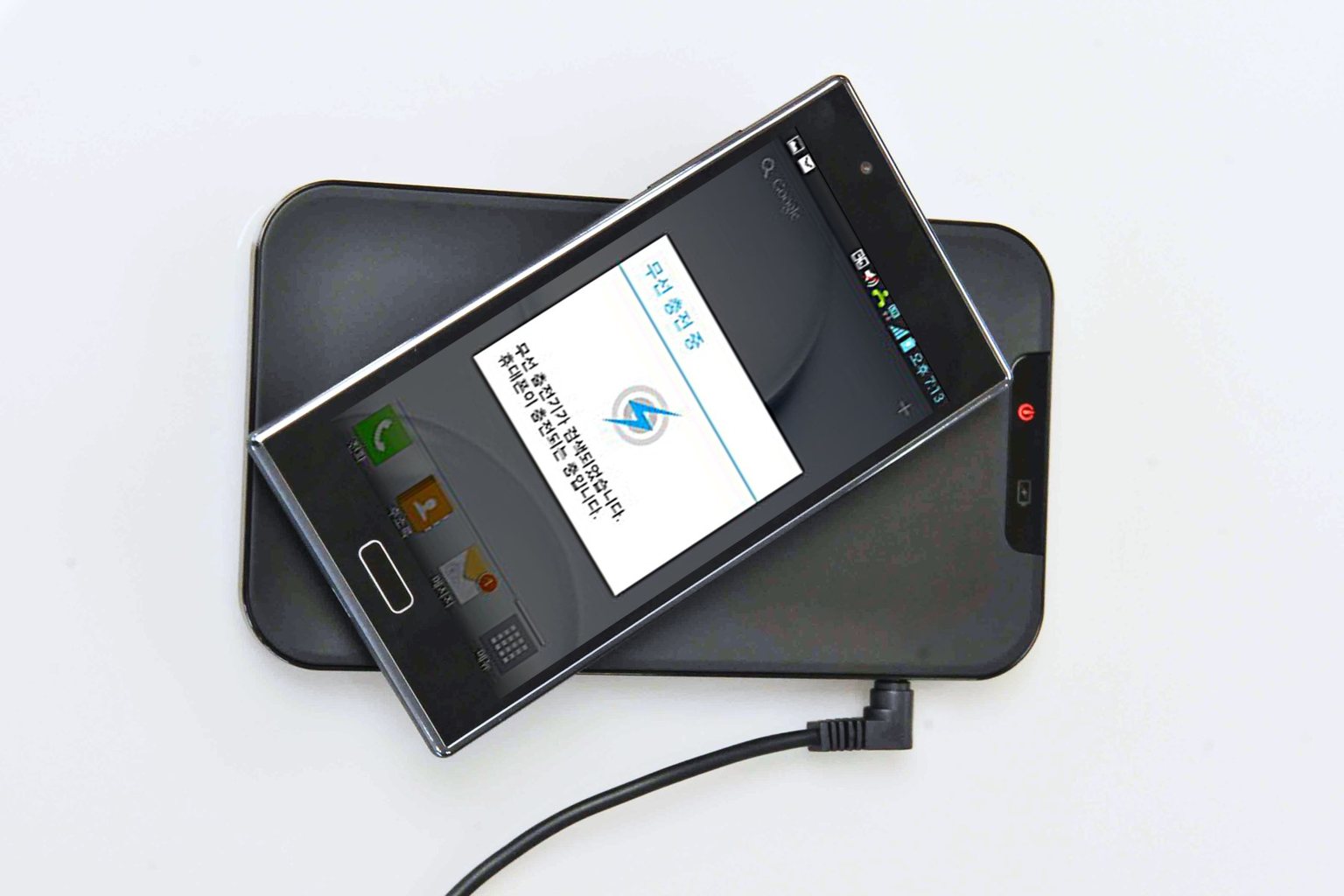
There is a second-order effect that shows up in tooling reviews. The magnet ring has to sit concentric with the coil, and the whole assembly has to sit under a wall thin enough for the field. In a phone, that geometry was designed around a camera bump; version 2.1 of the specification added a test for protruding cameras precisely because a bump can tilt the device and lift one side of the coil. If your product has a raised logo, a metal badge or a hinge, that feature is now an electromagnetic component.
What the label on the receiver actually says
When a supplier quotes a wattage, ask which point in the chain it refers to. The three commonly quoted numbers are the coil input, the receiver output, and the current that finally reaches the battery. They are not the same number, and on small devices the gap is large.
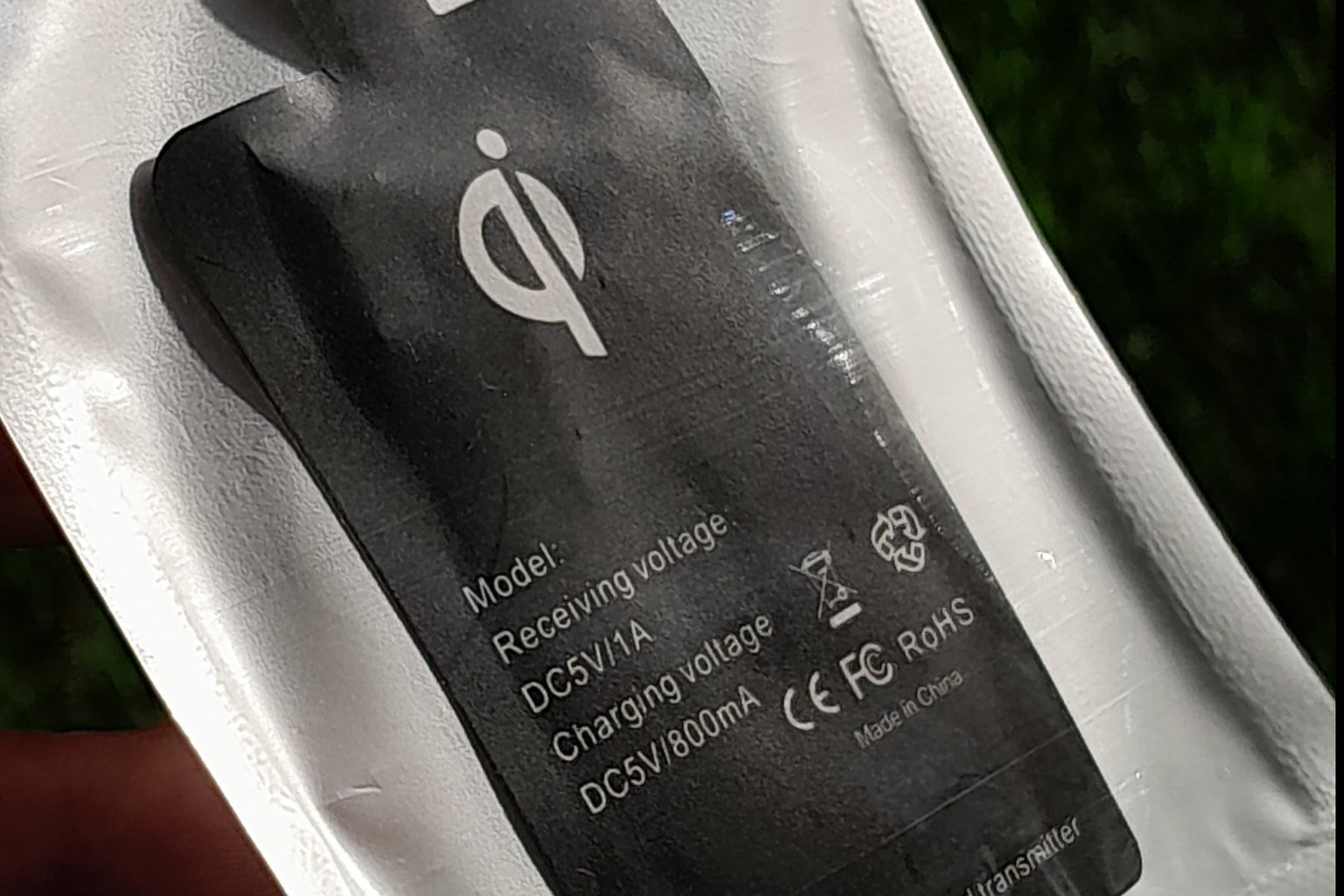
That photograph is the most useful document in this article. A receiver rated at 5 W in and 4 W out is honest engineering — the label tells you where the energy went. The dishonest version is a charger marketed at 15 W that is certified at 15 W on the coil and delivers 9 W into a battery that is warm and half full.
Apple's own documentation shows the same ladder without hiding it. The MagSafe charger reaches 15 W only with a 20 W or higher USB-C adapter capable of 9 V at 2.22 A; on a Qi-compatible phone without the magnet ring it is limited to 7.5 W; and on iPhone 15 and earlier it drops to 7.5 W when an accessory is plugged into the phone at the same time, for regulatory reasons. One charger, three numbers, all true.
The cost is paid in millimetres, not dollars
Adding wireless charging to a small product is a stacking problem before it is a cost problem. The receiver stack is a coil, a magnetic shield, and on Qi2 a magnet ring, plus a thermal path to somewhere that can absorb heat. Then the housing has to be thin enough over the coil, and the battery has to move.
The dimensions in the trade are not secret. A coil in a TWS charging case typically runs 10 to 15 mm outside diameter with a shield of 0.10 to 0.20 mm; a watch coil runs 8 to 12 mm; a phone coil runs 30 to 40 mm. The shield is not a luxury: without it, the field drives eddy currents into the battery pouch and the ground plane, which both wastes energy and heats the cell. Drop the shield to save 0.1 mm and you have moved the loss from the coil into the battery.
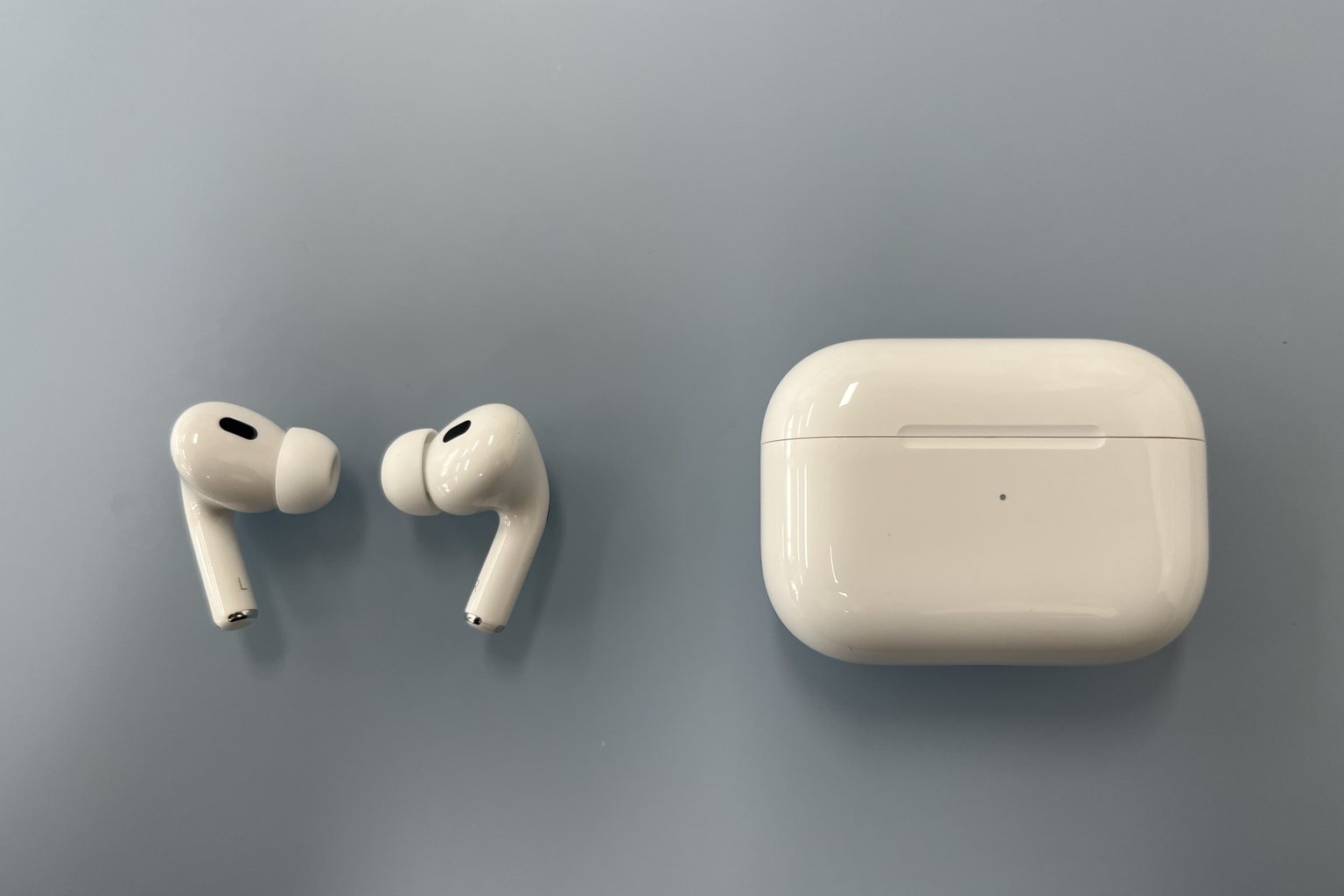
Then the magnets start arguing with the rest of the product. A magnet ring in a case lid sits close to the driver magnet, which is the strongest magnet in the product and is not aligned with anything. It sits close to the hall sensor that tells the firmware the lid is closed. We have seen a lid-detect false trigger that took two weeks to diagnose because the symptom was a case that reported itself closed while open, which disabled charging and looked like a firmware bug.
Placement decides the industrial design, not the other way round. Behind the lid, the coil collides with the hinge, the antenna and the display flex. In the base, it collides with the USB-C receptacle, the pogo pins and the battery. There is no position that is free. Our working rule for a case under about 15 mm thick: adding 15 W wireless charging costs you either battery capacity or a larger case. Buyers who are promised both are being promised a prototype, not a product.
Thermal is the specification that decides your returns
Wireless power transfer in this class runs at roughly 70% to 80% end to end when everything is aligned. The remainder becomes heat inside a sealed plastic box, a few millimetres from a lithium cell. That is the whole engineering problem, and it is the one that gets the least space in a quotation.
There are two numbers to hold in mind. Certification testing for the 25 W profile requires the surface temperature not to exceed 48 °C during the test. And IEC 62368-1, the safety standard your CB report will be built on, sets touch limits for accessible parts: 43 °C to 48 °C for a device worn on the body for more than 8 hours in direct skin contact, and 48 °C for a surface held for more than a minute. A charging case that reaches 46 °C in a 25 °C lab is inside the limit and outside the customer's patience.
So test it where it will be used. The protocol we write into a specification is unglamorous and it works: 2 hours continuous at the maximum negotiated power, in a 35 °C chamber, with thermocouples on the coil, the shield, the battery and the outer surface, logged every 30 seconds, with the product in its retail case if it ships with one. Then repeat it with the phone running navigation, because that is the real load.
Be careful with the phrase "100% tested". On a charging line it often means a two-second power-on check. Ask instead for the ageing rack dwell time, the load condition, and whether temperature is recorded or merely observed. A supplier who cannot answer those three questions has an ageing step that is decorative.
This is also where a pre-shipment inspection earns its fee. If your inspector only counts cartons and scans barcodes, the thermal behaviour of the batch is untested. We put the thermal log in the same checklist as the drop test and the battery documents — the sequence is in the pre-shipment inspection checklist, and it is worth reading before you book the inspection rather than after.
The Qi-ID is per model, and the magnet is not a certificate
Certification is where a wireless charging programme quietly loses a month. The numbers are public and they are not trivial: WPC membership runs about US$18,000 a year for an associate member and US$30,000 for a regular member, and product registration is US$750 for a new model or US$250 for a similar one. A straightforward certification takes around 20 working days, and the sample requirement is real — roughly five transmitters and seven receivers, with coils prepared for the LQk measurement.
Qi2 also requires an authentication chip. Each certified product carries a unit certificate issued through a WPC-authorised provider, which is why a Qi2 board is not interchangeable with a generic Qi board of the same wattage. It also means the firmware that handles authentication is part of the certified design.
Then comes the part that catches brands in the last week before tooling. Change the coil, the shield, the magnet, the housing thickness over the coil, or the power firmware, and you re-certify. A late industrial-design tweak that adds 0.3 mm of wall is not a cosmetic change; it is a new certification, a new US$750 and another 20 working days. Put that sentence in the project plan and the design review gets much calmer.
Finally, check the number. Every certified product has a Qi-ID registered against a specific model, and the WPC database is public. The consortium counts more than 13,000 Qi-certified products; it does not count the far larger number of magnet-equipped pads that were never tested. Ask for the Qi-ID for the exact model on the quotation, then open the database and compare the brand, the model number and the product photo. If the photo does not match the sample in front of you, you have found the problem before your customer did.
One variant worth knowing: Qi2 Ready, introduced with version 2.1 in January 2025, certifies a phone without magnets together with a magnetic case that supplies them (the MCPE and MCPM profiles). It solved a real problem for Android brands that did not want a magnet array in the chassis. It is not a shortcut for accessory makers — a case still has to pass the compatibility test as part of the pair, and the mark belongs to the tested combination.
Where it fails in the field
Most wireless charging complaints are not component failures. They are geometry that changed after the validation report was signed.
Case thickness. The mechanism is magnet-to-magnet distance. A 3 mm leather folio turns a 15 W link into a 7.5 W one, and a thick wallet case with cards in it turns it into a pause loop: the charger starts, the metal in the card trips the foreign object check, the power stops, and the phone retries every few seconds.
Metal furniture. Hotel desks, café tables, car dashboards with a coin tray. The foreign object detection is supposed to stop the transfer, and on a certified product it does. On an uncertified board where the factory suppressed nuisance trips by lowering the threshold, it instead heats the coin. This is the failure mode that becomes a safety story rather than a return.
Two magnet arrays. A magnetic wallet, a magnetic car mount plate, a MagSafe-compatible ring stuck on a non-magnetic phone. Each of them pulls the coils out of registration by more than the tolerance the standard assumes, and the product gets blamed for a slow charge it did not cause.
The regulatory tail. Apple's support pages note that in the EU and EFTA, iPhone 15 and later show a first-use notification stating that wireless charging may use more energy than wired. Efficiency has become a consumer-facing disclosure. If you are weighing a wireless-only design against a USB-C case, that trade-off now has a compliance dimension as well as a cost one; we went through the USB-C side of it in the five shifts piece, and the short version is that the receptacle obligation sits on the case, while a product that charges only wirelessly falls outside it. That decision has to be made on the case drawing, not in the packaging artwork.
What to write into the RFQ
Eight lines. They fit on one page and they turn a marketing conversation into a specification.
1. Name the profile by version. "Qi2" is not a version. Write MPP under Qi 2.0, or MPP under Qi 2.2 for 25 W. Ask for the clause the supplier is designing to, not the badge they intend to print.
2. Name the measurement point for the wattage. Coil input, receiver output, or battery. A quotation that says "15 W" without this is a quotation you cannot compare with another.
3. Ask for the Qi-ID for the exact model. Then verify it in the public database against the brand, the model number and the product image.
4. Specify the stack. Coil outside diameter and turns, shield material and thickness with tolerance, magnet grade and coating, and the wall thickness over the coil. These four numbers decide both the field and the certification.
5. Specify the thermal test, not the thermal claim. 2 hours at maximum negotiated power, 35 °C chamber, four thermocouple locations, 30-second logging, with the retail case fitted.
6. Specify the magnet's effect on the rest of the product. Retention force in newtons, and a written statement that the hall sensor and the driver have been tested with the magnet fitted, including the lid-detect behaviour.
7. Specify the foreign object test. The standard test object and the pass criterion, not a coin on the bench. Ask what the factory changed after the last nuisance trip, and get it in writing.
8. Name who pays for re-certification. Any change to the coil, shield, magnet, housing thickness or power firmware triggers a new registration. Decide before tooling whether that cost sits with the factory's engineering change or with your design change.
Our stance
Do not put Qi2 in an earbud case. Put a 5 W Qi receiver in it, keep the case small, and spend the difference on the battery. The magnet ring is a phone-scale geometry, the authentication chip is a cost with no user-visible benefit at 4 W, and the certification file is three times the work for a feature the customer will use once a week on a desk mat.
Put Qi2 where the phone is: magnetic power banks, car mounts, desktop stands, the accessories whose entire job is to hold a phone in one place. That is the use case the magnets were designed for, and it is the one where the buyer can see the difference in the first ten seconds.
And be honest about what the standard solved. Qi2 fixed alignment. It did not fix loss. The 20% to 30% that leaves the system as heat is still there, still inside a sealed box, still a few millimetres from a lithium cell — which is why the thermal protocol matters more than the wattage on the carton, and why the test report is the document worth reading before the packaging artwork.
Building a wireless charging product?
We are a sourcing and OEM partner in Shenzhen. We write the profile, the measurement point and the thermal protocol into the specification before a quotation is issued, and we check the Qi-ID against the model you are actually buying. Tell us the product, the case thickness and the target retail price, and we will tell you which profile is worth paying for.
Talk to us about an OEM programme →