
How to source bone conduction headsets: the transducer, the band and the IP rating that gets tested
A bone conduction headset is three parts doing three jobs: a vibrator pressed against the mastoid bone, a spring band that holds it there, and a sealed pod that carries the battery and the board. Each one fails differently, and each one is quoted as if it were free. Here is what the transducer is actually made of, why 30.3 g is a design decision rather than a diet, what IPX5 and IPX8 are really tested at, and the eight lines a buyer should put in the RFQ before tooling is cut.
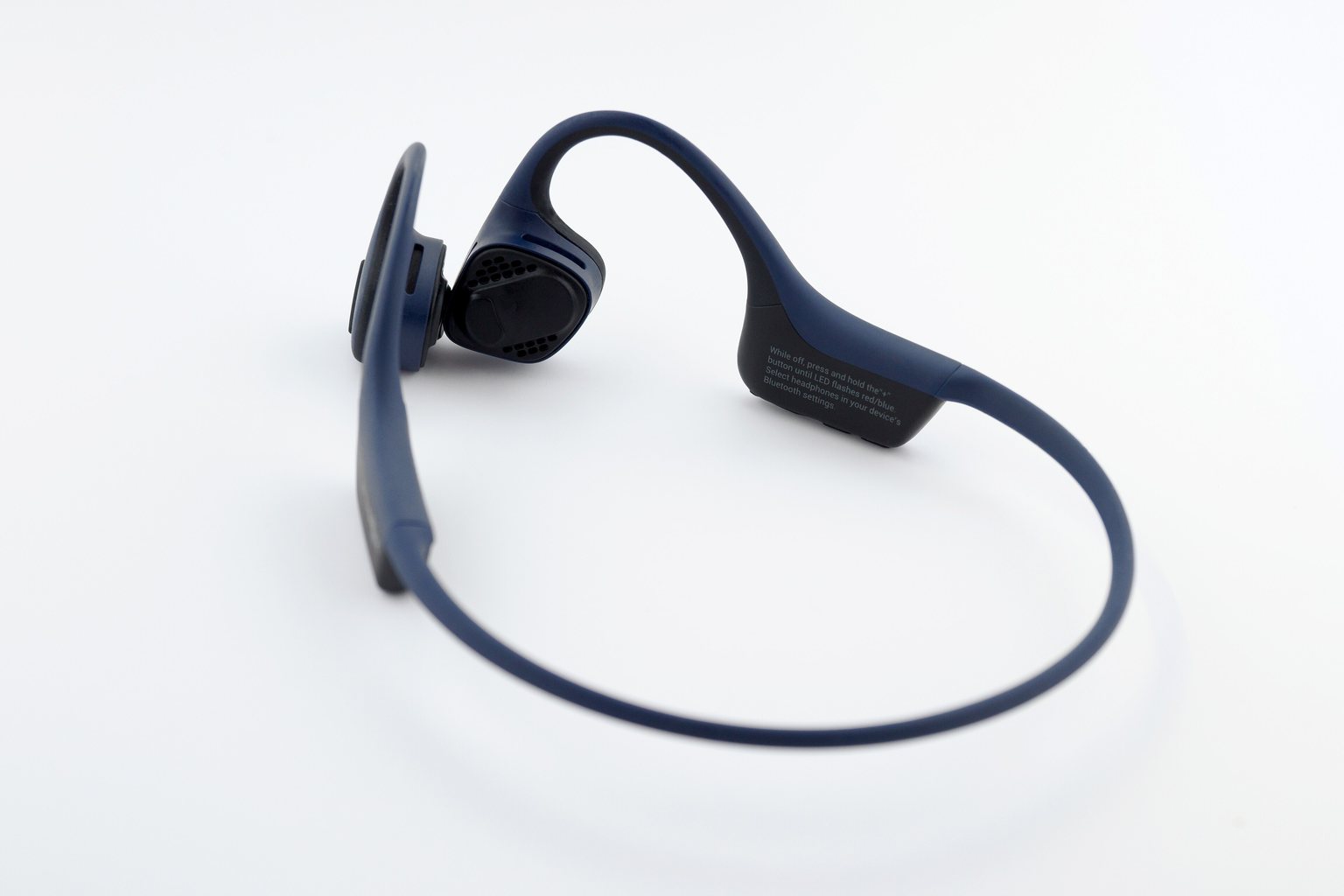
Header photo: Brett Jordan / Wikimedia Commons, CC BY 2.0
If your RFQ says "bone conduction, IPX5, Bluetooth 5.3", you are not specifying a product. You are asking a factory to quote the platform it already builds. Three numbers decide whether the program survives its warranty period: the construction of the transducer, the clamp force of the band, and the exact test your IP rating was issued against. Everything else on the datasheet — the frequency response, the "9D sound" line, the app — can be changed after tooling. Those three cannot.
We quote this category for sports brands, safety-equipment distributors and a handful of industrial customers who need audio without a sealed ear canal. The questions that come back after a launch are almost never about sound. They are about a band that snapped at the pod joint in month seven, a charging port that stopped working after a summer of sweat, or a rattle that turned out to be a transducer that had come unglued inside its housing.
Three parts, three failure modes
Strip the product down and the bill of materials is short. That is exactly why buyers under-specify it: there is not much to look at, so the quotation looks comparable between factories when it is not.
| Part | What it does | How it fails in the field | What to ask for |
|---|---|---|---|
| Transducer | Turns the amplifier signal into vibration against the bone behind the ear | Rattle, buzz at high volume, output drop on one side | Construction drawing, measured output at 1 kHz and 4 kHz, adhesive process |
| Band | Holds both pads at the right pressure and survives being stretched daily | Silicone tear at the pod joint, kinked wire, lost clamp force | Wire material and diameter, clamp force, bend-cycle result |
| Pod and seal | Carries cell, board, buttons, microphone and charging contacts | Water at the port, corroded pogo pins, button that stops clicking | IP level with the test report, sample state, 100% leak test or sampling |
Here is the part that surprises buyers. The three parts usually come from three different suppliers, and the factory quoting you the finished headset is often buying all three. When a quotation is 20% cheaper than the next one, the difference is normally in which of these three got swapped — not in labour.
The transducer is a motor with reeds, not a small speaker
A bone conduction transducer is a voice coil driving a reed or a pair of reeds against a weighted plate, all of it potted into a housing with a silicone pad on the face. It has no cone and no air cavity in front of it, because it is not trying to move air. It is trying to move a skull.
The current flagship construction pairs two voice coils with two reeds to raise output without raising distortion — that is what the "10th generation" language in the Shokz catalogue refers to. The cheap alternative is a piezoelectric disc: a ceramic wafer that flexes when driven. It costs a fraction of a moving-coil assembly, needs a boost converter because it wants a higher drive voltage, and it is thin below roughly 200 Hz. For a voice-prompt product sold to a warehouse, that is a reasonable trade. For a running headset sold at retail, it is a return waiting to happen.
Then there is the newest move in the category, and it changes what you are sourcing. The OpenRun Pro 2 keeps a bone transducer for mids and highs and adds a separate 18 mm × 11 mm air-conduction driver for bass, split by a digital crossover. The whole unit is 30.3 g. In other words, the market leader answered the bass problem by adding a second, conventional driver instead of asking the vibrator to do something physics will not allow.
If your supplier proposes a hybrid, ask one question before anything else: does the second driver have its own amplifier channel, or is it wired in parallel with the bone transducer? A parallel tap is cheaper and it will drag the impedance curve around, which means the tuning you approved on the sample is not the tuning that ships. A real second channel needs a second amplifier in the SoC or a small external amp, and that is a line in the quotation you should be able to see.
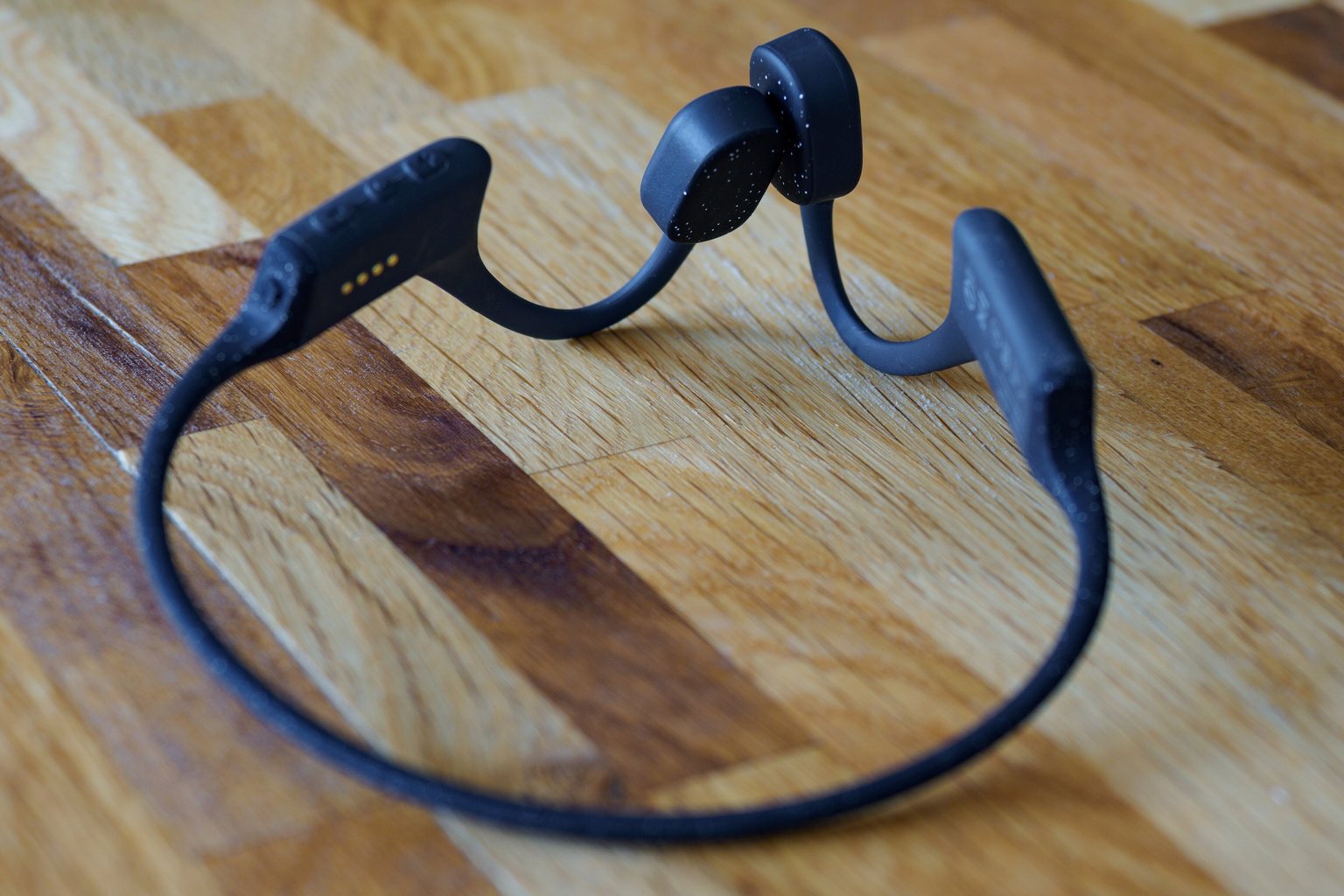
The 20 Hz to 20 kHz claim is a marketing number
Every bone conduction datasheet in the category prints a 20 Hz to 20 kHz frequency response. Measured through the skull, the useful band stops well short of that at the top and collapses at the bottom: below roughly 100 Hz there is very little left to work with, whatever the box says. We covered the physics and the reference thresholds in the comparison with air conduction, so here is only the procurement consequence.
Do not accept a frequency response as evidence of anything. Ask for three measurements instead:
1. Output at 1 kHz and 4 kHz on an artificial mastoid, at a stated drive level. These two points tell you whether the unit has midrange presence (speech intelligibility) and whether it will sound dull outdoors.
2. Total harmonic distortion at maximum volume. This is where cheap transducers give themselves away. A vibrator that is driven past its linear range buzzes on bass-heavy tracks, and no firmware fixes it.
3. Leakage at 30 cm. For an open device this is the number your retail customer will complain about in a quiet office, and almost nobody publishes it.
A supplier who can produce those three numbers for the exact transducer they are quoting is a supplier who has measured the part. A supplier who sends a frequency response curve with no test condition has sent you a picture.
The band decides the fit, and the fit decides the bass
Bone conduction is a contact sport. The pad has to sit on the mastoid with enough pressure to couple vibration into bone and little enough that a customer forgets it is there after 2 hours. That pressure is set by the band: a nickel-titanium memory wire, usually 0.6 mm to 1.0 mm in diameter, overmolded in silicone, with the two ends entering the pods.
Public specifications show how carefully this is tuned. The OpenRun Pro 2 lists full titanium in its frame along with silicone, plastic and nickel-titanium alloy, and quotes a clamp force 16% lower than the previous generation at the same 30.3 g ± 0.5 g total weight. It also ships in two sizes, with the Mini version 21 mm shorter for head widths under 23.5 cm. That is not cosmetic segmentation; a band that is too long cannot reach the clamp force the acoustic tuning assumes, and the buyer in the smaller size gets a quieter product.
Weight is a design decision, not a diet. The 2019 OpenRun is 26.4 g. The OpenSwim Pro is 27.3 g. The flagship with the extra bass driver is 30.3 g. Adding 4 g to a headset that hangs off two contact points is felt immediately, so every generation fights for grams in the pods and pays for them in battery.
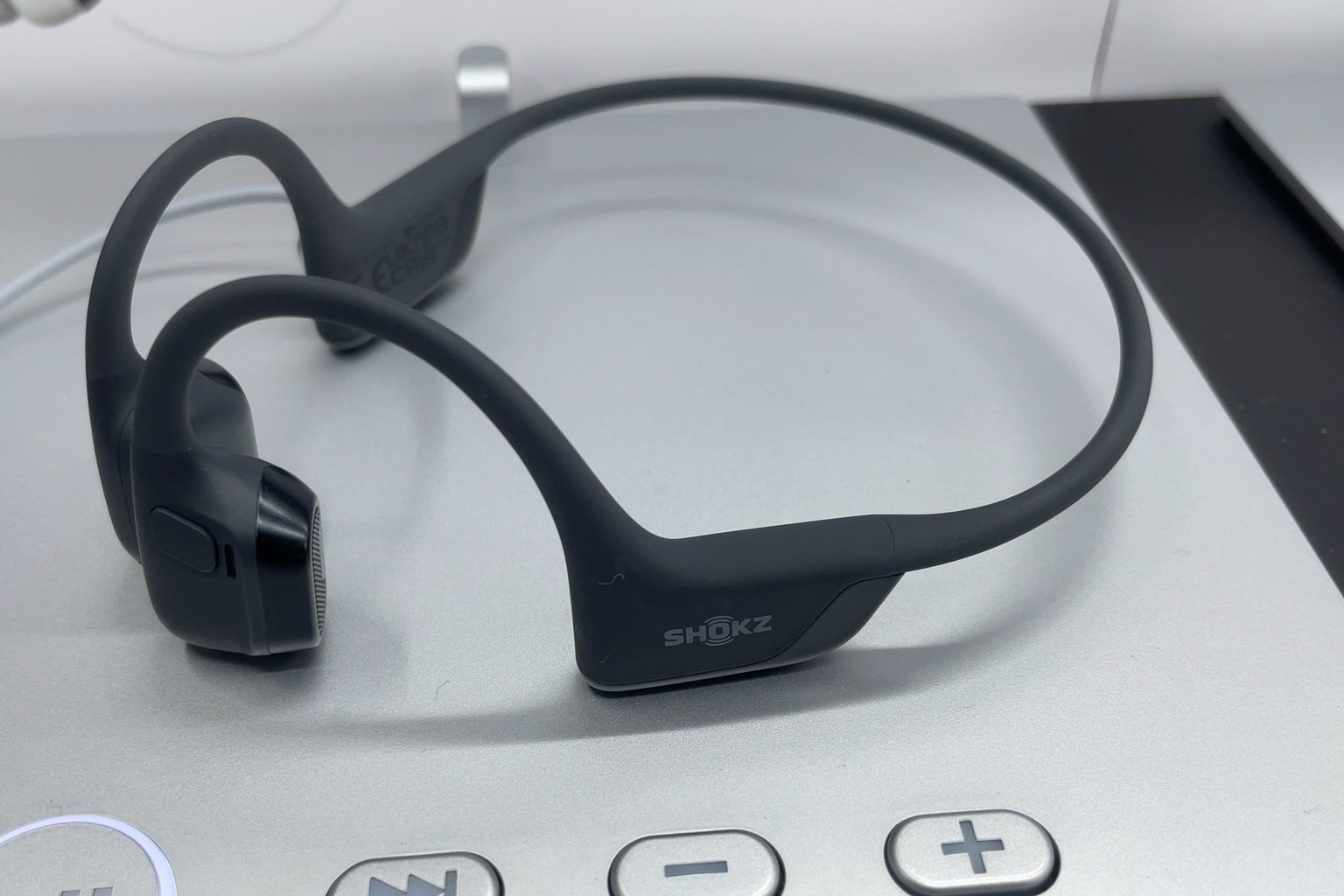
The failure mode is boring and expensive. Silicone tears at the pod junction. The memory wire kinks where it exits the molding and never recovers its shape. The surface coating wears shiny at the temples after a season of sunscreen. None of those show up in a 3-day evaluation, and all of them show up in a retail return report 8 months later.
So ask for the bend-cycle test: which fixture, what deflection, how many cycles, and what counts as a failure. A brand-name competitor will have run this to a number in the tens of thousands. A trading company will say "very good quality". That answer is the whole evaluation.
IP ratings: what IPX5, IPX7 and IPX8 mean at the bench
IP ratings are not adjectives. They are test recipes, defined in IEC 60529, and a report is only meaningful if you know which recipe was run on which sample state.
| Rating | What the lab does | What it does not prove |
|---|---|---|
| IPX5 | Water jet from a 6.3 mm nozzle at 12.5 L/min, 2.5 to 3 m away, at least 3 minutes | Nothing about immersion. A jet test is not a swim test |
| IPX6 | Same setup with a 12.5 mm nozzle at 100 L/min, at least 3 minutes | Still no immersion, and no steam |
| IPX7 | Immersed with the lowest point 1 m below the surface for 30 minutes | Not continuous immersion, and not pressure at depth |
| IPX8 | Depth and duration set by agreement between buyer and supplier, more severe than IPX7 | Nothing, unless the agreement is written down |
Real products in this category sit at three different levels, and the level is a positioning decision. The OpenRun is rated IP67 — dust tight and immersible, but not for swimming. The OpenRun Pro 2 is IP55: protected against dust and low-pressure jets, which covers sweat and rain and explicitly not a pool. The OpenSwim Pro is IP68, because swimming is the product. Same category, three different answers, three different prices.
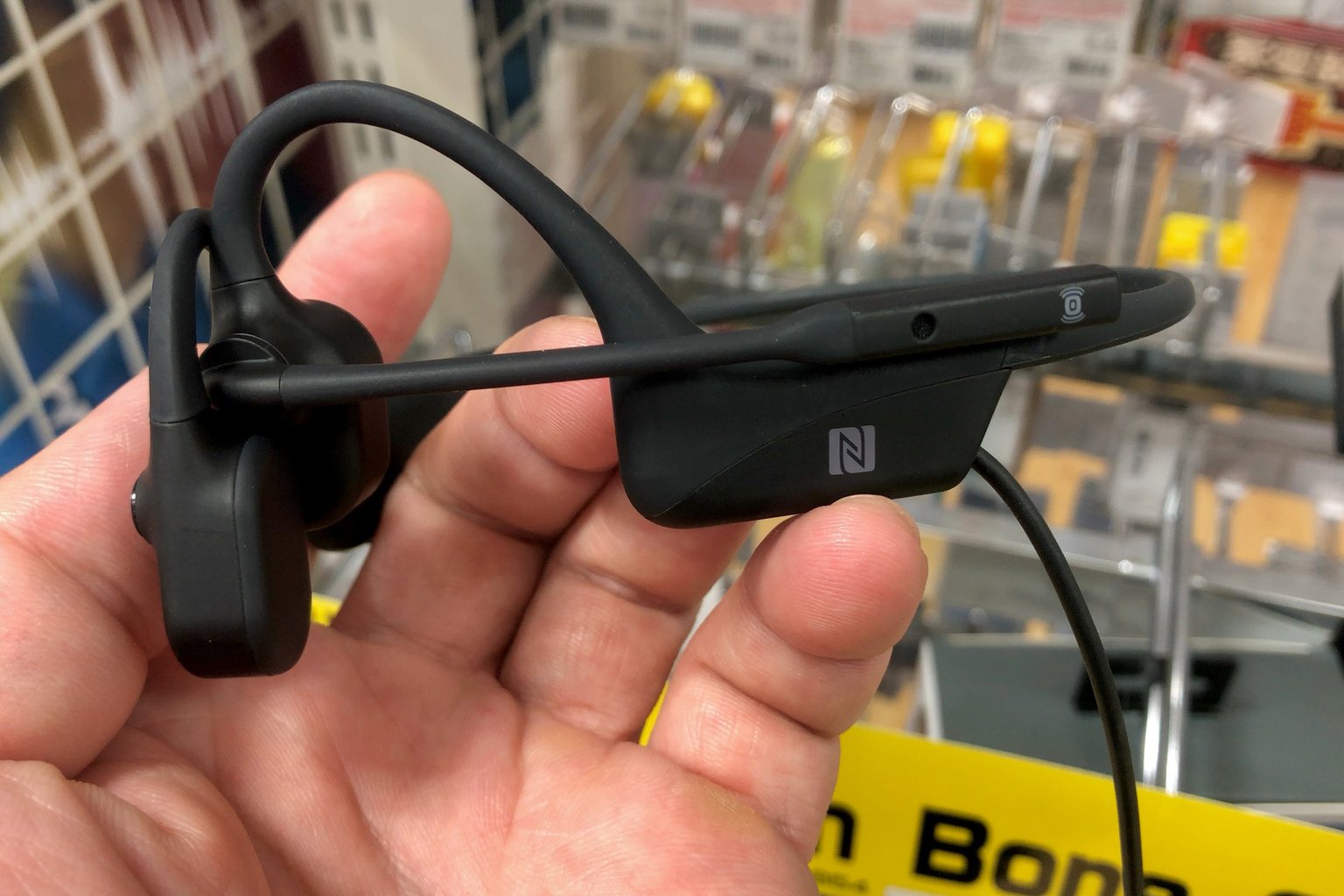
The detail that separates a real IP claim from a sticker is the sample state. A 1 m immersion test with a rubber flap closed proves the flap works. It does not prove the product survives a customer who charges it wet, and it does not prove anything about the button seals. Ask three questions of any IP report: which laboratory issued it, what the sample looked like when it went in, and whether the units tested came off the production line or out of the engineer's drawer.
Salt and sweat are their own problem. A splash of fresh water in a lab is not the same as chloride sitting on a pogo pin for 8 hours at skin temperature. If your market is running or industrial, ask whether the charging contacts are gold-plated and whether the factory runs a sweat-equivalent corrosion test, not just the IP test.
Where the yield actually goes
Bone conduction assembly has four places where money disappears, and a quotation that does not account for them is a quotation that will come back as a price increase at the second order.
Transducer bonding. The vibrator is bonded into its housing and the pad is bonded to the housing face. An adhesive void of a fraction of a millimetre turns into a rattle at high volume, and it cannot be detected by listening at low level on a noisy line. Good factories do a swept-sine check on 100% of units; cheap ones do a "listen" check.
Overmolding scrap. The band is where cosmetic rejects concentrate: flow lines, bubbles at the wire exit, silicone flash on the pod joint. This is the single biggest reason a first run comes in under plan, and it is normally invisible in the quotation until the second purchase order.
Leak test false rejects. A 100% air-leak test is the only way to hold an IP claim across a production run, and it rejects good units as well as bad ones if the fixture is not tuned. Ask for the reject threshold and the false-reject rate, not just "we test 100%".
The pod-to-band joint. Assembly of the finished pod into the overmolded band involves either adhesive or a mechanical clamp, and either one can be done in a way that passes final inspection and fails in month six.
A supplier who can give you last quarter's first-pass yield for the exact model you are buying — not the factory average — is telling you more than any catalogue. If the number is above 95% on a mature model, fine. If it is above 95% on a brand-new shell, ask to see the line.
Eight lines for the RFQ
This is the list we put in front of a new supplier, in this order. It is deliberately about process, not about features, because features are what every quotation already lists.
- Transducer construction. Moving coil or piezo, number of coils and reeds, housing material, impedance, and the drawing for the pad.
- Measured output at 1 kHz and 4 kHz on an artificial mastoid, at a stated drive level, with the test setup named.
- Distortion at maximum volume, plus the volume setting at which the unit leaves its linear range.
- Second driver, if offered. Size, own amplifier channel or parallel tap, crossover frequency, and whether the port is tuned or sealed.
- Band specification. Wire alloy and diameter, clamp force in newtons at a stated span, bend-cycle fixture and cycle count, and size variants with their head-width range.
- Weight budget for the finished unit with tolerance, and the weight of the two heaviest components inside the pods.
- IP target and test report. Level, laboratory, sample state at test (port open or closed, new or aged), and whether units came from mass production.
- Field data. The three most common warranty return reasons for this model over the last 12 months, with percentages.
None of these are unusual requests. A factory that builds this category for real brands answers all eight in a day. A factory that assembles whatever its transducer supplier sends will answer three and change the subject on the rest — which is exactly the information you needed.
What this means before you commit tooling
Three decisions, in the order they cost money.
Do not approve tooling off a hand-built sample. The sample in the meeting was assembled by an engineer with tweezers and time. Production tooling changes the wall thickness of the pod, the flow of the silicone and the position of the pad by fractions of a millimetre — and the pad position is what the acoustic tuning depends on. Ask for a pilot run of 300 pcs from production tooling before you sign the packaging artwork, and inspect it as a pilot, not as a sample — the inspection that matters at this stage is the one that measures the joint and the seal, not the one that counts cartons.
Treat the band and the seal as the two parts you cannot fix later. Firmware, EQ and app can all be revised after launch. A band that tears and a port that leaks cannot — the fix is a new tool and a new validation cycle. Spend your negotiation time there, not on the colour range.
Buy the transducer as a named part. If the quotation says "bone conduction speaker" with no part number and no supplier, you have bought a promise. Ask for the part number, the second-source plan, and the price at 1,000 pcs and at 3,000 pcs so you can see whether the vibrator is a commodity or a bottleneck. In this category it is usually the latter, and it is the reason a quote can be firm for 30 days and unstable after that.
Building a bone conduction product for 2027?
We are a sourcing and OEM partner in Shenzhen, working across wireless audio, open-ear wearables and smart glasses. Send the use case, the IP level you actually need and the market you are certifying for, and we will tell you which transducer construction fits, what the band has to survive, and where the cost moves between 500 pcs and 3,000 pcs.
See the bone conduction headsets we build →