
Smart rings took 20 years to work: what a buyer should check before sourcing one
The category did not fail for two decades because the idea was weak. It failed because a ring is the worst place to put a radio, a cell and an optical sensor at the same time. What changed, what the 2026 spec sheets actually say, and the six numbers a buyer should settle with a factory before tooling is cut.
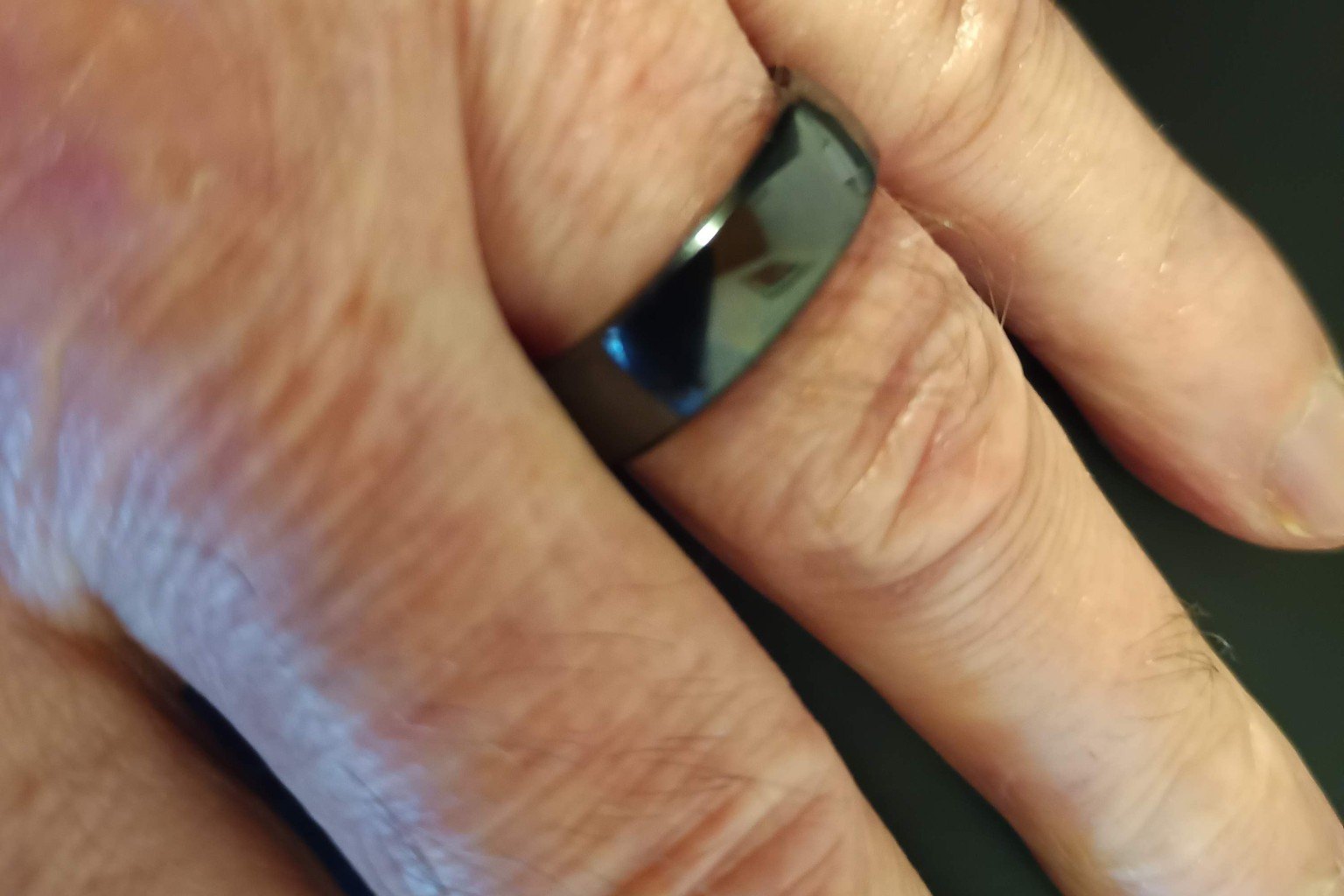
Header photo: Johann56 / Wikimedia Commons, CC0
Smart rings were not a slow idea. They were an impossible one for about 20 years, and the reason is arithmetic: a ring gives you roughly 1.5 to 3.5 cubic centimetres of internal volume, and a watch gives you 10 to 15. Everything that makes a wearable useful has to fit in a fifth of the space, wrapped around a finger that moves, sweats and blocks radio waves. The category crossed the line when three separate problems — a cell small enough, an antenna that works inside metal, and an optical path that survives 23 hours of daily wear — were solved close enough together that the product stopped embarrassing itself. IDC puts 2026 shipments at 4.9 million units, up 12.8%, with about 6.3 million by 2030. That is still small next to wrists. It is also the first time the number has been worth arguing about.
If you are buying rather than admiring, the history is not the useful part. The useful part is that the constraints which held the category back are the same constraints that decide whether your programme ships on time, and they show up on a drawing long before they show up in a review.
Three waves, one shape
The idea is older than the products. Engineers were fitting sensors and transmitters into rings in the 1990s, and by the early 2000s there were prototype rings that opened doors and swapped contact details at trade shows. None of them survived a week of normal wear, which is the test that matters and the one a demo never runs.
The first wave that shipped was about doing one trick. In 2013 a crowdfunded NFC ring let people unlock a door or a phone by tapping, and it worked — the demo was real. It also solved a problem almost nobody had, because contactless payment had not arrived yet and a ring that replaced a key card was a novelty, not a habit.
The second wave was measurement. Oura started in Oulu, Finland, in 2013, put a ring on stage in March 2015 and went to Kickstarter that August, where it hit a US$100,000 target in 15 hours and closed with roughly US$650,000 from about 2,400 pre-orders in 37 days. The pitch was not payments. It was sleep. That choice turned out to be the whole category, because sleep is the one thing a ring can measure better than a watch can.
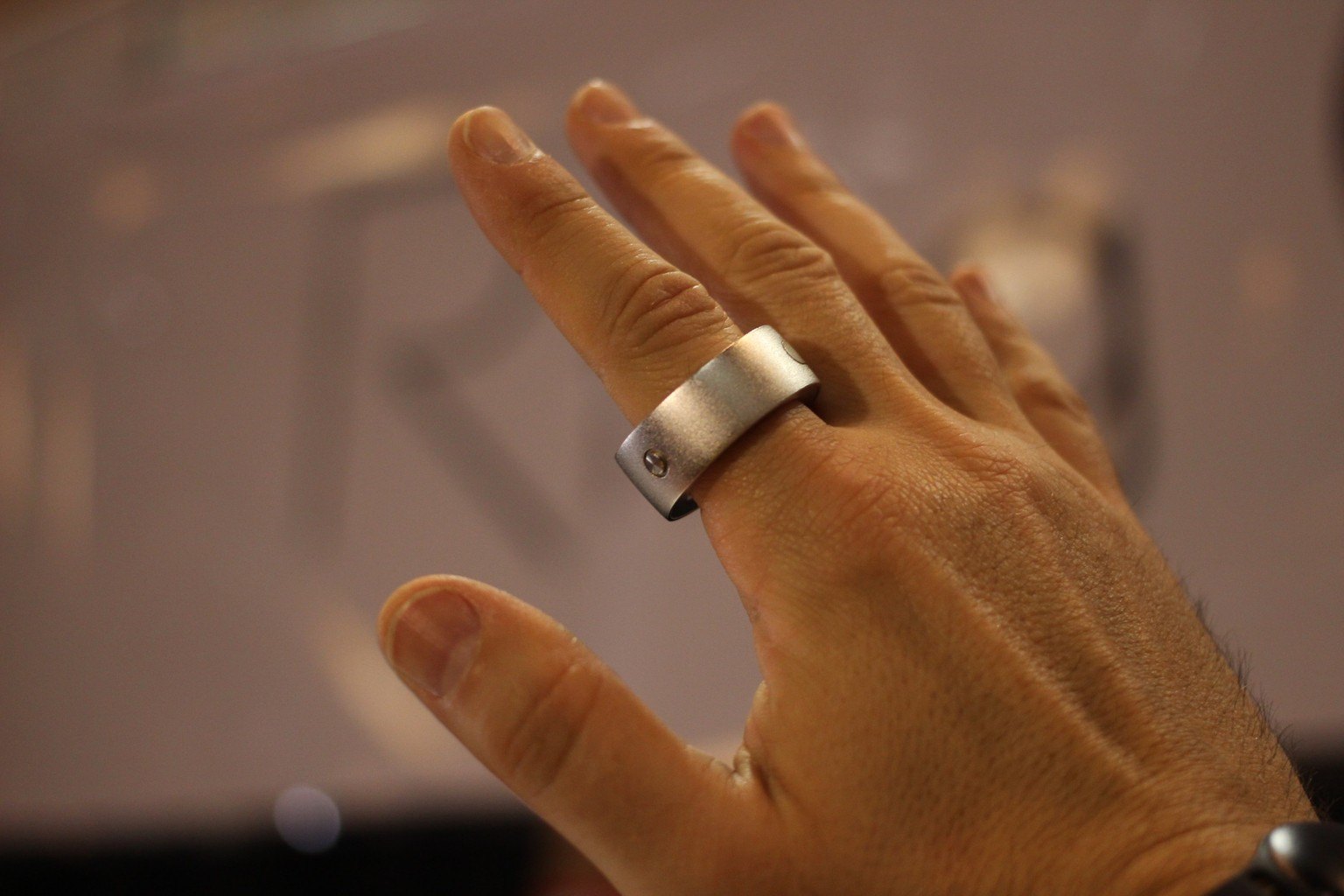
The third wave started around 2024 and is still running. Samsung shipped the Galaxy Ring in July 2024 at US$399.99 with no subscription, which did more for the category than any advert, because it told distributors that rings were a product line rather than a science project. By the time Oura filed its S-1 in September 2026, the numbers were no longer niche: 3.1 million rings sold in the nine months to 30 June 2026, 3.6 million on a trailing 12-month basis, US$1.21 billion of revenue in those nine months at 74% growth, and 5.0 million paying members.
Two details in that filing matter to anyone building a competing product. Revenue per ring worked out at about US$311 across hardware and membership, and membership was already 20% of revenue at 121% growth. That is not a hardware business with a subscription attached. It is a subscription business that has to ship a ring to start the clock.
The wrist was the wrong place to measure
Watches have measured heart rate for a decade, badly, in the one situation people care about most: at night. A watch sits on a wrist that bends, presses into a mattress and shifts under the strap, and every shift moves the optical sensor off the artery it was reading. The failure is not random noise. It is a gap in the data that no algorithm can fill, and it happens during the eight hours when resting heart rate and temperature are most informative.
A finger solves this mechanically. The digital arteries run close to the surface, the ring is held by the knuckle rather than by a strap tension setting, and the sensor cannot slide unless the ring is the wrong size. That is why the industry figure that stands out in Oura’s filing is not the revenue. It is the median daily wear time of about 23 hours. A device that is worn for 23 hours is not competing with a watch on features. It is competing with a wedding band on comfort, and it is winning on the metric that makes the data worth having.
Here is the part buyers usually get wrong: that 23 hours is a mechanical achievement, not a firmware one. A ring has to be light enough to sleep in, sealed enough to shower in, and smooth enough on the inside that the sensor dome does not leave a mark. Oura quotes 2.0 to 2.69 grams and 100 metres of water resistance on its current model. Samsung quotes 2.3 to 3.0 grams with 10 ATM and IP68. Those numbers sound like marketing. They are actually the tolerances your factory has to hold, because a 0.3 mm assembly error in a 2.28 mm case is a visible bump on the inside of a finger.
What actually took 20 years: a 25 mAh cell
Look up the battery in any smart ring and you will find a number that looks like a typo. The Galaxy Ring ships with 18 mAh in the smallest size and 23.5 mAh in the largest. That is not a battery in the sense most product managers mean; it is a curved pouch cell with roughly the capacity of a twentieth of a phone battery, and it has to run a radio, three LED channels, a photodiode array, an accelerometer and a temperature sensor for a week.
Current cells in this class land around 200 to 250 watt-hours per litre, which is how you end up with 15 to 25 mAh in a shape that fits a ring. Everything else is power discipline. Continuous optical sampling at 100 Hz draws roughly 3 to 5 milliamps, so designs duty-cycle to about 25 Hz for resting heart rate and burst to full rate only during activity, which is where the 40% to 60% runtime gains come from. A well-designed ring draws under 50 microamps in deep sleep. Get that wrong and no cell chemistry saves you.
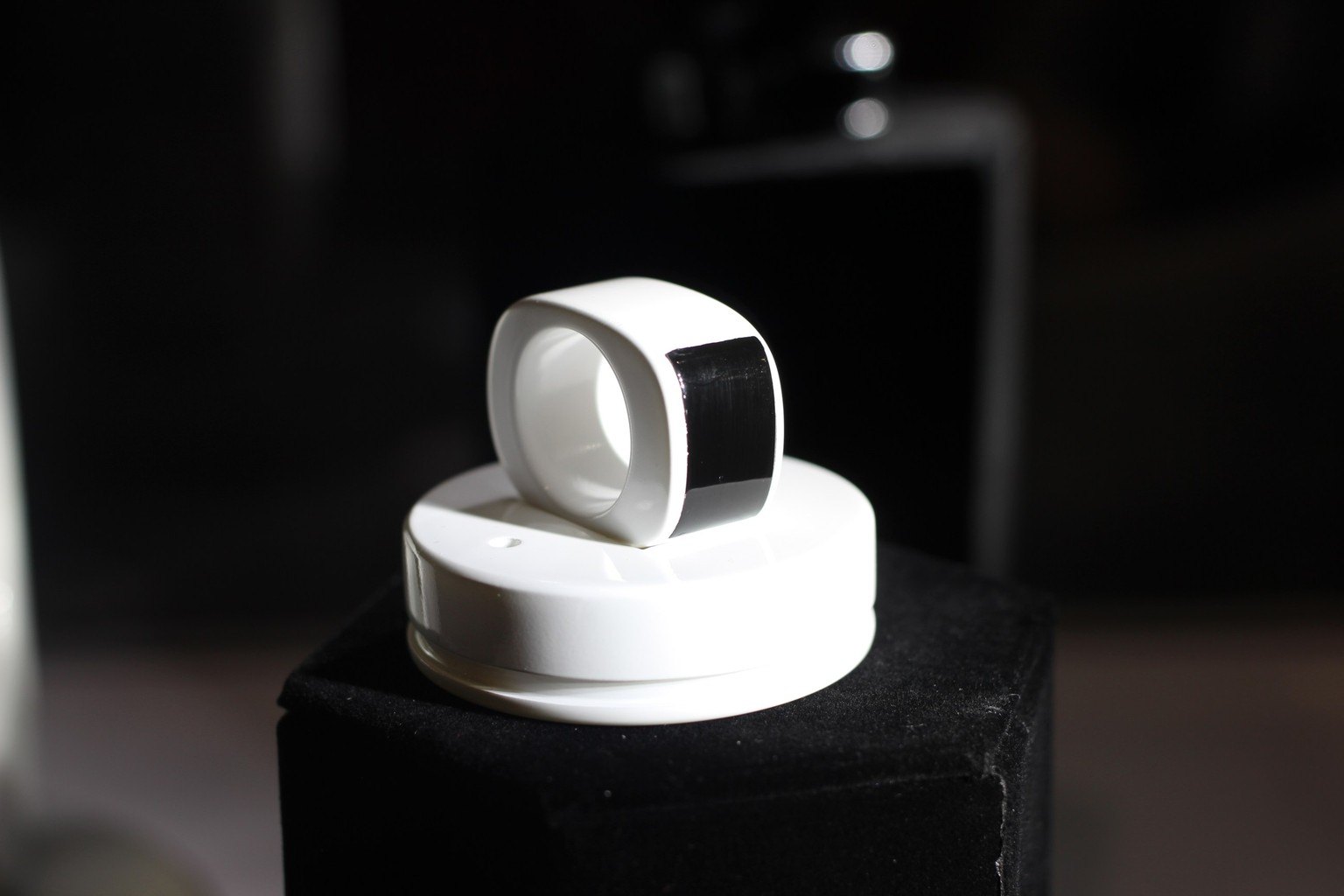
The 2026 generation moved the ceiling again, and the interesting part is that it moved by shrinking rather than by adding capacity. Oura’s current flagship measures 6.09 mm wide and 2.28 mm thick and weighs from 2 grams, against 7.9 mm and 2.88 mm on the model it replaced, and it is rated for 6 to 9 days instead of 5 to 8. Same category of cell, better power architecture, smaller case. That is the shape of every real improvement in this product: a millimetre off the wall buys more than a milliamp-hour in the cell.
For a buyer, this converts into one question that most quotations do not answer: what is the runtime at the smallest size in the range? A ring family is not one product. The cell in a size 6 is smaller than the cell in a size 13, and the honest suppliers will quote you two numbers. The ones who quote one number are quoting the largest size and hoping you do not ask.
The antenna is fighting the finger
A Bluetooth antenna inside a metal tube, pressed against a bag of salt water, is close to the worst radio environment a consumer product can have. Body tissue is a lossy dielectric at 2.4 GHz, and the housing that makes the product feel like jewellery is the same housing that kills the signal. A metal shell can cost you around 12 dB of link budget before you have done anything wrong, which is roughly the difference between a stable connection across a room and a dropout when the phone is in the next room in a pocket.
The fix is mechanical and unglamorous. Designs cut a slot in the inner housing, or build a chip antenna into the board stack with the housing as part of the radiating structure, and then tune the whole assembly with the real shell, the real battery and a real finger in place. Suppliers who do this properly report recovering 7 dB or more from retuning, ground-trace re-routing and enclosure matching. Suppliers who do not will hand you a prototype that works on a desk and fails on a hand.
This is the single most common reason a ring programme slips, and it is invisible in a quotation. Ask what OTA testing was done, on how many units, and with what RSSI margin at the worst-case orientation. If the answer is a datasheet figure for the module, there is no answer.
Tolerance is the product
Fitting a rigid-flex board, a curved cell, two or three optical paths and a charging coil into a 2.28 mm wall leaves no room for the tolerances that normal assembly absorbs. Production rings use 4 to 6 layer HDI boards with laser-drilled microvias, traces and spacing down to 3 mil — about 0.075 mm — and via-in-pad for the sensor and radio packages. The board stack is usually split into rigid islands joined by polyimide ribbons so it can follow the curve of the ring without cracking solder joints.
None of that is exotic on its own. What makes rings hard is that every step has a yield cost, and the yields multiply. A 99% step repeated across a dozen steps is 89%. This is why a pilot run of 300 pieces with a stated 98.3% yield is a meaningful data point and a promise of "99% yield" with no pilot is not.
Two tests separate a real ring line from a line that has simply built watches before. The first is a 100% optical path consistency check: every unit gets measured for light return through the sensor window, because a bubble in the potting or a 0.05 mm shift in the window seat changes the reading without changing the outside of the ring. The second is 100% OTA verification on the finished unit, not on a sample. Rings are too small for sampling to be representative — one housing batch can shift the resonance enough to move the yield curve.
Every size and finish is a separate build
A watch is one case with a strap in three colours. A ring is nine sizes in six finishes, and each combination is its own set of tools, its own cell, its own shell and its own cosmetic acceptance. The Galaxy Ring ships in sizes 5 to 13 and three titanium finishes. Oura sells sizes 6 to 13 in six finishes, and its current generation puts a hard PVD coating on every finish rather than only the premium ones.
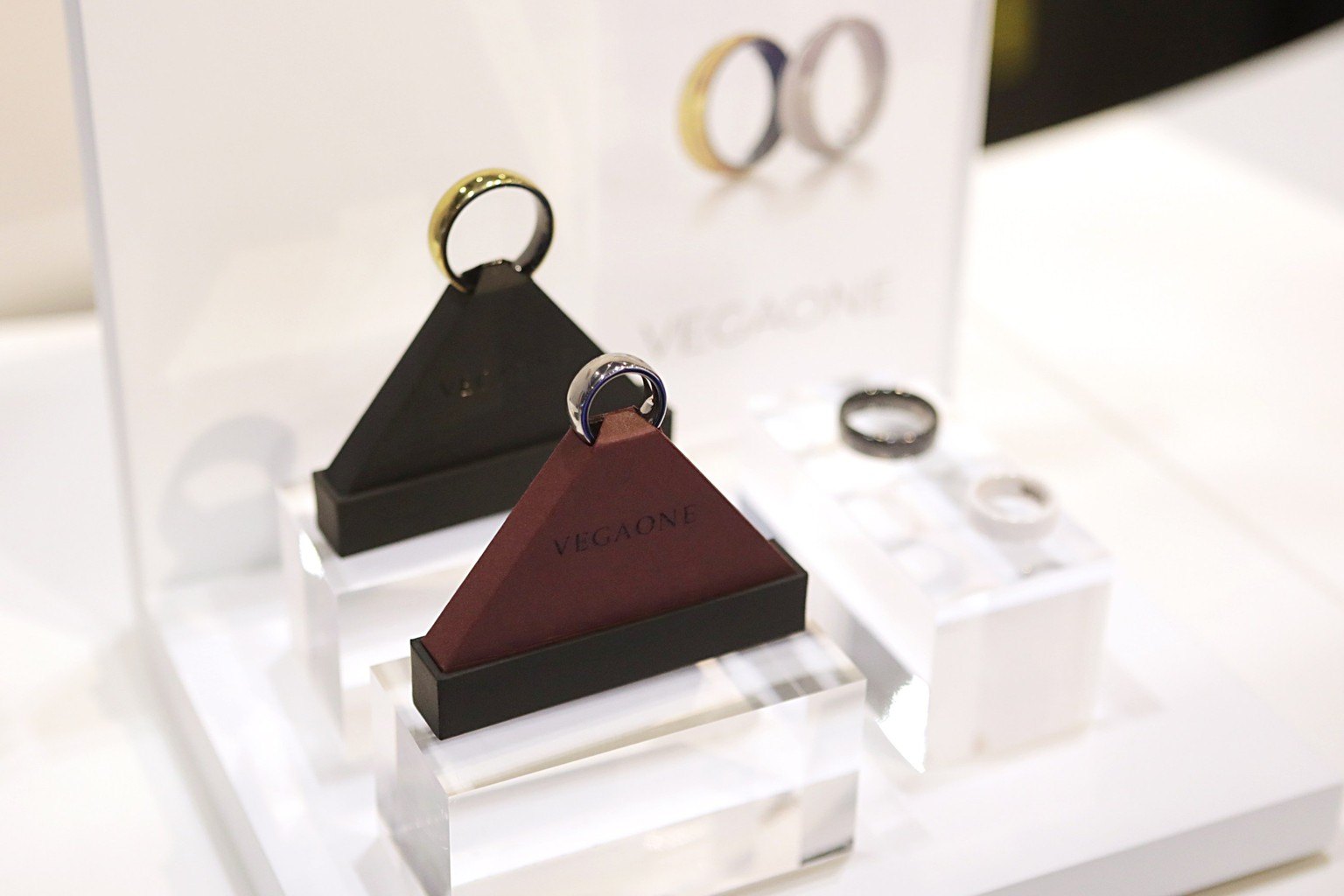
The material choice is a manufacturing decision before it is a design one. Zirconia ceramic is radio-transparent, scratch-resistant at around 8.5 on the Mohs scale, and the most expensive to machine because it needs diamond tooling and post-sintering grinding. Grade 5 titanium sits at roughly 6.0 Mohs and 4.43 g/cm³, machines well and is conductive, so the antenna has to be designed around it. 316L stainless is the cheapest and the least forgiving on radio, at 5.5 Mohs with a density near 7.99 g/cm³ that shows up immediately on the scale.
Here is the commercial consequence. If a buyer asks for six finishes across six sizes, they have asked for 36 SKUs, 36 sets of cosmetic standards and a colour-matching problem at every anodising or PVD run. Most first-time ring programmes should launch with two finishes and a size range of five, then extend. The tooling is not the expensive part. The scrap from a colour that drifts outside tolerance is.
And the paint is not the last step. A coated shell cannot be re-polished without losing the dimensional tolerance that the seal depends on, so a cosmetic reject after coating is a scrapped part, not a rework. Suppliers who quote a cosmetic yield above 95% on a first PVD run are usually quoting a different product.
The business model is part of the specification
Oura charges US$5.99 a month for the full feature set. Samsung does not charge a subscription at all, and neither do the smaller challengers, because a subscription on a US$399 device is a hard sell outside the segment Oura already owns. This looks like a marketing choice. It is a hardware requirement.
A product that depends on subscription revenue has to keep working for years, which means firmware updates over the air, a secure element, and a sensor set whose calibration does not drift out of range at month 18. A product that sells on a one-off price can be simpler, but it also has to be cheaper, which pushes the BOM toward a smaller cell, fewer optical paths and a plastic or coated shell instead of ceramic.
Decide which model you are in before the drawing is fixed, because the two answers lead to different boards. A brand that plans a subscription and specifies the cheapest optical stack will spend year two explaining to subscribers why the sleep data got worse.
What to settle before tooling
Six numbers, one document and one clause. Get these in writing, and the programme becomes a schedule problem instead of a discovery problem.
- Wall thickness and internal volume. Anything above 3 mm is a comfortable ring; 2.5 mm is where the engineering gets expensive; 2.28 mm is currently the benchmark set by the market leader. Ask what volume is left for the cell after the board, the coil and the seal.
- Cell capacity at the smallest size, and the runtime claim attached to it. Require separate figures per size band, and require the test conditions: which features were on, what the screen-off standby draw was, and whether the claim was measured or modelled.
- Optical path count and window material. Two or three photodetector paths with sapphire or coated glass are the current norm. Ask for a cross-section drawing that shows the LED-to-skin distance, because that distance is what the calibration curve is built on.
- Antenna type and OTA evidence. Slot antenna in the inner housing or chip antenna in the stack, plus a test report on finished units with the worst-case RSSI stated. Not a module datasheet.
- Sealing method and its test. Ultrasonic welding, epoxy potting or a gasket plus adhesive all work; what matters is whether the process is validated per size, because the same seal design behaves differently at 15 mm and 22 mm diameter. Require 10 ATM or IP68 evidence per size, not per family.
- Cosmetic standard by zone. Which surfaces are A-zone, what defect size is acceptable, and what colour tolerance applies after coating. This belongs in the same document as the sample sign-off, for the reason a sample sign-off sheet has to contain explains: without a written standard, the first mass-production argument is about opinion.
- The change-notification clause. Any change to the shell, the cell, the antenna or the sensor window has to come to you in writing before it ships. In a product this small, a supplier switching a potting compound to save a step can change the optical reading without changing the drawing, and you will find out from reviews rather than from the line.
Two further items are not numbers but decide the economics. First, the MOQ logic is different from earbuds, because a ring is sold by size: a 1,000-piece order across nine sizes is 111 pieces per size, and tooling amortised over 111 units per cavity is a different calculation from 1,000 units of one colourway. Read what an MOQ of 1,000 actually includes before you assume the number transfers. Second, certification follows the radio and the battery, not the form factor, so a ring needs the same radio file and the same transport testing as any other transmitter, with the added complication that the antenna is inside the product with no external access — the outline in which marks a product actually needs applies unchanged.
We are blunt with buyers about one thing: a ring is not a small watch. If the brief is a watch feature set at a ring size, the answer is no, and the earlier that answer arrives the cheaper it is. What a ring does well is one job, continuously, with almost no attention — and every successful product in this category has been narrow rather than complete.
Sourcing a ring, or a wearable that has to fit in 3 mm?
Send the size range, the cell budget and the sensor list. You will get a feasibility answer on the wall thickness and the optical stack before a tool is cut, plus the test plan that goes with it.
See how we run an OEM programme →