
CE, FCC and RoHS: which marks your product actually needs
A single speaker can carry eight marks and still be unsellable in one country. What each regime really requires from an earbud, a wearable or a speaker, which of the four documents is evidence and which is letterhead, and the four questions to settle before you ask a factory for a certificate.
Header photo: Pittigrilli / Wikimedia Commons, CC BY-SA 4.0
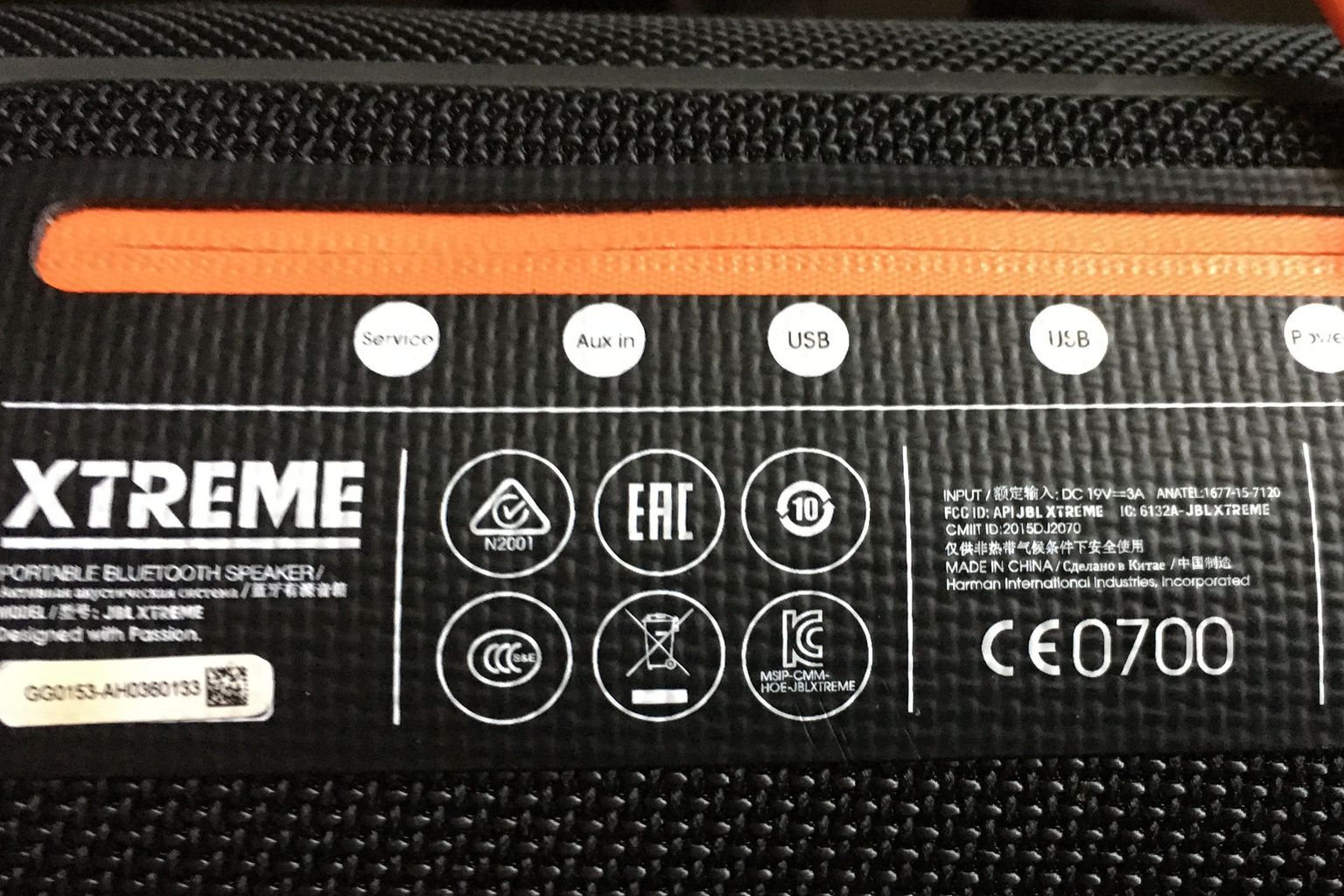
You cannot buy CE. CE is a self-declaration that your product meets a set of EU directives, and the evidence behind it is a file you keep for a decade. RoHS is one of those directives, not a certificate sold separately. FCC is a different system again: an ID number issued for a transmitter, visible in a public database, printed on the product. And the mark most buyers still budget for Britain, UKCA, has been optional since 1 October 2024 because Great Britain recognises CE indefinitely. Which marks your product needs is decided by four questions, and none of them is "what does the factory have a certificate for".
The confusion is not stupidity. It comes from the word certificate, which the industry uses for four different objects with four different legal weights: a test report, a declaration of conformity, a certificate issued under a scheme, and a registration number. A factory email that says "we have CE and RoHS certificates" can mean any of those, and usually means the weakest one.
Here is the part that decides whether your first container clears or sits in a bonded warehouse for a week: the document that customs, market surveillance and your retailer all look at is the declaration of conformity, and it carries the name of the manufacturer of record. If that name is the factory and not you, the file does not belong to your brand. Fixing it after the goods are on the water is expensive. Fixing it before the tooling is cut costs a conversation.
Four questions before any certificate
Answer these in order. Each answer removes whole rows from the checklist, and together they save more money than any negotiation with a lab.
1. Which market, exactly. The EU and Great Britain are not the same regime any more, and the United States shares almost nothing with either. A product sold through a UK retailer and a product sold through a German retailer can be the same hardware with the same test data and still need different paperwork and different labels.
2. Does it transmit. A Bluetooth earbud, a Wi-Fi camera and a 2.4 GHz presenter are radio equipment. A wired speaker, a power bank without a radio and a passive accessory are not. This one answer changes the entire cost structure, because radio testing is the expensive part.
3. Does it contain a battery, and can the user take it out. A battery brings transport testing, battery-specific labelling that became mandatory in stages from 18 August 2025, and — from 18 February 2027 — a European design requirement that the end user must be able to remove and replace the whole pack with commercially available tools. That last one is a mechanical design decision, not a paperwork task, and it has to be settled at the drawing stage.
4. Who is the legal manufacturer. Under EU rules, the company whose name goes on the product is the manufacturer, whether or not it owns a single machine. If you put your brand on the housing, you are the manufacturer, the factory is a subcontractor, and the declaration of conformity is yours to sign. This is the single most misunderstood point in private-label sourcing, and it is the reason a factory’s spotless test report often cannot be used by the buyer who paid for it.
The European Union: one mark, six obligations
The letters CE sit on the product once. Behind them are several legal instruments, and a compliant technical file references each one that applies.
| Instrument | What it covers | How compliance is shown |
|---|---|---|
| Radio Equipment Directive 2014/53/EU | Radio, EMC, safety and spectrum use of anything that transmits | Test report against harmonised standards, plus the DoC |
| EMC Directive 2014/30/EU | Emissions and immunity for non-radio equipment | Test report, plus the DoC |
| Low Voltage Directive 2014/35/EU | Mains equipment between 50 V and 1,000 V AC | Usually the charger or adapter, rarely the earbud itself |
| RoHS 2011/65/EU, as amended by (EU) 2015/863 | Ten restricted substances in electrical and electronic equipment | Material declarations, XRF screening, wet chemistry where needed |
| Battery Regulation (EU) 2023/1542 | Battery labelling, removability, producer registration | Label artwork, design evidence, registration numbers |
| WEEE 2012/19/EU and GPSR (EU) 2023/988 | Take-back marking and registration; general product safety; an EU responsible person | Bin symbol, national registrations, name and address on the product or packaging |
The declaration of conformity is a one-page document. It names the product, the directives applied, the standards used, the signatory and the place and date. It is signed by the manufacturer or an authorised representative established in the EU. It is not issued by a laboratory, and no laboratory can issue one on your behalf — which is why a lab that offers to "give you CE" is selling you a test report and a template.
The technical file is the part nobody asks about until an inspector does. It has to sit somewhere for 10 years after the last unit is placed on the market, and it has to contain the test reports, the risk assessment, the label artwork, the bill of materials and the declaration itself. Ask a prospective supplier who holds theirs, and in whose name. A five-second pause before the answer tells you more than the answer.
The cybersecurity clause that arrived in August 2025
Most checklists still in circulation in 2026 stop at safety, EMC and spectrum. Delegated Regulation (EU) 2022/30 added three essential requirements to the Radio Equipment Directive, and they have applied to in-scope products placed on the EU market since 1 August 2025: the device must not harm the network, it must protect personal data and privacy, and where it enables payments it must protect against fraud.
The scope sentence matters more than the list. It covers internet-connected radio equipment, and separately it covers any radio equipment that processes personal data and is designed to be worn on the body or hung from clothing. Earbuds with a companion app and smart glasses are caught by the second limb even when they never touch a network themselves. Products that stream audio over Bluetooth and store nothing may be out of scope, but the boundary is drawn around data processing, not around connectivity, and it needs a written assessment rather than an assumption.
Compliance normally runs through the EN 18031 series, three parts matched to the three requirements. Parts of those standards are not harmonised, and where a harmonised route does not exist a notified body has to be involved. That is the difference between a two-week self-declaration and a six-week notified body file, and it is worth knowing which one you are in before the launch date is fixed.
The framework is also moving. The Cyber Resilience Act, Regulation (EU) 2024/2847, takes over cybersecurity for products with digital elements, with vulnerability reporting obligations starting in September 2026 and full application on 11 December 2027. Delegated Regulation (EU) 2026/339 repeals the RED cybersecurity regulation on that same date, so the two do not overlap. For a product designed now, the practical reading is that the security file you build for EN 18031 is the file the CRA will ask for later, and building it twice is the expensive option.
Great Britain: the second mark you do not have to buy
After Brexit, the UK introduced UKCA and set a deadline for replacing CE. That deadline was extended, then removed. The Product Safety and Metrology etc. (Amendment) Regulations 2024 came into force on 1 October 2024 and recognise CE marking indefinitely for 21 product regulations, including radio equipment, electrical safety, EMC and RoHS. A CE-marked product can be placed on the GB market with no UKCA mark and no end date.
So when a UK distributor sends over a checklist demanding UKCA, they are usually working from a document written in 2021. Sending it back with the regulation cited ends the conversation. There is one trap: UKCA remains available and is still required for a few categories outside those 21 regulations, and Northern Ireland follows EU rules under the Windsor Framework — CE, or CE plus UKNI where a UK body did the assessment. UKCA alone is not valid there.
The saving is not trivial. A separate UK conformity assessment on a Bluetooth product commonly runs into the low thousands of dollars and several weeks, for a market you can serve with the file you already have.

The United States: an ID number, not a certificate
The FCC does not certify products for safety. It regulates interference, and it splits equipment into two worlds.
Anything that deliberately transmits — Bluetooth, Wi-Fi, a 2.4 GHz remote — is an intentional radiator and needs Certification. That means testing at an accredited laboratory, review by a Telecommunications Certification Body, and a grant that publishes an FCC ID in the commission’s public database. The ID is two parts: a grantee code assigned to the applicant, then a product code chosen by them. It has to appear on the product, or in an electronic label reachable from the device menu, and the Part 15 compliance statement has to be in the manual.
Everything digital that does not transmit — a wired speaker, a plain charger — falls under supplier’s declaration of conformity instead. No filing, no ID number, but the responsible party must be established in the United States and the test records have to be kept and produced on request.
The mistake that costs the most here is buying a pre-certified module and assuming the product is covered. A module grant covers the radio under the conditions it was tested in: the antenna, the shielding, the host PCB layout and the separation distances. Put that module behind a metal grille, add a second antenna, or move it 3 mm closer to the battery, and the grant no longer describes what you are shipping. The finished device still needs its own assessment, and the module’s conditions have to be met or re-tested.
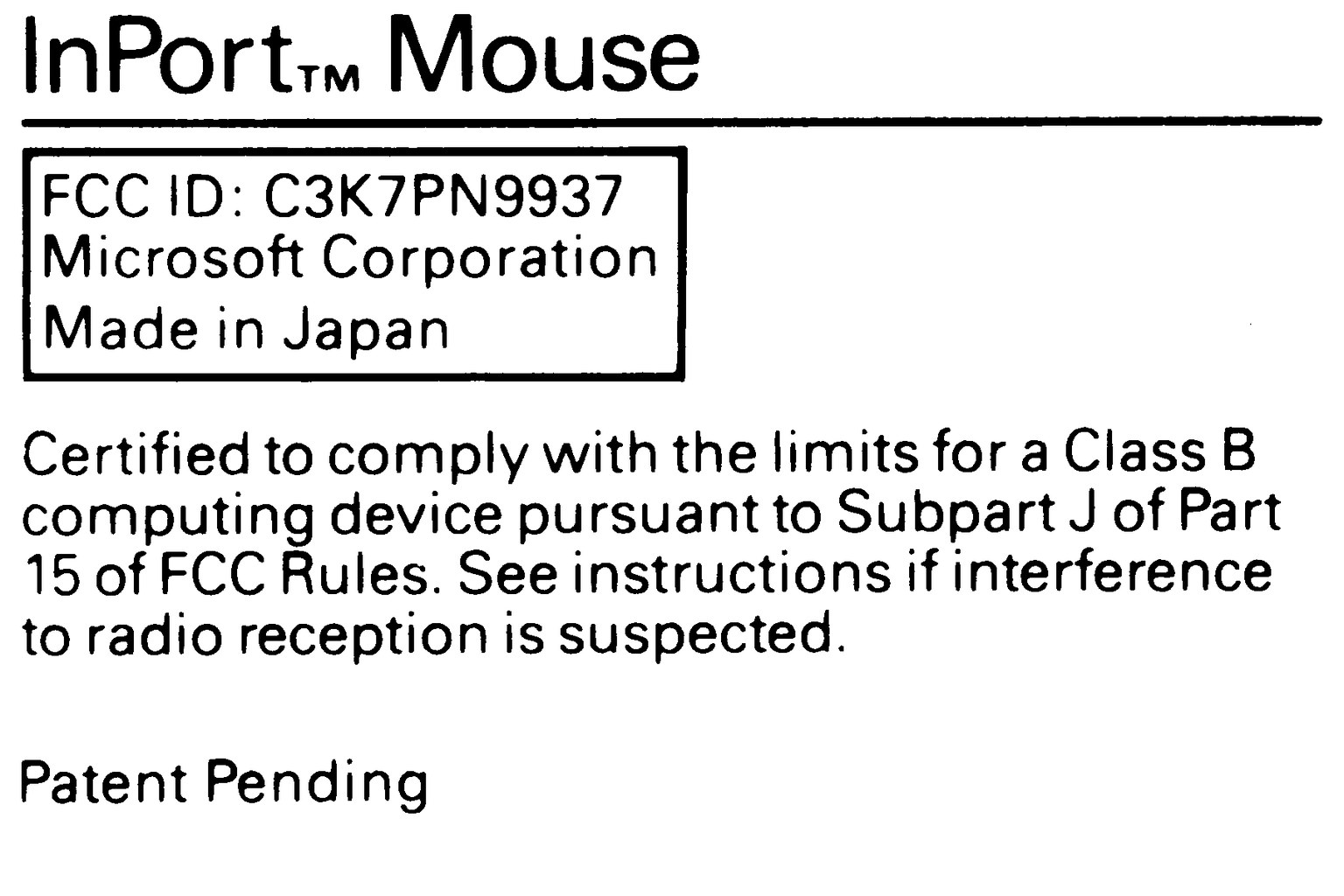
Two more things about the US that surprise European buyers. There is no federal RoHS equivalent, so a Chinese factory that treats RoHS as the universal green mark is technically right about Europe and wrong about America; what exists instead is a patchwork of state e-waste laws and California’s Proposition 65 warning regime. And UL is not legally required for consumer electronics — but large retailers, insurers and commercial buyers ask for a nationally recognised testing laboratory mark anyway, and refusing to provide one closes those channels regardless of what the FCC says.
RoHS: ten substances and one rule that decides everything
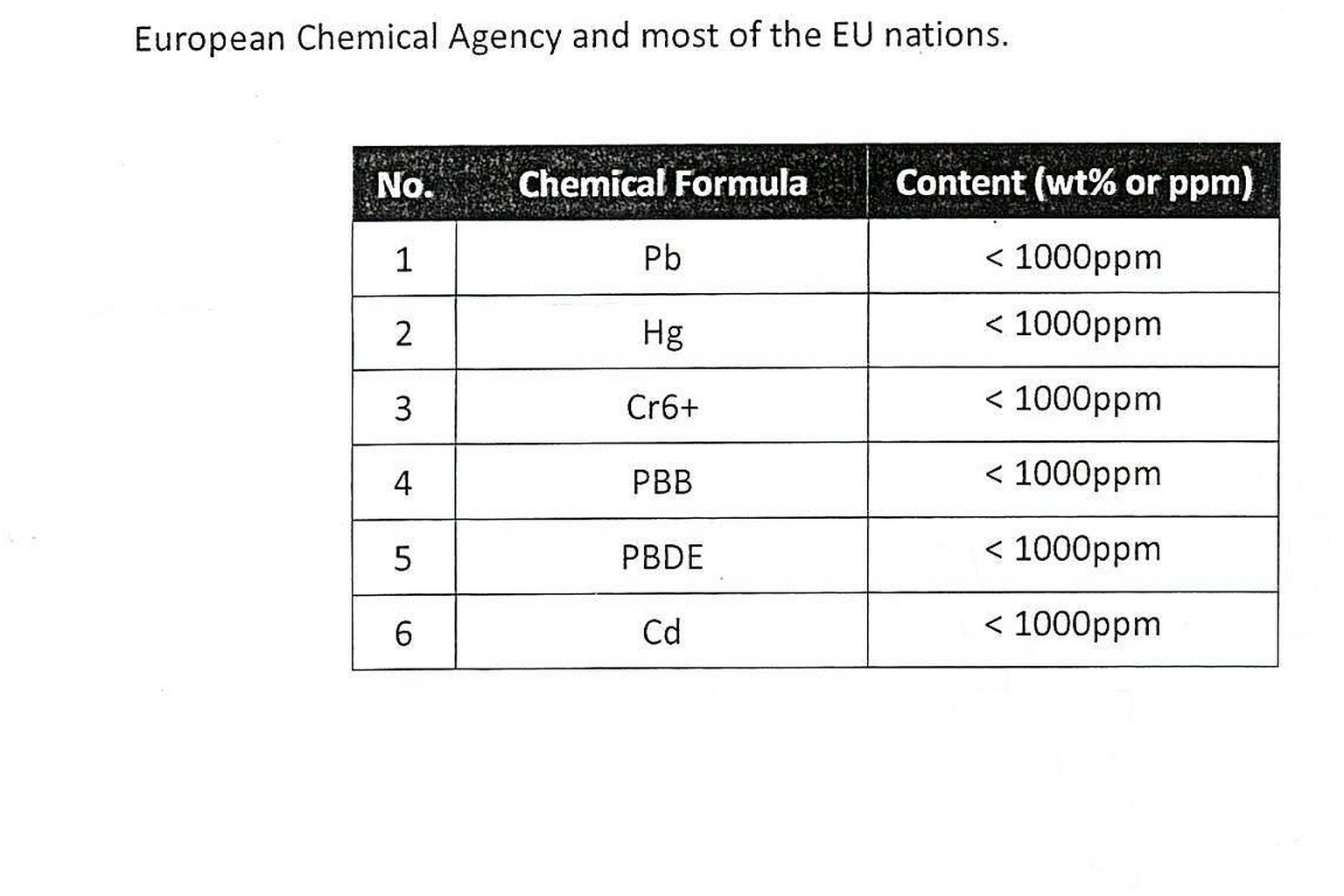
EU RoHS restricts lead, mercury, hexavalent chromium, two brominated flame retardants and four phthalates at 0.1% by weight, and cadmium at 0.01%. The four phthalates — DEHP, BBP, DBP and DIBP — have applied since 22 July 2019. The number that matters is not ten. It is homogeneous material.
Compliance is judged material by material, not on the assembled product. A 0.4 g solder joint and a 400 g housing are separate verdicts. This is why an average of the whole device is meaningless, why a supplier cannot dilute a bad screw by adding good plastic, and why the cheap screening tool of choice — a handheld XRF gun — can clear a product that a laboratory would fail. XRF reads elements. It cannot see the phthalates at all, and it cannot tell hexavalent chromium from the trivalent form used in the same alloy family. A screening pass is a reason to test further, not a result.
The technical file is built to EN IEC 63000 and kept for 10 years. It rests on declarations from material and component suppliers, verified by testing at a frequency you choose. If a factory can only produce a one-page letter saying "our product conforms to RoHS", the file has no floor under it.
The exemptions are where 2026 differs from every older checklist. The lead entries in Annex III were restructured by three delegated directives published on 21 November 2025 and applied from 1 July 2026. The old broad entry for lead in high-melting-temperature solder, 7(a), became seven sub-entries, 7(a)-I through 7(a)-VII, each tied to a specific application and each requiring at least 85% lead by weight. The parent entry runs to 30 June 2027 and the sub-entries to 31 December 2027.
Practically, this kills a sentence that appears in thousands of declarations a day: "lead present, exempt under RoHS Annex III 7(a)". Without a sub-entry, without a lead percentage, and without a description of the application, that claim cannot be checked — and an end product is not compliant merely because a component supplier wrote it down.
Four documents, four different weights
| Document | Who issues it | What it proves | What it does not prove |
|---|---|---|---|
| Test report | An accredited laboratory | That a specific sample, on a specific date, met specific limits | That your production units are the same build |
| Declaration of conformity | The manufacturer, or an EU authorised representative | That the manufacturer takes legal responsibility for the listed directives | Anything at all, on its own — it is a statement, not a measurement |
| Certificate | A scheme owner, a notified body, or a body with no accreditation at all | Whatever the scheme says, and only if the issuer’s scope covers your product | That the issuer is competent, unless you check the accreditation |
| Registration | A national authority or a producer responsibility organisation | That someone is registered to place that category on that market | Product compliance — it is an administrative gate, not a technical one |
When a supplier sends a certificate, do one search: the accreditation body’s public directory, for the issuer’s scope, and whether your product category sits inside it. A laboratory accredited for toys and textiles can print a beautiful certificate for a Bluetooth speaker. It means nothing, and it happens more often than the industry admits.
Two things sit outside the certificate and decide whether it is worth anything. The first is whether the company named on it exists in the form claimed, which is what the 20-minute desk verification of a Chinese supplier is for. The second is whether the plant can keep producing to that standard next quarter, which is the subject of the checks that predict a bad batch. A certificate describes a sample; neither of those documents appears in it.
What it costs, and what you are actually paying for
Ranges below are ordinary market figures for consumer audio and wearables, not quotations. The point is the shape of the numbers, not the exact amount.
| Scope | Typical market range | Typical lead time |
|---|---|---|
| CE radio and EMC testing, single product | US$1,500 to US$4,000 | 2 to 4 weeks |
| FCC ID, single-band 2.4 GHz product | US$1,100 to US$3,500 | 2 to 4 weeks |
| Multi-band product with RF exposure evaluation | US$3,000 and up | 4 to 8 weeks |
| RoHS screening plus wet chemistry on key materials | US$200 to US$600 | 5 to 10 days |
| Battery transport testing to UN 38.3 | US$1,000 to US$2,500 | 2 to 3 weeks |
| UKCA conformity assessment | Nothing, for the 21 regulations where CE is recognised | None |
Testing once beats testing four times. A laboratory set up for it can produce EU, US, Canadian and Australian radio data from a single sample campaign, because the measurement is the same and only the limits and the reporting differ. Buyers who commission each market separately pay for the shipping three extra times and lose three extra weeks, and the reports still describe the same hardware.
What legitimately triggers a new report is a change in the radio: a different chipset, a different antenna, a change to the matching network, a new enclosure material near the antenna, a new battery. What does not is a new colour, a new logo or a new gift box. Re-testing a cosmetic variant is one of the quiet ways a certification budget doubles.
Five ways buyers pay twice
Buying UKCA. Covered above. If your supplier quotes a separate UK fee in 2026, ask which regulation is not covered by the indefinite CE recognition before you approve it.
Accepting a factory letter as a certificate. A page on company letterhead that says the product complies is a self-declaration by the party with the strongest interest in the answer. It is not evidence. It is a cover sheet for evidence that may or may not exist.
Treating a module grant as a product grant. Covered above, and it is the most common cause of a product being pulled from a marketplace listing months after launch, when the listing is asked to show an FCC ID for the finished device.
Putting the factory on the declaration. The declaration has to name the manufacturer, and in private label that is the brand owner. Under the General Product Safety Regulation, which has applied since 13 December 2024, a product also needs a responsible person established in the EU, with a postal address and an electronic address shown on the product, the packaging or an accompanying document. A QR code cannot substitute for the address. A declaration that names a factory in Shenzhen with no EU responsible person is a document your importer cannot stand behind.
Never asking who the report was issued to. If the report names the factory as applicant, you cannot use it with your own brand, and you cannot carry it to a second factory. Ask for the report in your company name at the time of testing — it costs nothing then and a full re-test later.
What to put in the RFQ
Certification is cheapest when it is specified, not discovered. Seven lines in the request for quotation remove most of the surprises.
- Target markets and channels. EU, Great Britain, US, Canada, Australia, Japan, domestic — named individually, with the retail channel if it is Amazon or a large chain, because platform requirements often exceed the legal minimum.
- Radio detail. Chipset, bands, maximum output power, antenna type and gain. This is what the lab quotes against, and a vague answer here becomes a change order later.
- Battery detail. Chemistry, capacity, whether it is pouch or cylindrical, and whether the design lets the user remove the pack. From 18 February 2027 the EU answer has to be yes for most portable products, with narrow exceptions for sealed wearables where opening the case would destroy the ingress protection.
- Manufacturer of record. State that the declaration and the reports must be issued in your company name, with the factory as the production site.
- The document list before the balance. Full test reports rather than summary pages, the declaration in draft, label artwork with every mark positioned, and the EU responsible person’s details. Hold the balance against delivery of that list, not against a promise of it.
- Change notification. A clause requiring written notice before any change to the radio, the battery, the antenna or the enclosure material, with re-assessment defined as a shared cost, not a surprise.
- Who holds the file. Name the party that keeps the technical documentation and for how long. If the answer is "the factory keeps it", you have outsourced the one obligation that cannot be outsourced.
Two of those items reach further back than the certificate. The specification the lab tests against is only as precise as the one you signed off, which is what a sample sign-off sheet has to contain and what the timeline from sample to mass production is built around. And the documents that keep a factory from becoming a competitor are a separate set entirely — the four documents that stop a product being copied — while the inspection reports that confirm the production units match the certified build are read the way DUPRO and PSI reports describe.
How we run it on our own programmes
We test per platform, not per SKU. One radio design, one test campaign, and the variants that follow are documented as variants with their own declarations — which keeps a colour extension from turning into a fresh US$3,000 spend.
We also refuse declarations that list six substances. It is not pedantry. A supplier still using a 2015 template in 2026 has not updated its material data either, and the four phthalates sit exactly where consumer audio products put them: PVC cable jackets, soft-touch coatings and gaskets.
A European client learned the paperwork lesson at the worst moment. Their first shipment into Rotterdam was held for 9 days because the declaration named the factory as manufacturer and carried no EU responsible person, and the forwarder would not release the goods until the document was reissued. Nothing was wrong with the product. The product had passed everything. What failed was the name on a page, and the fix took one afternoon once someone decided to own it.
Two habits are worth copying whatever supplier you use. Ask for the test report as the laboratory issued it, with the applicant name visible — a supplier who forwards a rebranded summary has usually decided what you need to see. And ask which EN 18031 parts were assessed for the connectivity requirement. The second question is new enough that a blank look is a normal answer in 2026, which is exactly why it is worth asking before the launch date is committed.
Want the compliance file in your name, before the tooling is cut?
Tell us the product, the target markets and the channel. You will get the test scope, the document list and the label artwork laid out before the sample is approved — with the reports issued to your company, not to the factory.
See how we run an OEM programme →