
How to source smart glasses: optics, weight and who can actually build them
A smart glasses program in 2026 is decided by three numbers and one question. The numbers are total weight in grams, the share of the bill of materials the optic swallows, and the width of the temple that has to hold a battery, a board and an antenna at the same time. The question is who actually builds the thing, because the company quoting you a finished pair is rarely the company that makes the engine inside it. Here is what each tier really weighs, where a glasses BOM goes, and the eight lines that belong in the RFQ before anyone cuts a frame mold.
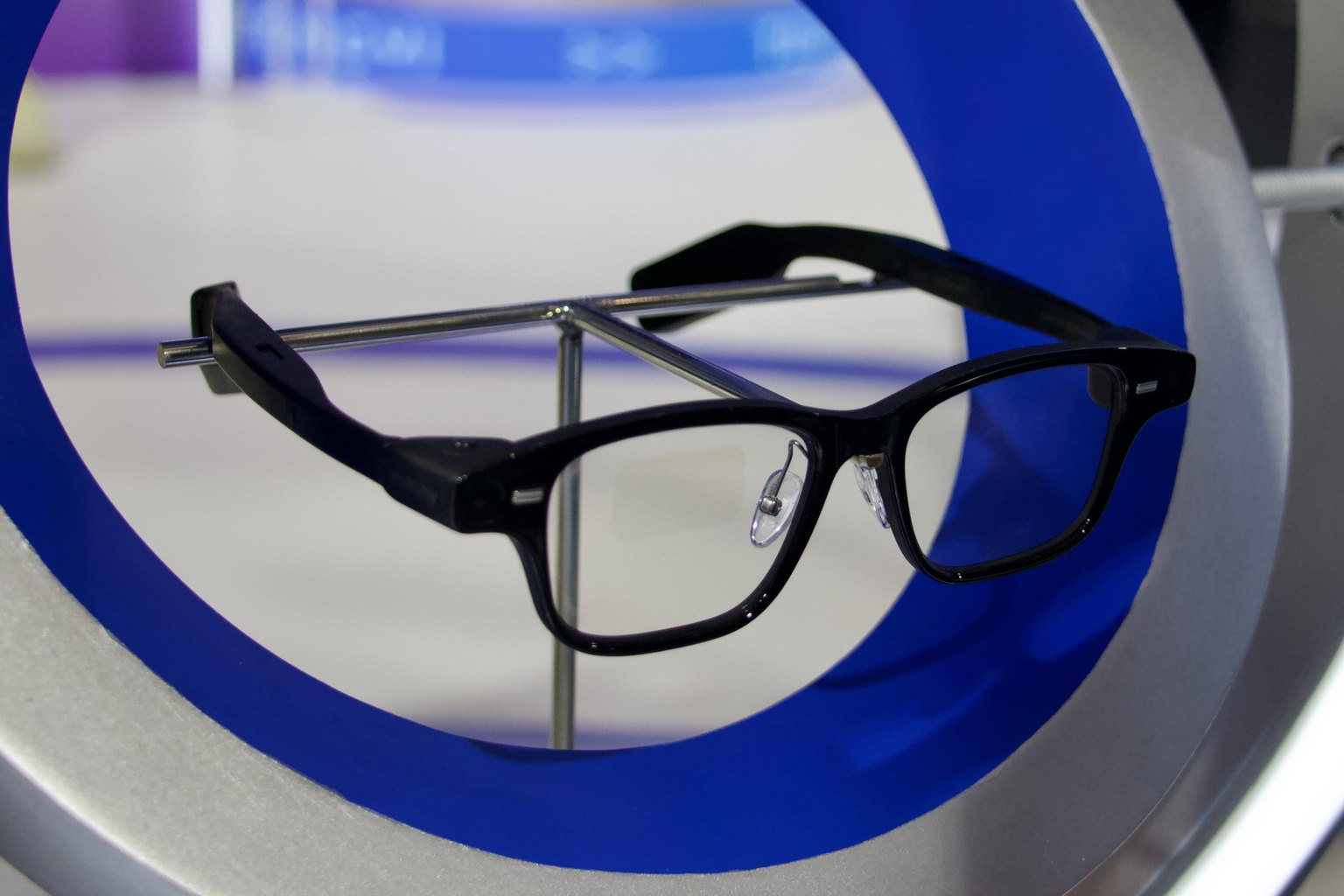
Header photo: Xuthoria / Wikimedia Commons, CC BY-SA 4.0
The pair of smart glasses you can actually source this year is decided by weight, by the light engine, and by the factory lineage behind the frame. Everything else — the assistant, the app, the translation feature you want to advertise — is software that can be changed after the tool is cut. Those three cannot. A 30 g audio frame and a 226 g AR pair are not the same product at different price points; they are different industries that happen to share a hinge.
We quote both kinds. The pattern we see across programs is consistent: buyers spend the first three weeks arguing about features and the next three months discovering that the optic they specified is on a 16-week lead, that the frame cannot hold the battery they wanted, and that the factory which quoted the whole thing has never bonded a waveguide in its life.
Fix those three in the specification and the rest of the project behaves. Here is how.
Three tiers, three supply chains
"Smart glasses" covers products that share a shape and almost nothing else. The tier you pick determines your MOQ, your certification path and which factories will even answer the RFQ.
| Tier | What is in it | Real shipping weight | Who assembles it |
|---|---|---|---|
| Audio only | Two open speakers, microphones, Bluetooth SoC, camera optional, no display | 30 g to 49 g | Audio OEM with an eyewear frame supplier |
| Monocular HUD | One eye gets a micro-LED or LCoS image through a waveguide | 30 g to 69 g | Audio OEM plus an optics module house |
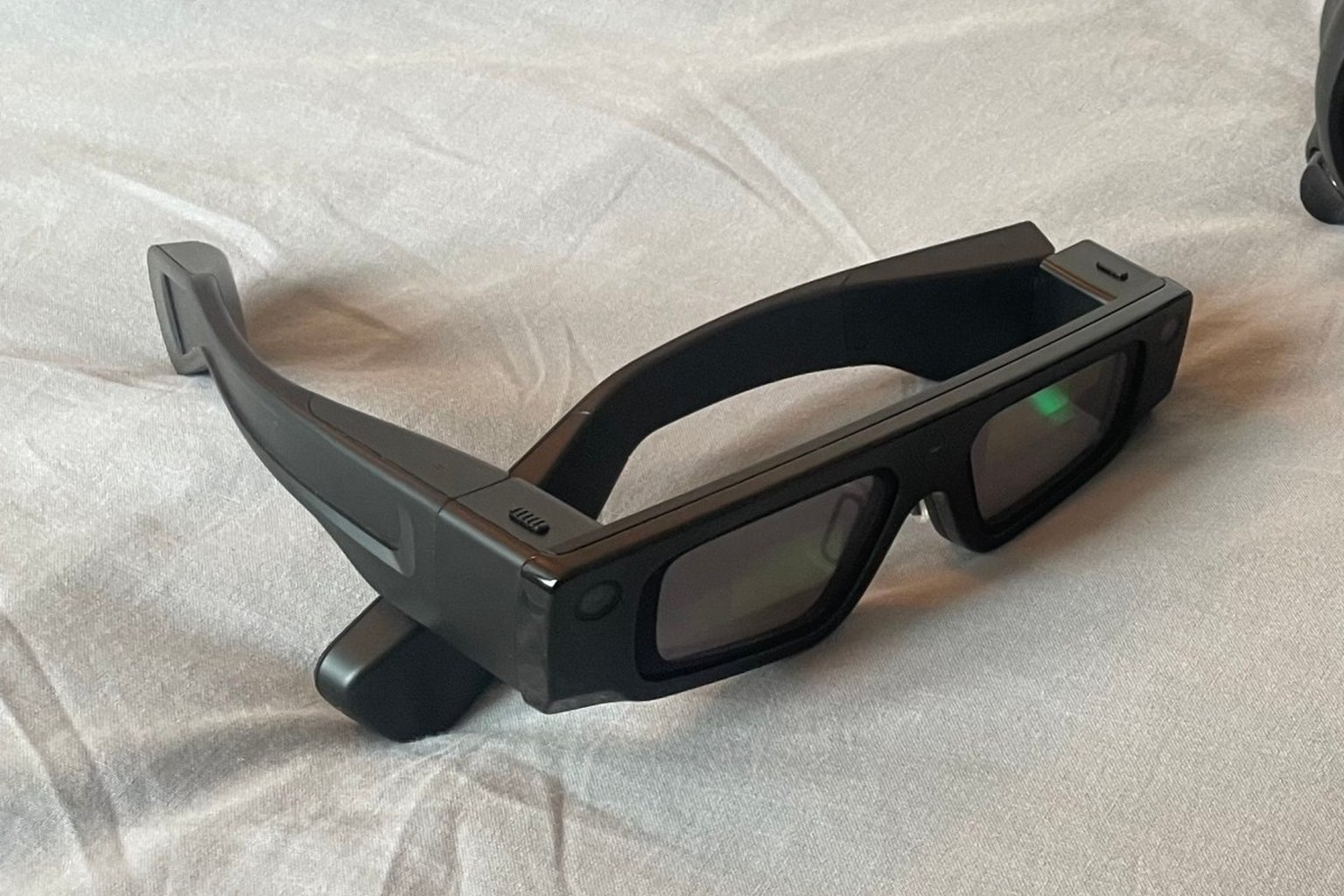
| Binocular AR | Two waveguides, two engines, tracking cameras, bigger battery | 200 g and up | Optics house driving the whole build |
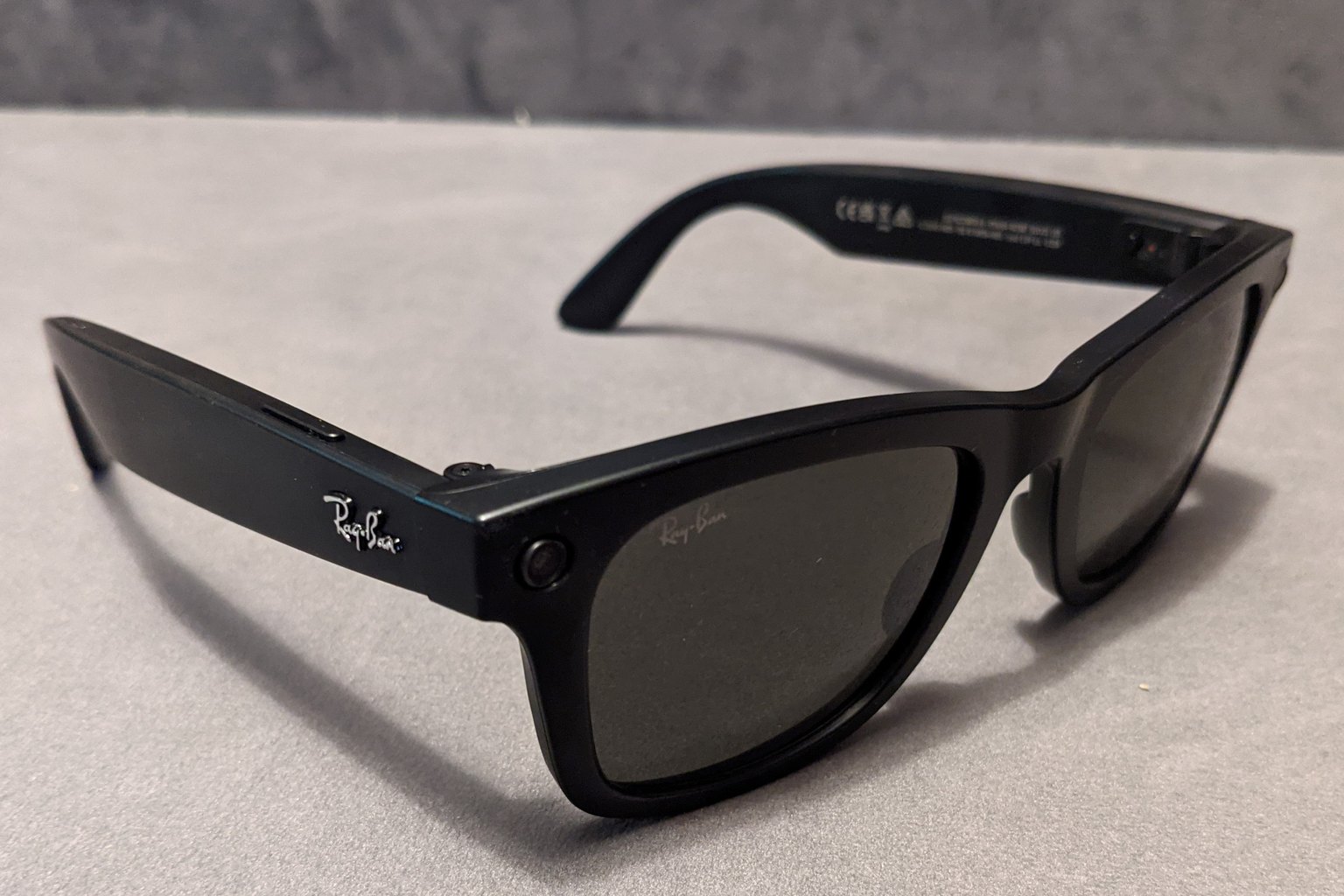
The weight column is not marketing copy. Even Realities puts its G1 at 30 g with a 640 x 200 monocular micro-LED display and a 25 degree field of view. Amazon's second-generation Echo Frames came in at 34 g with no display at all. Ray-Ban Stories, with two 5 MP cameras and two open-ear speakers, was 49 g. Meta's display model is 69 g. Snap's fifth-generation Spectacles — 46 degrees diagonal, 37 pixels per degree, 45 minutes of standalone runtime — is 226 g, still less than half of a Meta Quest 3 at roughly 515 g.
Read that ladder again, because it is the most useful table in this article. From 30 g to 69 g you are still selling eyewear that happens to compute. At 226 g you are selling a headset that happens to have temples, and your customers will treat it accordingly — Snap shipped it to developers at US$99 a month, not to consumers.
Weight is a manufacturing constraint, not a spec sheet number
A 5 g difference sounds like nothing. On the nose it is the difference between a product people forget they are wearing and one they take off in the car.
The reason is where the mass sits. A normal acetate frame distributes maybe a third of its weight in front of the ears and the rest behind them, and the nose pads carry very little. Add a camera, a board and a battery to the front, and the centre of gravity moves forward onto two small silicone pads. That is why the same 45 g feels fine on one frame and unbearable on another: it is not the total, it is the front-to-back split and the clamp force of the temples.
Two practical consequences for a specification:
Write the weight budget per part, not per product. "Under 45 g" lets a factory put 30 g in the frame and 15 g in the temples, which is the wrong way round. Ask for front assembly, left temple and right temple separately, with the battery included in the temple figure, and with the lens blanks counted. Programs that skip this step routinely discover at DVT that the battery they chose adds 6 g nobody budgeted.
Decide the wearer profile before the tool. Asian and European head widths differ enough that a single frame size fits neither well. Three sizes with a shared temple design cost more in tooling and less in returns. If your volume does not justify three sizes, choose the market you are actually launching in and say so in the drawing.
There is also a hard ceiling imposed by the battery, and it is arithmetic rather than opinion. A display pair draws meaningful current whenever the engine is on; the cell has to live in the temple, and temple volume is bounded by the hinge at one end and the ear at the other. Snap's 45 minutes of AR runtime at 226 g is the honest version of that trade. Anyone quoting you 8 hours of display use in a 40 g frame is either describing standby time or describing a product that does not exist yet.
The optic is the long-lead item, and it is not yours to design
In a display pair, the waveguide and the light engine together take somewhere between 40% and 57% of the bill of materials depending on whose teardown you read. That number is why the optic, not the frame, sets your schedule.
It also sets your supplier list. There are a handful of houses that make waveguide wafers and a smaller handful that make the engines that feed them, and they sell modules rather than designs. You are not specifying an optical system; you are choosing one from a catalogue and then designing a frame around its focal length, its exit pupil and its heat path.
Three numbers decide whether a module is worth designing around:
Yield. Full-colour micro-LED engines were below 40% yield two years ago; the better lines now report past 70%, which is the single biggest reason display glasses got cheaper in 2026. Ask your module supplier for the current first-pass yield on the exact part number, not the family. A 70% line and a 45% line produce the same image and very different prices.
Efficiency, meaning nits in versus nits at the eye. A waveguide that transmits 18% of the light needs roughly twice the engine power of one at 30%, and twice the battery, and a bigger heat path. Waveguide efficiency has moved from around 12% to 18% in two years at the volume end, and that single percentage explains most of the weight difference between a 2024 and a 2026 design.
Field of view against pixels per degree. A 20 degree field at 42 pixels per degree gives you crisp text in a small window. A 46 degree field at 37 pixels per degree gives you room and slightly softer edges. Neither is better; they are different products. What matters for sourcing is that the module you pick fixes both, and you cannot ask a factory to "make it wider" later without a new engine, a new waveguide and a new frame.
If you have not chosen a display technology yet, the optical comparison is a separate decision with its own trade-offs — we covered the birdbath versus waveguide question in a dedicated piece. The sourcing point here is narrower: once chosen, the engine is a purchased module with a lead time, and that lead time is usually longer than your frame tool.
Everything else lives in 5 mm to 7 mm of temple
Look at any smart glasses from the side and you can estimate the engineering difficulty in one glance: the temple is thick where the electronics are and normal where they are not, and the transition point is where the problems start.
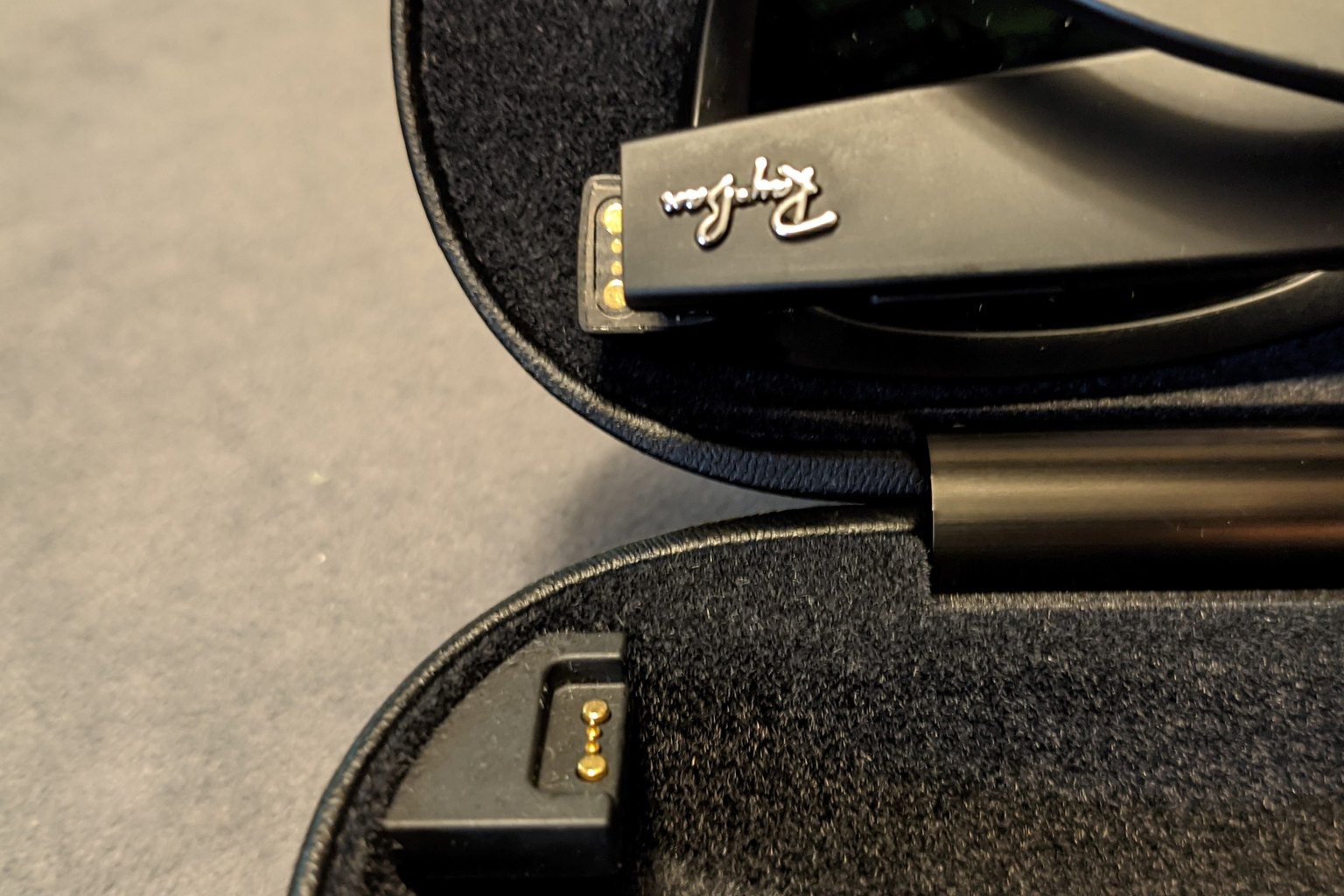
A consumer frame temple is roughly 4 mm to 6 mm thick. Inside that you need a flexible PCB, a battery, an antenna, a speaker and, on camera models, a coax run. The flexible board in a typical audio pair is 5 mm to 7 mm wide and folds twice. This is why the electronics design and the frame design cannot be done by two teams that meet at the end — the fold geometry is the frame.
Four details decide whether that volume works:
The antenna sits next to a metal hinge. A 2.4 GHz antenna needs clearance from ground and from metal, and the hinge is metal on most premium frames. Put the antenna in the temple tip and you gain distance but lose it to the hand; put it beside the hinge and the hinge detunes it. Every serious factory will show you an antenna efficiency measurement in the anechoic chamber, not a link budget on paper. Ask for the report with the frame assembled, because the same board in a plastic jig reads several dB better than it does in the product.
The battery is two cells, not one. Splitting the cell between temples keeps the balance and halves the current path, at the cost of two protection boards and a balancing circuit. On audio pairs the cells are commonly in the 150 mAh to 300 mAh range per side. On display pairs the engine dominates the draw and the cell grows until the temple stops looking like eyewear.
Heat has to leave through the temple, next to the wearer's head. IEC 62368-1 puts the surface limit for a device worn against skin for more than 8 hours in the 43 °C to 48 °C band depending on the material and contact area. That is not a comfortable target; it is a limit. A projector running at 1 W in a 6 mm plastic tube will reach it, which is why display glasses use graphite spreaders and why the thermal test point must be written into the drawing at a named location, measured at 25 °C ambient.
The speaker is open, so the enclosure is the acoustic design. An open-ear speaker in a temple radiates into free air and leaks; the port geometry and the distance to the ear canal set both loudness and leakage. If the frame is re-tooled for styling, the acoustic tuning is invalidated. Say so in the change-control clause, or you will be re-tuning after PVT.
Three factory lineages, and what each one cannot do
This is the part of sourcing that costs the most money when it is wrong, and it is invisible in a quotation. The company that sends you a professional PDF with a nice render may be one of three very different animals.
The audio OEM. It has SMT lines, acoustic chambers, battery aging racks and a mature Bluetooth qualification process. It is excellent at the electronics and the acoustics, mediocre at frame finishing, and usually has no cleanroom for optical bonding. Ask it for a display pair and you will get a competent audio product with a module bolted in and a frame that was sourced from a third party.
The eyewear factory. It makes acetate and TR90 frames, runs a hinge test rig, has an Rx lens line and understands fit, colour and surface finishing better than any electronics company. It has no idea what a die bonder is. It is the right partner for the frame and the wrong partner for the system.
The optics module house. It owns the engine and the waveguide and the bonding process, and it sells modules to whoever will buy them. It is not set up to assemble consumer products, print retail packaging or run a 1,000-piece order.
A real program is therefore at least two of those three, plus someone whose job is the interface. That someone is the integrator, and the value is not in assembling — it is in owning the drawing where the frame, the flex and the module meet. When a program fails, the failure is almost always at that interface: the module's exit pupil does not line up with the frame's optical axis, or the flex cannot fold inside the hinge, or the battery the frame was designed around is discontinued.
So the site visit question is not "do you make smart glasses". It is "show me the process flow and the test stations for a display pair". A factory that has shipped them will walk you past a class-1000 area, a bonding station, an optical test bench and a particle-controlled assembly bench without being asked. A factory that has not will show you a showroom.
Fit, validation and the 20-head trial
Eyewear is the only consumer electronics category where the product has to fit a body part with a 30 mm spread in width and a 15 mm spread in bridge height. That is why a tooling sign-off based on one model wearing one prototype is not a sign-off.
A practical validation budget for a first program:
20 heads, 2 weeks, 3 sizes. Twenty wearers across your target market, each wearing a pair for 10 working days, reporting at day 1, day 5 and day 14. Nose marks, temple pressure and slippage show up in that window and almost never in a one-hour fit session. If you cannot afford 20 pairs at engineering-build cost, you cannot afford the return rate.
Hinge, 10,000 cycles. The common requirement is 5,000 to 10,000 open-close cycles with a torque check before and after. Ask for the torque window, not just the pass mark; a hinge that loosens by 40% still opens and closes.
IPX4, 10 minutes. Splash protection under IEC 60529 is a 10-minute test from any direction, and on glasses it is mostly a test of the charging contacts, the speaker mesh and the camera window. IPX5 and above needs sealed acoustic membranes, which cost you output. Decide which you are selling before the mesh is specified.
Thermal at 25 °C, measured at a named point. Run the worst case — display on, brightness maximum, radio transmitting — for 30 minutes and record the temple surface at the point nearest the engine and at the point touching the ear. Anything above the IEC limit at 25 °C ambient will fail in a Dubai summer and in a car in Guangdong.
Compliance follows the frame material and the radio
There is no "smart glasses certificate". There is a stack of them, and which ones apply depends on decisions you make in the drawing.
A radio product needs CE under the Radio Equipment Directive in the EU and FCC Part 15 in the US. A product with a battery needs UN38.3 for transport and IEC 62133-2 for the cell. A frame that touches skin and holds a lens is a spectacle frame for the purposes of ISO 12870, and if the lens is tinted it also falls under EN ISO 12312-1. If the model has open speakers, EN 50332 sets the output ceiling at 100 dB(A). Add a camera and you have a capture indicator to design in, a privacy notice to write, and in the EU an AI Act transparency obligation if the device talks back.
The sourcing mistake here is treating certification as a post-design activity. Redesigning a hinge for IPX4 after the EMC test is a new EMC test. Changing the lens tint after the sunglasses declaration is a new declaration. The full checklist, including which marks apply to which product, is in our certification guide; the point for this article is that the bill for compliance is set at the drawing stage and paid later.
Eight lines to put in the RFQ
Everything above collapses into a short list. Send these eight and you will get comparable answers instead of eight differently shaped quotations.
1. Weight, split by part. Front assembly, left temple, right temple, batteries included, lens blanks included. Ask for the figure at engineering build and the figure at mass production, because they differ.
2. Optical module part number and vendor. Not "waveguide display". The exact module, its resolution, its field of view, its pixels per degree, its current draw at the brightness you will ship.
3. Who bonds, and what the optical test is. If the answer is "our partner", name the partner and the acceptance criterion: contrast at three field points, or an MTF number, measured on 100% of units or on a sample.
4. Temple cross-section and flex width. A drawing section at the hinge and at the widest point, with the flex stack and the battery envelope shown. If they cannot produce this, the electrical and mechanical teams have not met.
5. Antenna position, measured efficiency. Chamber report with the frame assembled, plus the hinge material. Metal hinges are fine; unmeasured metal hinges are not.
6. Battery, per side. Capacity in mAh and Wh, cell vendor, UN38.3 report and IEC 62133-2 certificate, plus the number of charge cycles to 80%.
7. Thermal test point and limit. Named location, ambient temperature, runtime, and the measured surface temperature at that point. Written into the drawing, not into the marketing deck.
8. The prescription route. Insert, or edging of the actual lens. Inserts keep the optical axis simple and add weight; edging keeps weight down and requires a lens lab in the loop. Pick one now, because it changes the frame geometry.
If you are still at the stage where the quotation itself is unclear, the structure of a factory quote is worth reading first — line by line, including what it leaves out. And if the volumes in your business case are not settled, the arithmetic of a 1,000-piece order is in the MOQ piece.
What this means for your sourcing decision
Three conclusions, in the order they should affect your budget.
Start at the audio tier unless the display is the product. A 30 g to 49 g audio pair uses an existing supply chain, carries a 500 to 1,000 piece MOQ for private label, ships in 20 to 30 days after artwork sign-off and can be certified on a familiar path. A display pair needs a module with a lead time longer than that, an ODM MOQ in the 3,000 to 5,000 piece range and a 90 to 120 day development cycle before the first sellable unit.
Buy the module before you design the frame. The optic fixes the optical axis, the exit pupil, the heat load and a large part of the bill of materials. Choosing it after the frame is tooled is the most expensive sequencing error in this category, and it is common because the frame is the part buyers can see and describe.
Pay for the interface, not the assembly. The cheapest quotation usually comes from a party that will assemble what others designed. The one that is worth more is the party that owns the drawing where frame, flex and module meet, and can show you the test stations that prove it. When a program at 3,000 pcs slips, it slips at that interface — a hinge that will not take the flex, an antenna that detunes when the temple closes, a battery that grew by 6 g. None of those appear in a quotation, and all of them appear in a launch date.
Specifying a pair of glasses for a 2027 launch?
We are a sourcing and OEM partner in Shenzhen, working across wireless audio, smart glasses and wearables. Send the weight budget, the tier you are aiming at and the market you are certifying for, and we will tell you which of the three supply chains your product actually needs — and what changes between 500 pcs and 3,000 pcs.
See the smart glasses we build →