
How to read a factory quotation line by line: what the unit price includes, and what it quietly leaves out
A quotation is not a price. It is a set of assumptions with a number printed under them, and the assumptions are where the money sits. Read the trade term, the quantity, the tooling, the carton and the test before you read the number — then send back the eight questions at the end of this page.
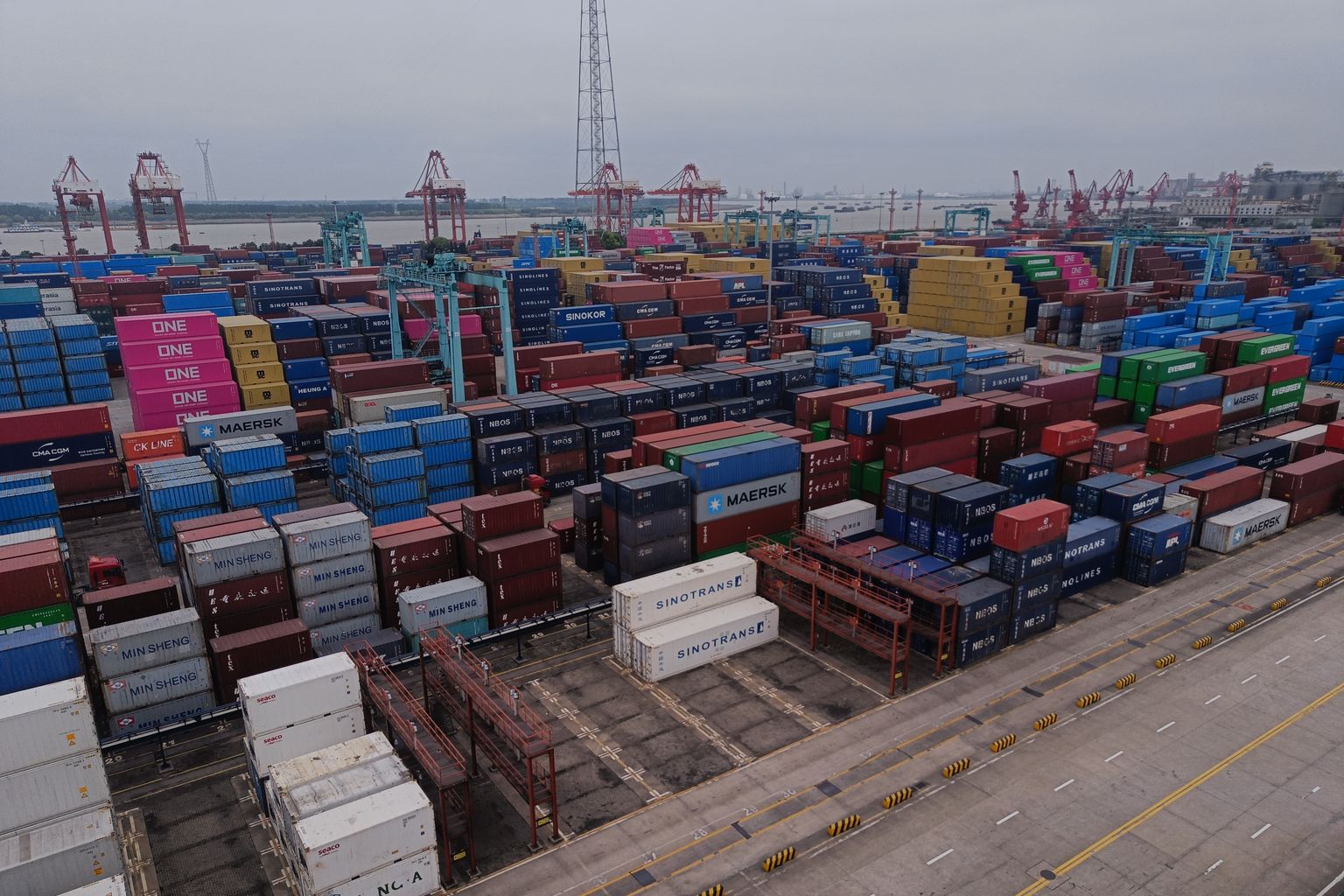
Header photo: Pierre Marshall / Wikimedia Commons, CC BY 4.0
The number at the bottom of a factory quotation is the least reliable part of it. Everything above that number decides what the number means: the trade term, the quantity it applies to, whether the tool is inside it, which carton the product ships in, what "100% tested" covers, how long the price holds. Two quotations can be US$1 apart and be describing different products. Read the assumptions first. The price is whatever is left once you have accepted them.
A buyer we work with in Rotterdam sent us three quotations for the same true wireless product last spring. The bottom lines were within about 11% of each other, so he forwarded all three and asked which factory was cheapest. None of them was cheapest, because none of them was quoting the same thing. One was EXW with a stock white box. One was FOB with a printed carton but no ageing test. The third was FOB, printed carton, 100% functional test, and tooling amortised across the order rather than paid upfront. Normalised to a single basis, the order of the three reversed.
That is the whole exercise. A quotation is a document you have to translate before you can compare it, and most of the translation happens in the first six lines, not the last one.
Start at the top: the trade term decides what the number stops at
Every export quotation should name an Incoterm and a place. The 2020 edition of the Incoterms rules, published by the International Chamber of Commerce and in force since 1 January 2020, contains 11 terms. Four of them cover almost everything a consumer electronics buyer will see: EXW, FOB, CIF and DDP. They are not price levels. They are boundaries, and each boundary hands a different set of costs and risks to a different party.
| Term | Where the seller's obligation ends | Who clears export | Who pays main freight | What usually surprises buyers |
|---|---|---|---|---|
| EXW factory | Goods packed, ready for collection at the seller's door | Buyer | Buyer | Export declaration, trucking and terminal handling are all yours — and a Chinese factory cannot legally hand you export documents it did not file |
| FOB port | Goods loaded on board the vessel at the named port | Seller | Buyer | The named port is part of the term. FOB Shenzhen and FOB Yantian are different trucking distances and different terminal charges |
| CIF port | Goods on board, freight and insurance paid to the destination port | Seller | Seller | Minimum cover is 110% of the contract value under Institute Cargo Clauses (C) — the narrowest of the three clause sets. It does not cover theft or water damage the way most buyers assume |
| DDP address | Goods delivered, duty paid, at the buyer's named address | Seller | Seller | The seller becomes importer of record. If the paperwork is wrong, the problem lands on the seller's customs record, and the price usually carries a wide safety buffer for it |
The practical consequence is that you cannot compare an EXW quotation with an FOB quotation by looking at the two numbers. The gap between them is real work: inland trucking, export declaration, terminal handling, and the forwarder's fee for arranging all three. On a small order that gap is proportionally larger, because the fixed part of it does not shrink with volume.
Two habits are worth forming here. First, always ask for the named place, not just the three letters. "FOB China" is not a term. Second, when a supplier quotes DDP to your door, ask who the importer of record will be, because that answer tells you whose name is on the customs entry and whose problem a mis-declared HS code becomes. We go through the classification side of this in the certification piece, and the short version is that the declaration is a legal statement, not a shipping convenience.
The unit price is five costs stacked, and only one of them is material
When a factory puts a number against a part, that number is built from material, machine time, direct labour, yield and overhead. Buyers tend to argue about the first one and ignore the rest, which is backwards: material is the only one of the five that is quoted to you at market by three suppliers on the same day, so it is the easiest to check and the hardest to hide anything in.
Machine time is where the arithmetic gets interesting, and it is the line almost no quotation shows. Take a housing that runs in a two-cavity tool on a 35-second cycle. One thousand pieces means 500 shots, which is 17,500 seconds of the machine's life, or roughly 4.9 hours. Three thousand pieces is 14.6 hours. If the same part is quoted in a single-cavity tool, every unit costs twice the machine time, and no amount of negotiation on the material line will recover it. A factory that quotes a low price and a low cavity count is telling you something about its capacity planning, not about your discount.
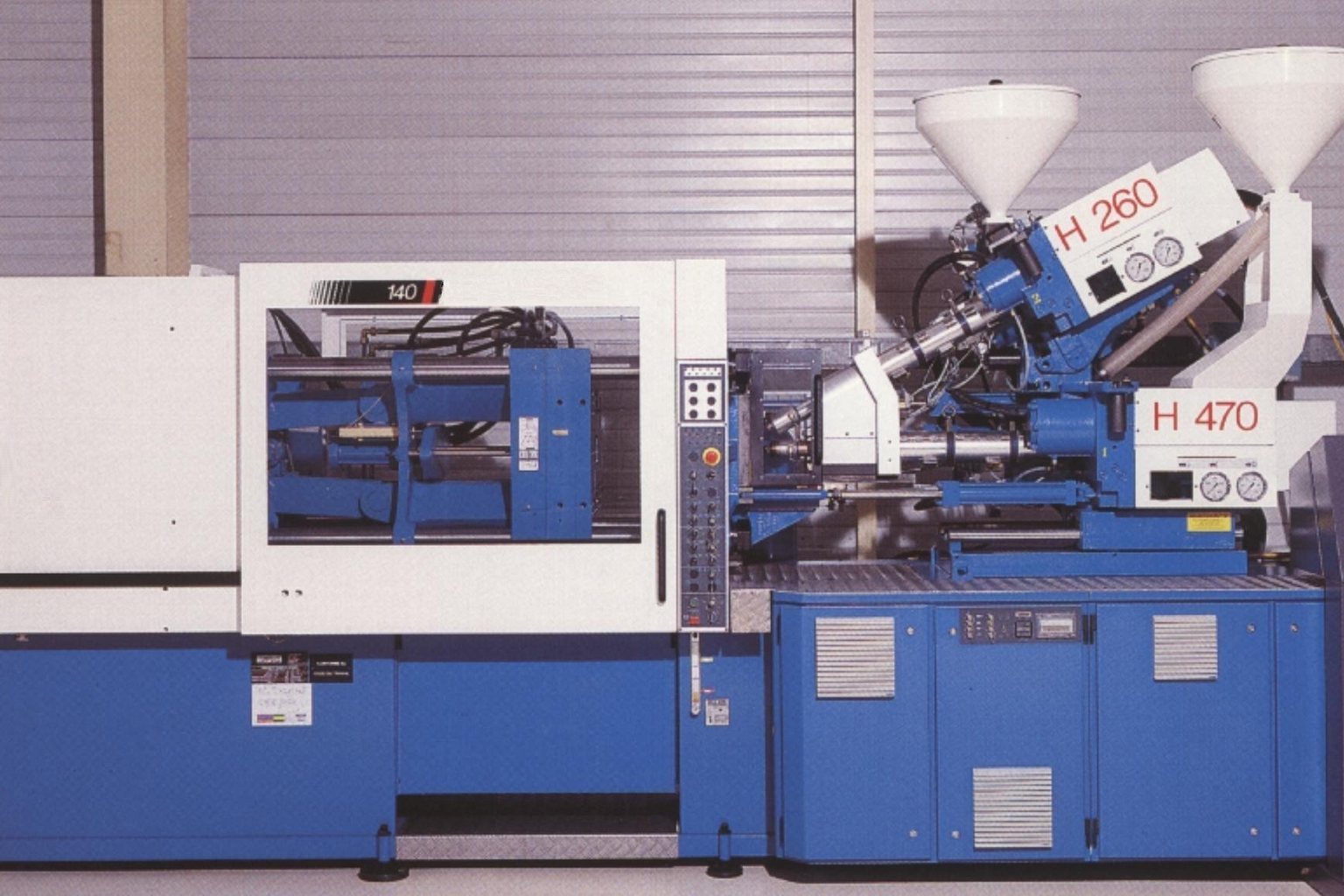
Yield is the fourth cost and the quietest. A factory running 95% first-pass yield is scrapping one part in twenty, and that scrap has to be paid for by the nineteen that ship. A factory at 98.5% is not being generous when it quotes the same price for a better process; it is simply losing less. This is why asking "what yield are you assuming?" gets a more useful answer than asking for a discount. It also tells you what the factory expects of its own tool.
Labour, the fifth line, is smaller than most buyers think on a moulded part and much larger than they think on anything assembled by hand — a speaker mesh glued into a housing, a flex folded and taped, a lens seated by hand. That is why the same product can be quoted at two very different prices by two factories with identical machines: one has a fixture that seats the part in 4 seconds, the other has an operator doing it in 25.
Tooling is a one-time line, and "free" is a financing decision
Tooling, sample charges, fixtures, test jigs and printing plates are different things, and quotations mix them constantly. A sample charge covers the labour and material of building a handful of units by hand, and the run from those units to first shots is a separate schedule with its own delays — we laid it out in the sample-to-production timeline. A tool is a piece of steel that will make every unit you ever sell. A test jig is what makes "100% tested" possible at all. When a quotation has one line called "mould fee", ask which of the four it actually covers.
There are only three ways tooling appears on a quotation, and they are the same money arranged differently. It is a one-time payment before production. It is amortised into the unit price across a stated quantity. Or it is described as free, which is the second option with the arithmetic left out. The third is the one that causes trouble, because the tool is not free — it is being recovered inside a unit price you have agreed to for as long as you buy that product.
Our position is simple. If you pay for the tool, the tool is yours, and the quotation should say so in writing, along with what happens to it if you move the product to another factory later. If the factory pays for the tool, expect to be tied to that factory for the volume it was amortised over, and expect the unit price to be renegotiated if you order less. There is no third arrangement where the tool is free and you also own it.
Two numbers are worth asking for even if you never use them. Tool lead time on a small housing tool usually runs 18 to 30 days from drawing release to first shots, and a standard pre-hardened steel tool is typically rated for 300,000 to 500,000 shots before refurbishment. If your annual volume is 20,000 pieces, you will never wear it out, and the factory knows that. That is a useful thing to know before you discuss who pays for it. We wrote the ownership side of this in the four documents that stop your product being copied, and the tooling clause is one of them.
The carton is a second factory with its own minimum
The box your product ships in is almost never made by the factory quoting you the product. A carton plant quotes it separately: a plate or cylinder charge per colour, a minimum run, a paper grade, a finish, and a die. When those costs land on a product quotation, they usually land as a single number called "packing", which is why the number moves so much between suppliers and between quantities.
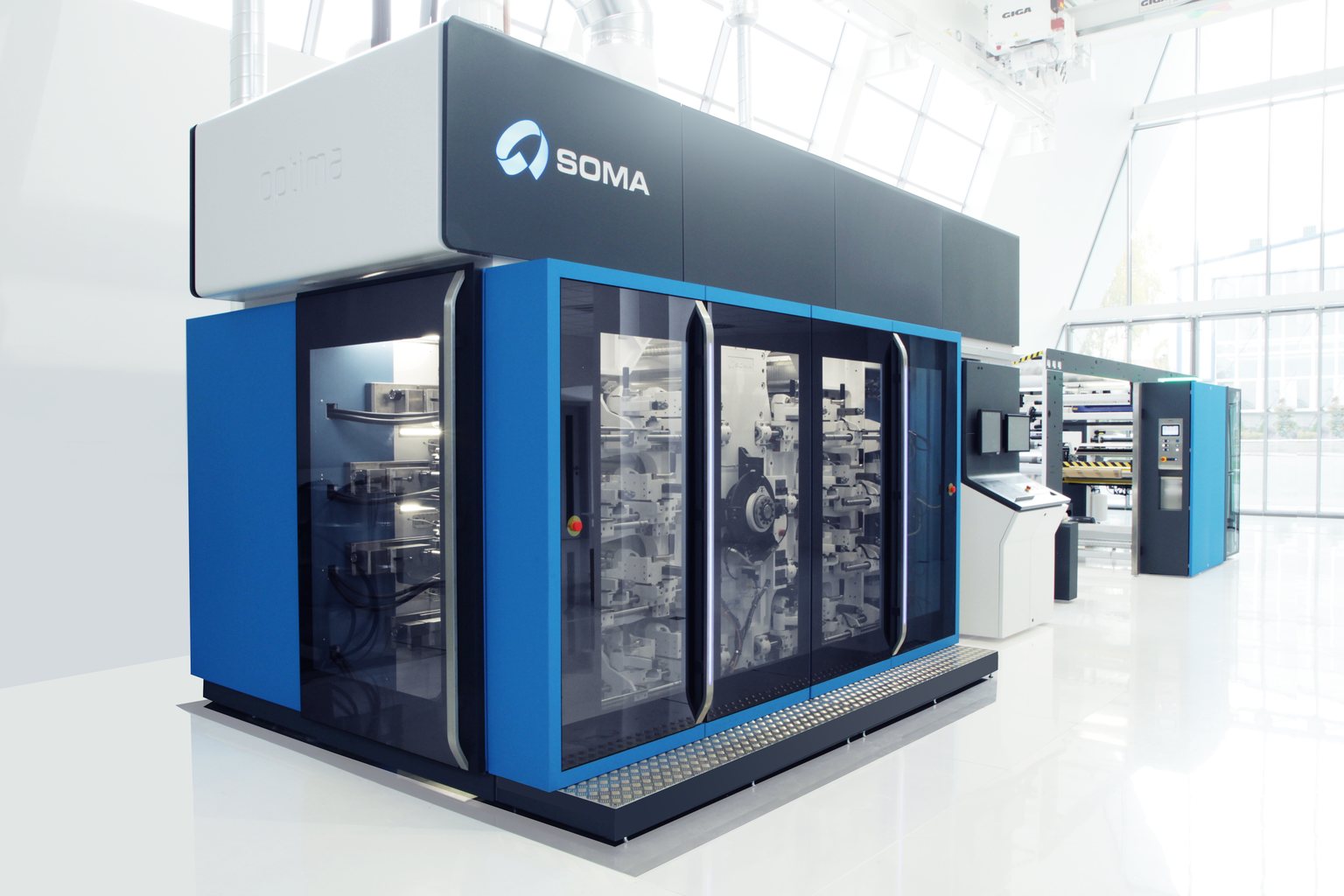
Four lines are worth separating out of "packing". The retail carton, with its print and finish. The master carton, which has its own board grade and its own barcode, usually an ITF-14 rather than the EAN-13 on the retail unit. The inner tray or blister, which may be a third supplier again. And the documentation — manual, warranty card, insert — which has a language count and therefore a print run of its own.
Here is the part that catches first-time buyers. Artwork approval is a separate critical path from sample approval. A carton proof can look right on screen, print 12% off on press, and still pass an internal review because nobody compared it to a physical standard under the right light. If the colour of the box is part of your brand, sign a printed proof, not a PDF. The sign-off routine is in the sample approval piece, and the packaging section of it applies to cartons exactly as it applies to housings.
The quantity ladder tells you where the price really breaks
Quotations arrive as tiers: 1,000, 3,000, 5,000, sometimes 10,000 pieces. The mechanics of the minimum itself — what a 1,000-piece MOQ actually includes and where it is negotiable — sit in a separate piece. Buyers read the ladder as a discount schedule. It is not. Each tier is a different production plan, and the price changes because a different set of fixed costs is being spread over a different number of units.
The fixed costs are the ones you can list: a mould change and a machine setup, an SMT programming run, a printing plate set, a test fixture build, a first-article inspection. On a small product, that block of work can easily be 8 hours of line time before the first saleable unit appears. Spread over 1,000 pieces it is heavy. Spread over 5,000 it is almost invisible. That is why the biggest single drop on a ladder is usually between the first and second tier, and why the step from 5,000 to 10,000 is often only a few percent.
One warning about ladders. A tier price is a price for that tier only, with the packaging and the test routine that were quoted at that tier. Factories routinely quote the 3,000-piece price with a stock box and the 5,000-piece price with a printed one, because that is how the two orders would realistically be placed. If you compare the two numbers directly, you are comparing two different products. Ask for the same configuration at every tier, even if it costs more at the bottom.
Payment terms and validity are priced too
Thirty per cent deposit with the balance before shipment is the standard arrangement in this trade, and it is not arbitrary. The deposit funds material, the balance releases the goods. Every variation on it — a letter of credit at sight, open account at 60 days, a retention held against the inspection report — moves money and risk between the two parties, and somebody is paying for that movement even when the quotation does not show a line for it.
Validity is the other half. A quotation without a validity date is a snapshot of a market that has already moved. Thirty days is the common convention for consumer electronics, and it exists because the inputs move: resin tracks oil, memory and chips move on allocation, and freight rates move on capacity. A supplier who will hold a price for six months is either carrying that risk in the number or planning to reopen the conversation later. Both are legitimate; only one of them is honest about it.
Ask two questions and the section is settled. What is the validity date? And what happens at the end of it — a re-quote on the whole price, or a specific formula for the material portion? A factory that can answer the second question has thought about its own supply chain, which is a reasonable proxy for how it will behave when a shipment slips.
Testing: "100% tested" usually means two seconds
Test time is a real cost inside the unit price, and it is the line most often described in language rather than numbers. "Each unit is fully tested before packing" can mean a power-on check that takes 2 seconds, or a functional routine with pairing, microphone, speaker, charging and firmware verification that takes 25. On a 3,000-piece order, that difference is roughly 1.7 hours against 20 hours of test time. One of those is a cost you can see in the price. The other is a sentence.
So ask for the routine, not the claim. Which stations does the unit pass through? What is measured at each one? What is the pass criterion, and who decides a marginal unit is a pass? Is there a re-test rule, and are re-tests logged separately? A factory that runs a real fixture can answer all four in a paragraph. A factory that runs a power-on check will answer in adjectives.
The same logic applies to the ageing step. A rack that holds units for 4 hours in a hot chamber is doing something different from a rack that holds them for 30 minutes, and the difference is visible in the failure rate your customer sees in month three rather than in the inspection report. We put the on-floor version of these checks in the pre-shipment inspection checklist, and the report-reading version in the DUPRO and PSI piece.
Eight questions to send back before you compare
These fit in one email and they convert a quotation into something you can actually put beside another one. We send them as a numbered list, and we expect numbered answers.
1. Which Incoterm, and which named place? Not "FOB China". FOB Shenzhen, or FOB Yantian, or EXW Bao'an. The place is part of the term.
2. Which quantity does this price apply to? And what is the price at half that quantity? The second number tells you how much of the price is fixed cost.
3. Is tooling inside this price, and who owns the tool? If it is amortised, over what quantity, and what happens if you order less?
4. Which carton exactly? Custom printed or stock? Who pays the plates? Is the master carton included, and is the barcode printed or labelled?
5. How many cavities, and what cycle time? These two numbers are the sanity check on everything else. If the factory will not give them, that is an answer too.
6. What does your test routine cover, in seconds per unit? And can we see a sample test log from a previous order?
7. What yield are you assuming, and who pays for scrap? A process quoted at 95% and one quoted at 98.5% are not the same process.
8. Payment terms and validity date? Including what happens to the price when the validity expires.
Our stance: normalise first, then compare
Do not compare bottom lines. Pick one basis — FOB Shenzhen, the quantity you will actually order, the carton you actually want, the test routine you actually need — and ask every supplier to quote that. It takes one extra email per supplier and it is the single highest-return hour in a sourcing project.
If a supplier cannot or will not quote on a normalised basis, you have learned something more valuable than a price: you have learned that the quotation is a sales document rather than a production document. Those are different instruments, and only one of them survives contact with a factory floor.
The number at the bottom is the last thing you should read. Everything above it is what you are actually buying.
Comparing quotations for an OEM project?
We are a sourcing and OEM partner in Shenzhen. Send us the three quotations you are holding and we will normalise them onto one basis — same term, same quantity, same carton, same test — before you place a deposit. It usually takes less time than the second round of emails.
Talk to us about your quotation →