
How to choose components for a wearable: the SoC, the microphone and the sensor that decide the BOM
A wearable has four parts that matter and roughly 300 that do not — until one of them stops the line. The SoC sets what the product can do for the next 3 years, the microphone sets whether anyone can hear it, the sensor sets what the app can claim, and the passives decide your minimum order and your shelf life. Here is how each one is actually chosen, what a factory will not tell you about the part it already uses, and the six lines that belong in a component RFQ before the schematic is frozen.
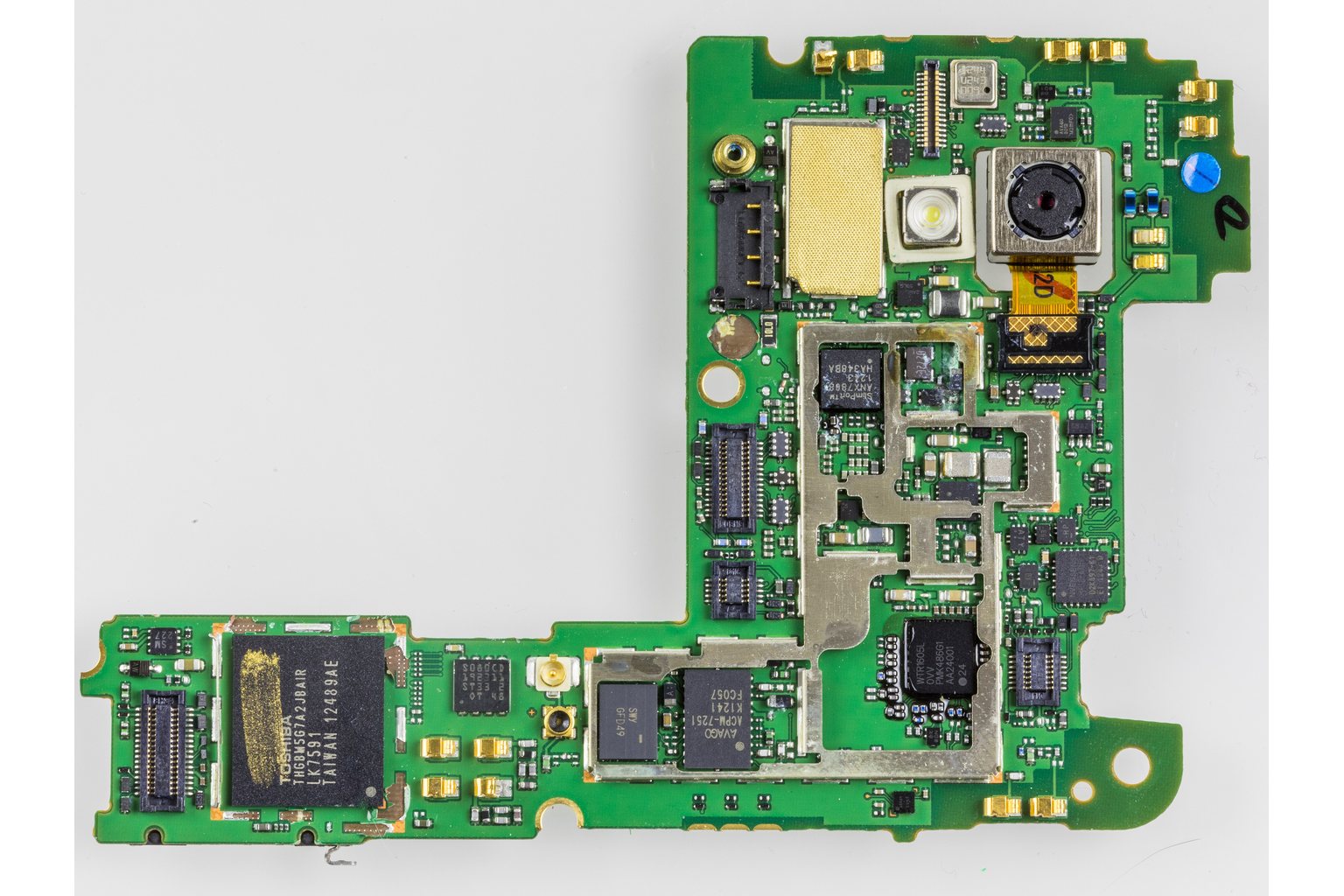
Header photo: Raimond Spekking / Wikimedia Commons, CC BY-SA 4.0
Component choice is not a technical decision that procurement signs off at the end. It is the decision that fixes your price, your lead time and your ability to ship a second order. If your RFQ describes features — "AI noise cancelling, 8 hours, app control" — the factory will quote the platform it already builds, with the parts it already has credit terms for. You will get a working product and no grip on any of the four things that actually cost money: the SoC family, the microphone interface, the sensor package, and the reel quantities behind them.
We build audio and wearable products in Shenzhen for brands in more than 80 countries, mostly between 1,000 and 5,000 pcs per model. The pattern in that range is consistent: the programs that go wrong do not go wrong in the acoustics lab. They go wrong 9 months later, when a part is discontinued, a second source turns out to be pin-compatible but not firmware-compatible, or the reel the factory bought has a date code from before the last PCN.
A wearable is four parts and about 300 passives
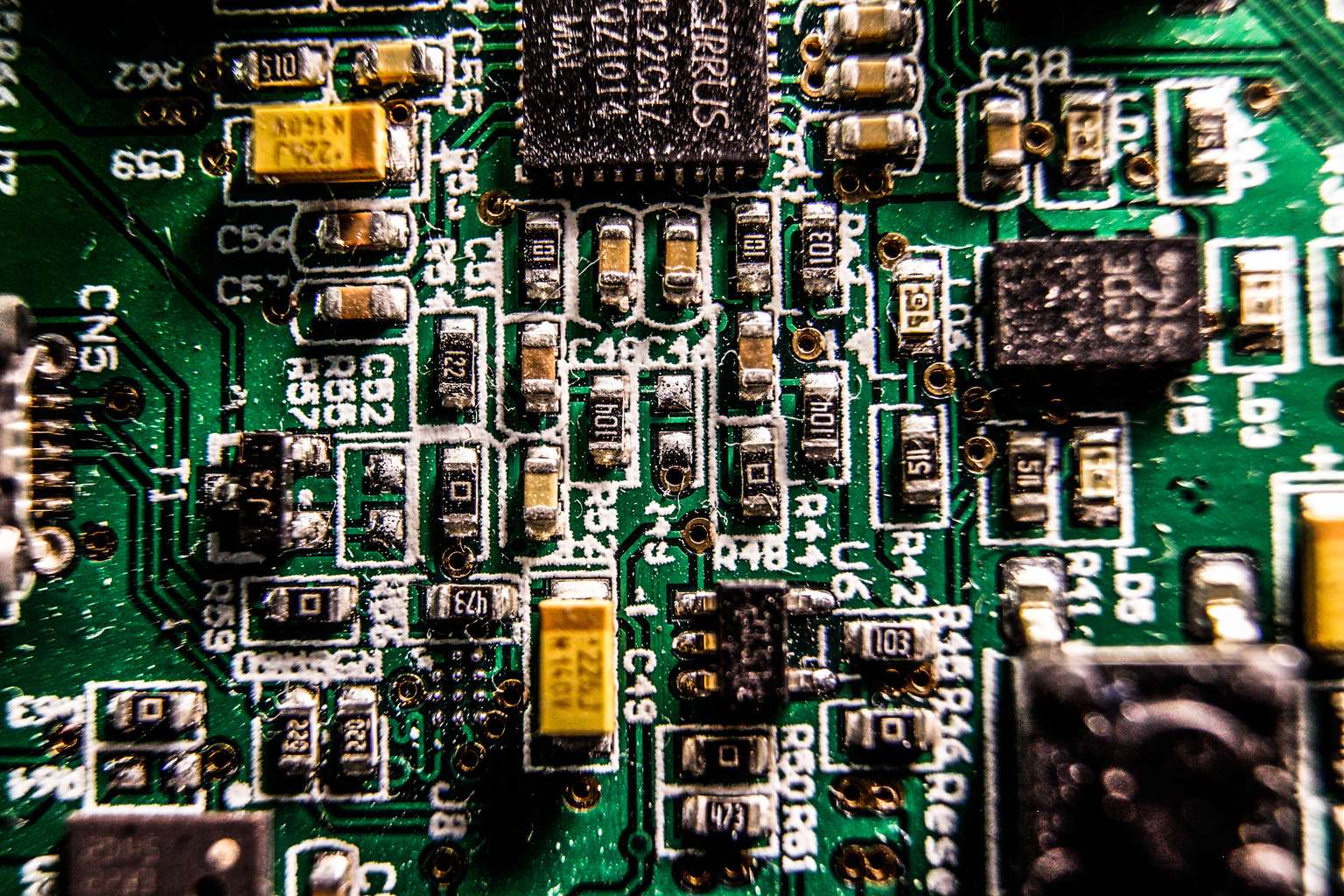
Strip a TWS earbud, an open-ear clip or a smart ring down to its board and the bill of materials looks short at the top and endless at the bottom. Roughly 300 passive components is normal for a two-board earbud with ANC, and 95% of them are 0402 or 0201 size — 1.0 mm × 0.5 mm and 0.6 mm × 0.3 mm respectively. Nobody negotiates a capacitor price. Everybody should negotiate what happens when that capacitor changes.
| Part | What it fixes for the life of the product | How it bites later | What to ask for |
|---|---|---|---|
| SoC | Audio paths, ANC capability, Bluetooth version, flash size, power budget | Firmware is tied to it; a swap means a new SDK, new tuning and a new certification file | Exact part number, SDK version, lifecycle statement, second source that shares the SDK |
| Microphone | Noise floor, maximum sound level, interface (analog or PDM), reflow compatibility | Interface choice is in the PCB; a change means a layout revision | SNR, acoustic overload point, sensitivity tolerance, port and gasket drawing |
| Sensor | What the app can claim: steps, gestures, heart rate, sleep | Calibration data and algorithm tuning are per-part; the second source is never drop-in | Package size, output data rate, current in the mode you will actually use, calibration plan |
| Passives and packaging | Minimum order, shelf life, line yield, date-code risk | Reel quantities set your true MOQ; moisture level sets how long parts can sit on the floor | Reel quantity, moisture sensitivity level, date code policy, cut-tape and re-reel practice |
One line in that table is usually missing from the quotation you receive: the exact part number. A quotation that says "Bluetooth 5.3 chipset, Airoha or equivalent" has told you nothing you can hold anyone to. "Or equivalent" is where the cost of the second order hides.
The SoC: choose the platform once, then live with it
In Bluetooth audio there are perhaps six SoC families worth designing around, and every one of them comes with an SDK, a tuning tool, a reference layout and a support relationship. That is the real product you are buying. The chip is the cheap part; the ecosystem around it is what a factory has invested in, and it is the reason a factory will push you toward the platform it knows.
That push is not dishonest. It is also not free. The platform decides four things you will not be able to change after tooling:
1. How much of the audio path is hardware. A chip with a dedicated ANC block and multiple microphone inputs can run feed-forward and feedback loops in hardware. A cheaper part does it in DSP with fewer inputs, and the difference shows up as a noise floor that a good reviewer will hear in a quiet room.
2. How much code fits. In-package or external flash of 8 MB is the current middle of the road for a product with ANC, voice prompts, an app, OTA and a wake word. Ask what is left after the SDK, the voice prompts in 4 languages and the OTA partition. Factories answer that question in percentages when they know, and in adjectives when they do not.
3. The Bluetooth feature set you can claim. LE Audio and LC3 need a chip and a stack that support them, not a firmware patch. If your retail copy says LE Audio and the platform does not have it, the claim is a return.
4. The certification file. The radio test report is issued against a module or a chip with a specific layout and antenna. Change the SoC and you re-run RF, and in the EU you re-issue the RED documentation. That is weeks, not days.
So the question to ask is not "which chip is better". It is: which platform has a second source that shares the same SDK? A family with two pin-compatible members from the same vendor is a supply plan. Two different vendors with similar datasheets is a redesign waiting for an allocation notice. We have watched a customer lose a Q4 launch because a single-source Bluetooth SoC went to 52-week lead time and the "equivalent" part needed a new layout, a new tuning file and a new RF report. The chip was 4% of the unit cost. The delay cost the season.
Ask for the lifecycle statement in writing: the part's status, the date of the last PCN the factory received, and the last-time-buy window in the vendor's discontinuance policy. If the answer is "no problem, it is a very popular chip", you have learned that nobody has checked. Compare that answer against the quotation, because the quotation is where a cheap platform shows up as a lower price with no explanation — the line-by-line reading of a quotation is the place to catch it. For the compute side of the same question — how much of the work happens on the device — the trade-offs are set out in on-device versus cloud AI.
The microphone: MEMS or electret is a one-way decision
Two microphone technologies are in play, and the choice is made by the reflow oven before it is made by the acoustics engineer.
A MEMS microphone is a silicon die with a membrane etched into it, mounted in a package with a port, usually 3.5 mm × 2.65 mm and under 1 mm tall. It goes through the same reflow as the rest of the board, it is specified in dBFS rather than dBV, and its sensitivity tolerance is typically ±1 dB. Current draw is in the region of 250 µA per microphone. Its output is either analog or digital PDM, and the digital version removes an analog trace from a board that is 40 mm long and full of switching supplies.
An electret condenser microphone is the older part: a foil or film diaphragm in a metal can, needing a bias voltage and a preamp, with a sensitivity tolerance closer to ±3 dB and no reflow survival. It is cheaper per piece and it is hand-soldered or wave-soldered, which on a modern wearable line means a second process, a second inspection point and a second way to fail.
Here is the part buyers do not hear from the factory. Once the board is laid out for PDM microphones — two data lines, one clock, a specific decoupling arrangement — going back to analog costs a PCB revision. And once the mechanical design assumes a MEMS port with a gasket, the electret can with its 4 mm to 6 mm diameter does not fit the same opening. The decision is made in week 3 and it is still there in year 3.
Three numbers decide whether the microphone is good enough, and a factory that has measured its parts will have all three:
Signal-to-noise ratio. 64 dB(A) is a mid-range part; 70 dB(A) is what a premium ANC product uses, because the noise floor of the microphone sets the floor of the whole system. Two microphones that differ by 6 dB in SNR do not sound 6 dB different in a quiet room, but they do in the feedback loop of an ANC product, where the microphone is listening to the error signal.
Acoustic overload point. The sound level at which the microphone distorts, typically 120 dB SPL to 130 dB SPL. A microphone with a low overload point is fine for a conference call and useless next to a motorcycle exhaust, and "the mic is fine" is not a specification.
Sensitivity tolerance. ±1 dB versus ±3 dB matters for beamforming and for any product that pairs two microphones. Matching two parts from a ±3 dB bin is a sorting operation, and sorting operations are labour, and labour is the line you are trying to keep short.
Then the mechanical question that decides the IP claim: where is the port, what is the gasket, and is the port covered by mesh. A microphone port is a hole in a sealed enclosure, and a device that claims IPX5 with a 0.4 mm port and no membrane is claiming it against the wrong test. We covered the audio path and the legal side of always-on microphones in the RFQ for always-listening devices; the component-level point here is simpler. Specify the port diameter and the gasket in the drawing, not in the chat.
The sensor: specified last, fails first
Motion and optical sensors are usually the last parts added to the BOM, after the industrial design and the app feature list, and they are the first parts to cause a problem in the field. Two families cover most wearable claims.
The inertial sensor. A 6-axis part in a package around 2.5 mm × 3.0 mm × 1 mm gives you acceleration and rotation. The numbers that matter are not the ±16 g range printed in the marketing sheet — every part has that. They are the output data rate you actually need (6.7 kHz is available at the top of the range, 50 Hz is enough for step counting), the current at that data rate, and the offset drift over temperature. A part that draws 0.5 mA at full rate will empty a 40 mAh cell in days, so the low-power mode and its wake-up latency are the real specification.
The optical sensor. A photoplethysmography front end pairs green LEDs around 525 nm with a photodiode and an analog front end, sampling at 25 Hz to 100 Hz. The part is a small fraction of the cost of the mechanical work around it: the window, the light seal, the skin contact pressure and the dark current calibration. Buyers who negotiate the sensor price and accept the factory's window design have optimized the wrong 3% of the problem.
Calibration is where the second source idea breaks. Sensors from two vendors are never drop-in even when the package and the register map look compatible, because the offset, the scale factor and the temperature compensation curve live in a calibration file that the algorithm was tuned against. If the factory swaps the sensor after you approve the sample, the step count changes by a few percent and nobody notices until reviews arrive. Write the sensor part number into the approval document.
Passives and packaging: where your minimum order actually comes from
This is the least glamorous section and the one that most often changes a purchase order.
Components arrive on tape wound on a reel, and the reel quantity is set by the component size, not by your order. For 0402 parts a 7-inch reel typically holds 4,000 pieces; the same 7-inch reel holds 10,000 of an 0201, and a 13-inch reel doubles those numbers. On a product with 300 passives and a 1,000-piece order, the arithmetic is not the issue. The issue is the parts with a single reel minimum and a 12-week lead time — the audio codec's companion IC, the antenna matching part, the ESD array — because those set your true minimum and your true first shipment date.
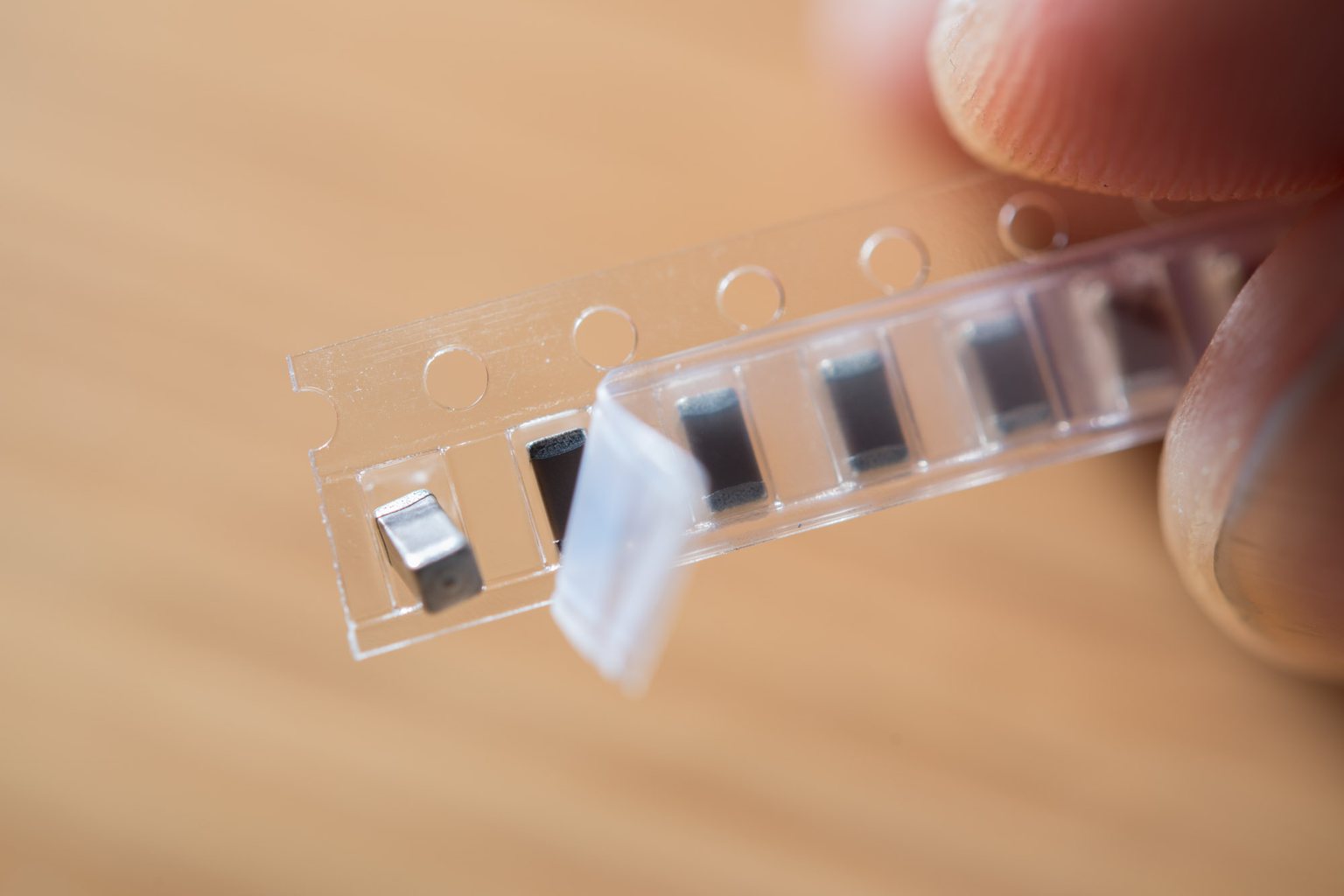
Moisture is the second trap. Plastic-bodied parts absorb water, and a part that goes into reflow wet cracks internally — the "popcorn" failure — and passes the functional test anyway. That is what the moisture sensitivity level in the datasheet is about: a level 3 part has a floor life of 168 hours out of its dry pack at 30 °C and 60% relative humidity. After that it must be baked or it must not be used. A factory running three models on one line will leave a partially used reel on the shelf for a month and put it back in the machine. Ask how floor life is tracked, and ask to see the dry cabinet log for the reels used on your run.
Date codes are the third. Ask for the date code policy in writing: no part older than 12 months from the vendor's production date, no re-reeled stock, no parts from a broker. Counterfeit and recycled components enter through exactly this door — a broker offers a reel below market because it is a leftover from a cancelled program, and on a wearable the parts are too small to inspect. If your factory cannot tell you which distributor the reel came from, the answer is "the open market".
The package you never see: 0.4 mm pitch and the X-ray
The SoC arrives as a ball grid array — a plastic body with an array of solder balls underneath, at a pitch that is now commonly 0.4 mm with balls around 0.25 mm across. You cannot inspect that joint from the side, and you cannot repair it with a soldering iron. Everything the product will ever do passes through those balls.
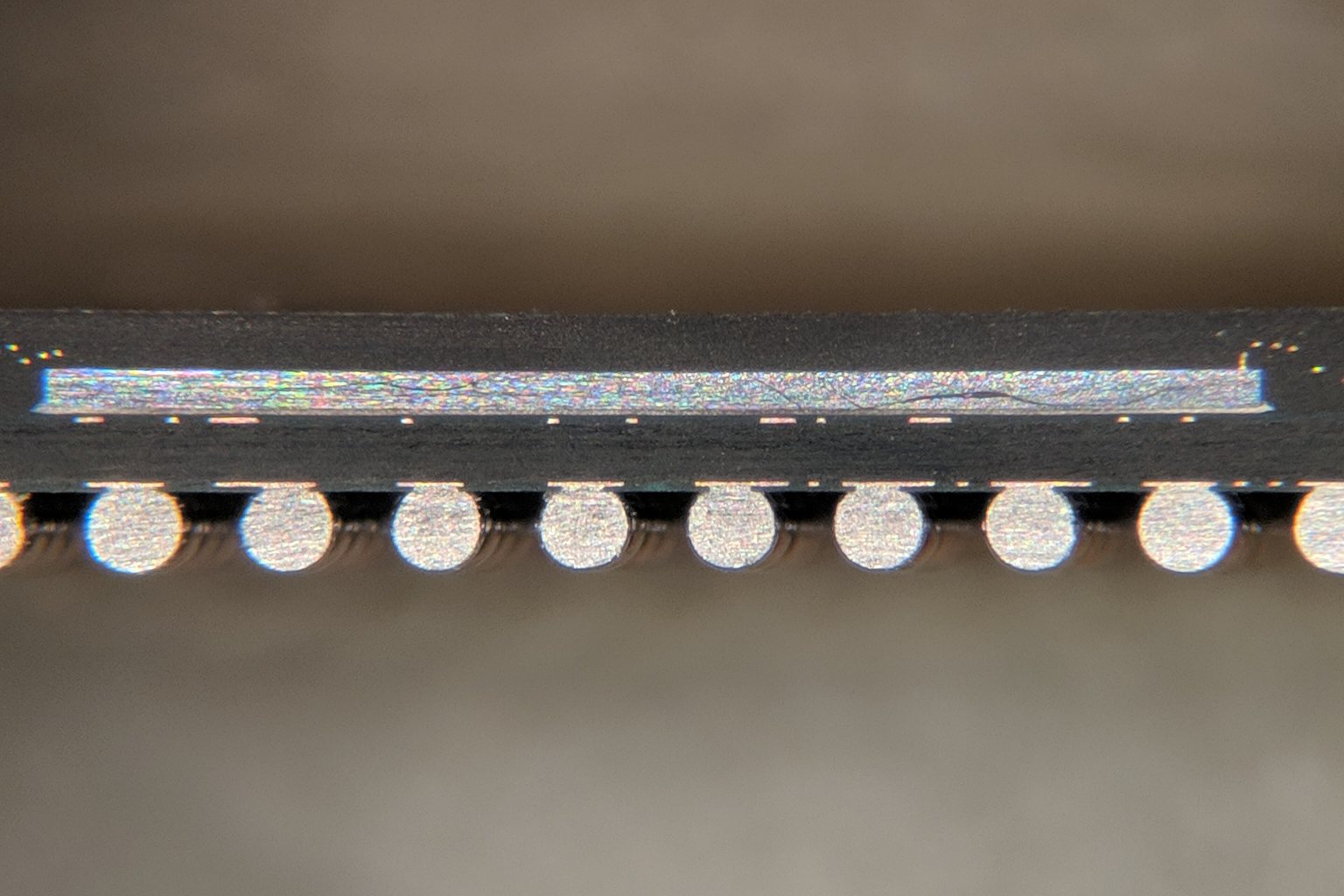
Three process controls belong in the supplier agreement, and none of them are exotic:
Reflow profile with a recorded curve. Peak around 245 °C for lead-free solder, measured on the board rather than read from the oven display, with the profile filed per run. A profile that is 10 °C hot shortens the life of every part on the board, and the only evidence is the file.
X-ray of the first-off and a sample per shift. The X-ray shows voids, bridging and missing balls. Ask for the void percentage against the acceptance class written into your drawing, and ask who signs the report. A factory that X-rays only the first article of a new model is checking the stencil, not the run.
Functional test at temperature, not just at room temperature. A wearable is worn at 35 °C next to skin and charged at 0 °C in a car. A board that passes at 25 °C and fails at 60 °C will pass your sample approval and fail your first winter. The cost of adding a 60 °C soak to the test is small; the cost of a batch that fails in the field is the whole program.
What this means for the purchase order
Four decisions, in the order they cost money.
Name the parts, not the features. A BOM with part numbers, designators and approved manufacturers is the difference between buying a product and buying a sample. It also gives you the only real lever on price at the second order, because it lets you see what changed.
Ask for the second source before you need it. One approved alternative per critical part, tested on the same firmware, with the same calibration. The test costs a pilot run. Doing it after an allocation notice costs a quarter.
Buy the buffer you will actually consume. A wearable typically has 3 to 5 parts with a 12-week lead time and a single source. Holding 8 weeks of those parts is cheaper than air-freighting a finished product in December, and it is the one inventory decision worth making at 1,000 pcs.
Fix the change process. Any substitution — passive, sensor, microphone — should require your written approval with a sample. Not a notification after the fact. Put that sentence in the supply agreement, because the default assumption on the factory floor is that a same-value part is the same part.
Six lines for the component RFQ
This is the list we send to a new supplier before the schematic is frozen. It is deliberately short, because a long list gets a long answer and no data.
- Exact SoC part number and SDK version, plus the lifecycle status, the date of the last PCN received, and the name of a pin-compatible alternative that runs the same SDK.
- Microphone part number, interface and the three acoustic numbers — SNR in dB(A), acoustic overload point in dB SPL, sensitivity tolerance in dB — with the port diameter and gasket drawing attached.
- Sensor part number, package dimensions and current draw at the output data rate you will ship, plus the calibration file format and who owns the tuning.
- Reel quantities and lead times for every part with a single-source risk, and the true minimum order that follows from them.
- Moisture and date-code policy: floor life tracking method, dry cabinet log availability, maximum age of incoming parts, and the distributors you are allowed to buy from.
- Process evidence: the reflow profile file per run, X-ray sampling plan with the acceptance class, and the temperature range of the functional test.
A supplier who builds wearables for real brands answers all six within a day, usually by forwarding documents it already keeps. A supplier who assembles whatever its trading partner sends will answer the first line and negotiate the rest. That gap is the evaluation, and you can run it before you spend anything on tooling.
Specifying a wearable for 2027?
We are a sourcing and OEM partner in Shenzhen, working across wireless audio, open-ear wearables, smart glasses and smart rings. Send the feature list and the target market, and we will come back with the platform options, the parts that carry a single-source risk, and where the BOM moves between 1,000 pcs and 5,000 pcs — before the schematic is frozen, not after.
Talk to us about your BOM →